










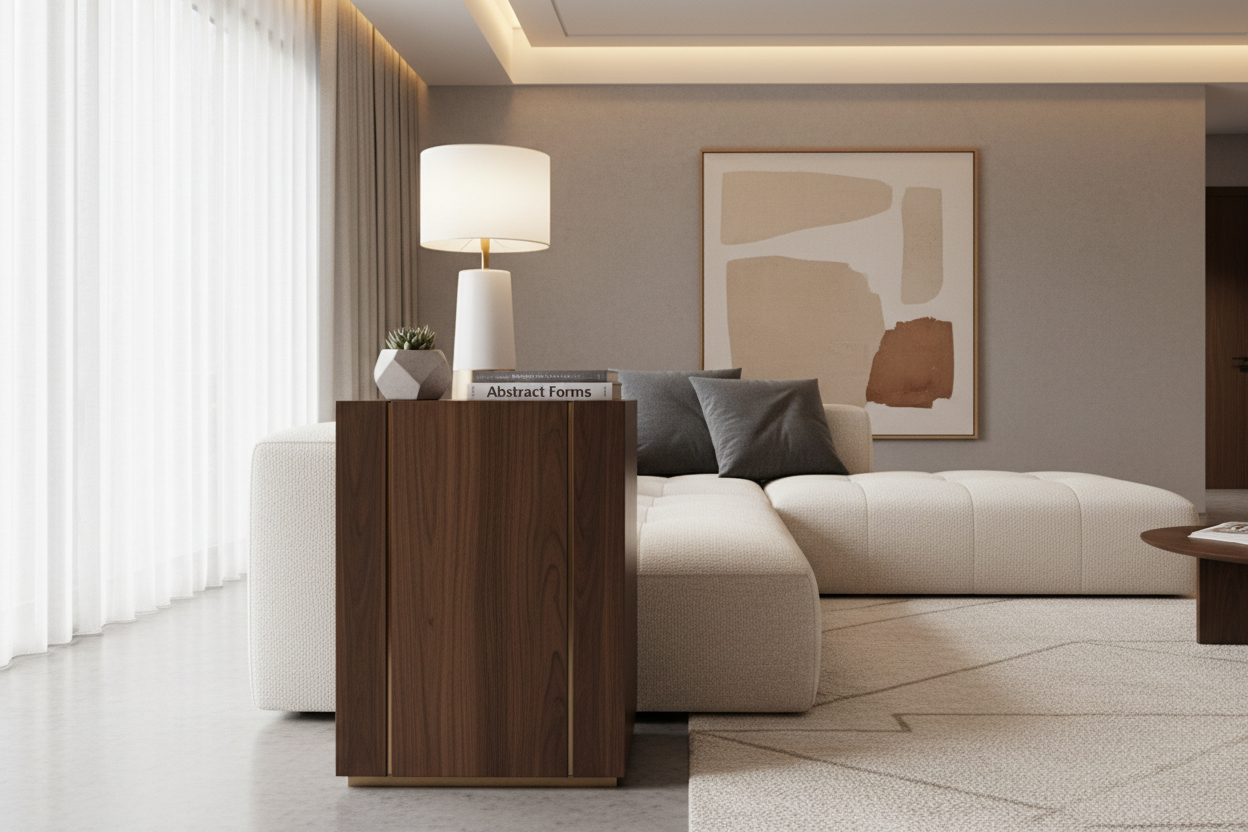
Most people default to standard heights when furnishing a room, resulting in a sea of furniture that all sits at roughly the same level—usually between 20 and 24 inches off the ground. A 3ft tall side table disrupts this monotony, drawing the eye upward and adding essential vertical interest to a space. Unlike standard end tables designed to sit flush with a sofa arm, these taller pieces serve a specific architectural purpose: they act as pedestals for display, functional surfaces for high-profile furniture, or slim solutions for narrow entryways. If you have been struggling with a corner that feels empty or a high-backed chair that dwarfs your current furniture, a table of this stature is likely the solution you haven't considered yet.
My Experience with the "Impossible" Gap
I learned the value of verticality the hard way. A few years ago, I inherited a massive, vintage wingback chair. It was beautiful, but it sat incredibly high due to a thick, overstuffed seat cushion. Every standard end table I placed next to it looked ridiculous, like a dollhouse miniature sitting in the shadow of a skyscraper. Putting a drink down required an awkward lean almost to the floor.
The solution wasn't a bigger standard table; it was a taller one. I eventually hunted down a 3ft side table—technically sold as a plant stand—and the difference was immediate. The proportions finally clicked. The tabletop sat perfectly aligned with the high roll of the chair arm, and suddenly the corner didn't look lopsided anymore. That experience taught me that height is just as critical as footprint when balancing a room's visual weight.
When to Use a 3 Foot End Table
Understanding where to place a table of this height requires a shift in perspective. Standard tables are about lounging; these taller variants are about presence and specific utility. One of the most practical applications is in the entryway. Many hallways are too narrow for a full console table, yet you still need a place to drop keys or mail. A slender 3 foot end table tucked against the wall provides that landing strip without encroaching on walking space. Because it stands at hip height (roughly counter height), it is ergonomically perfect for grab-and-go items.
Bedrooms featuring modern luxury mattresses also benefit from this height. With the rise of pillow-top mattresses and box springs, many beds now sit 30 inches or higher. A standard nightstand often disappears below the mattress line, making it hard to reach your alarm clock or water glass. Switching to a taller table brings functionality back to the bedside, ensuring your lamp and essentials are actually accessible.
Styling a High Decorative Table
Because these tables are taller, they naturally command more attention. A high decorative table acts almost like a gallery plinth. The key to styling them is managing the center of gravity visually. Since the table is leggy, you want to avoid piling heavy, bulky items on top, which can make the piece look top-heavy and precarious.
Lighting requires careful math here. If you place a table lamp on a 36-inch surface, the light source will be significantly higher than usual. To avoid the glare of a bare bulb shining directly into your eyes while you sit, opt for shorter, stouter lamps. Alternatively, skip the lamp entirely and use the height to display trailing plants. A Pothos or String of Pearls cascading down from three feet up creates a lush, green curtain that softens the rigid vertical lines of the table legs.
Material Matters
The construction material dictates the stability and the vibe of these taller pieces. In a high-traffic zone, a lightweight metal table might be prone to tipping if bumped. For these areas, look for weighted bases or solid wood construction to anchor the piece to the floor. Glass-topped tables work wonders in small rooms because they allow light to pass through, keeping the 36-inch height from feeling like a wall or a barrier.
Breaking the Horizontal Line
Interior designers often talk about "layers" in a room. If your sofa, coffee table, TV stand, and side chair all top out at 30 inches, the room feels flat. Introducing a 3ft tall side table creates a necessary peak in that landscape. This variation keeps the eye moving. You can place one in a dead corner behind a sectional sofa to hold a sculpture or a vase of tall branches. This adds depth to the room without requiring bulky cabinetry.
Another clever use is in the bathroom. Pedestal sinks offer zero storage, and standard shelving units can be too wide. A tall, small-footprint table can hold a stack of fresh towels or a basket of toiletries right at hand level, adding a spa-like elegance to a utilitarian space.
What to Look for Before Buying
Before purchasing, get out the measuring tape. Three feet is taller than you think—it is the same height as a standard kitchen countertop. Visualize that height in your living room. If you plan to set it next to a sofa, check the arm height. If the table towers more than 10 inches above the sofa arm, it might feel disconnected and awkward, looming over the person sitting there. In those cases, reserve the table for a corner display or an entryway.
Check the footprint stability. The taller the table, the wider the base needs to be to prevent tipping. If you have pets or small children, a tripod style with a wide splay is generally safer than a straight column pedestal. Finally, consider the surface area. Many tables of this height have very small tops (10-12 inches diameter). Ensure it is large enough to hold whatever you intend to place on it, whether that is a coffee mug or a heavy ceramic pot.
DIY and Repurposing Options
If you cannot find a piece of furniture explicitly labeled as a "tall side table," broaden your search terms. Many bar stools sit at roughly 30 to 32 inches. With a flat seat, a vintage bar stool makes an excellent industrial-style side table. Similarly, plant stands and telephone tables from the mid-century era were often designed with this taller profile in mind. By looking for these keywords, you open up a world of vintage possibilities that add character to your home while solving your height requirements.
FAQ
Is a 3ft table too tall for a standard sofa?
Generally, yes. Standard sofa arms are usually 24-26 inches high. A 36-inch table will tower over the arm, making it awkward for setting down drinks. These tables are better suited for high-backed wing chairs, entryways, or as standalone display pedestals.
Can I use a plant stand as a side table?
Absolutely. Plant stands are often designed at the 36-inch height mark to catch sunlight. As long as the top surface is flat and large enough to hold your items (phone, drink, book), they function perfectly as a high decorative table.
How do I choose the right lamp for a 3ft tall table?
Since the table provides the height, choose a shorter lamp. Aim for a lamp where the bottom of the shade is at eye level when you are seated next to it, preventing bulb glare. Small accent lamps or battery-operated mushroom lamps are usually ideal proportions.

Leave a comment
This site is protected by hCaptcha and the hCaptcha Privacy Policy and Terms of Service apply.