










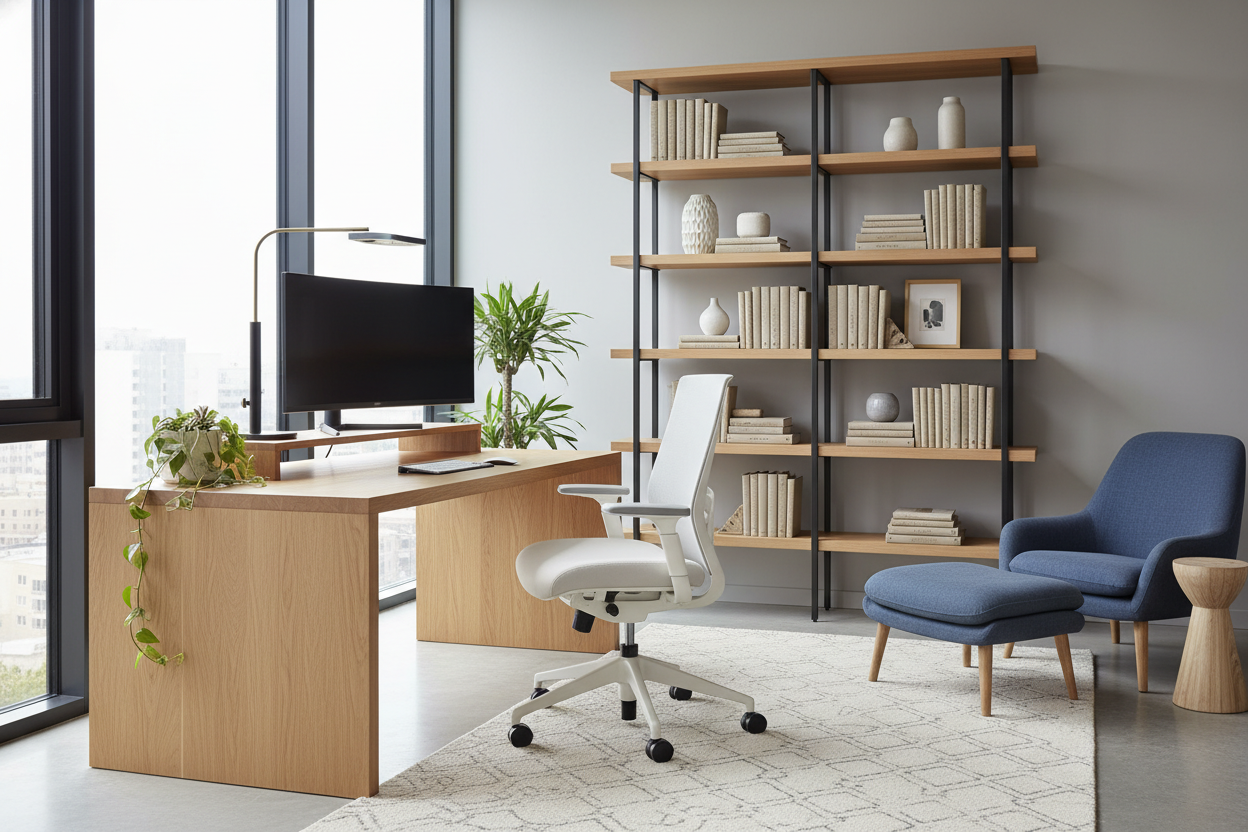
Staring at a blank wall or trying to focus while perched at the kitchen island is a recipe for creative fatigue. The difference between a makeshift desk and a productive sanctuary lies in intentional design. As a designer, I see many homeowners prioritize aesthetics over ergonomics, only to find the space unusable after an hour. This article cuts through the noise to provide actionable home office inspiration that balances high-end style with the rigorous demands of an eight-hour workday.
Key Features to Look For
- Ergonomic Integrity: Prioritize seating with lumbar support and adjustable height over purely decorative chairs.
- Lighting Layers: Ensure a mix of ambient (overhead) and task lighting (desk lamps) to reduce eye strain.
- Material Durability: Choose desk surfaces that resist heat, scratches, and coffee rings (e.g., hardwoods or high-pressure laminates).
- Spatial Flow: distinct zones for computer work, analog writing, and storage to maintain mental clarity.
Mastering the Layout: Office Room Inspo for Flow
Before buying a single piece of furniture, we must address the floor plan. Good office room inspo isn't just about how it looks in a photo; it is about how you move through the space. The 'Command Position' is a design staple for a reason. Position your desk so you have a view of the door but aren't directly in line with it. This reduces subconscious anxiety and commands the room.
If you are working with a compact footprint, consider a floating desk anchored to the wall. This frees up floor space, creating a visual illusion of a larger room while maintaining functionality.
Materiality and Texture: Beyond the Visual
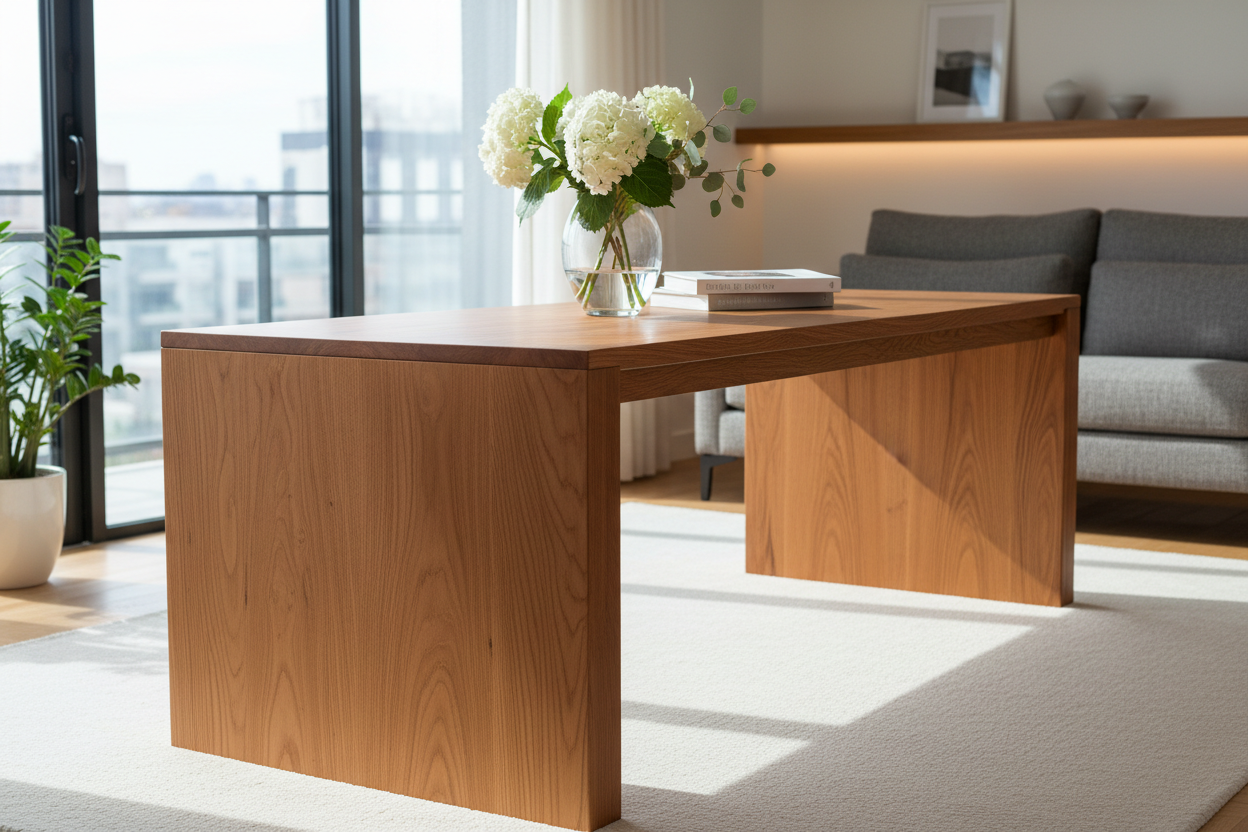
When curating office inspiration ideas, the tactile experience is often overlooked. A glass desk might look sleek and modern, but it can feel cold to the touch and amplifies the sound of typing. For a sophisticated, warm aesthetic, I recommend walnut or white oak. These materials offer visual warmth and absorb sound, improving the room's acoustics.
The Seating Dilemma
Your chair is the most critical investment. While velvet tub chairs are trending in office inspo ideas on social media, they rarely offer the necessary support for long-term use. Look for a hybrid design: a chair with a high-performance fabric (like crypton) that conceals a high-quality pneumatic lift and tilt mechanism. This bridges the gap between residential comfort and commercial utility.
Lighting: The Invisible Design Element
Poor lighting is the fastest way to kill productivity. Relying solely on a ceiling fixture creates harsh shadows on your workspace. Layer your lighting scheme. Start with a dimmable overhead fixture for general illumination. Then, add an architectural task lamp with a Color Rendering Index (CRI) of 90 or higher. This ensures that colors look accurate—essential for creative work—and reduces the blue-light fatigue associated with screens.
My Personal Take on Home Office Inspiration
Lessons from My Own Projects
I learned a hard lesson about surface finishes early in my career. I designed a custom, matte-black lacquered desk for a client who wanted a 'moody, executive' vibe. It looked incredible on installation day. However, within a week, the client called me. Every single fingerprint, dust mote, and bit of natural oil from their wrists showed up on that surface. It required constant cleaning, which became a distraction from their actual work.
Now, when I advise clients on dark furniture, I always insist on a wood grain texture or a satin finish rather than a flat matte or high gloss. It hides the reality of daily use much better. Real design has to survive the messy reality of a Tuesday afternoon deadline, not just the photoshoot.
Conclusion
Creating a workspace that inspires you requires looking past the trends and focusing on how the environment supports your workflow. By selecting tactile materials, prioritizing ergonomic layouts, and layering your lighting, you create a space that invites focus rather than fatigue. Use these principles to curate a home office that is as functional as it is beautiful.
Frequently Asked Questions
What is the ideal desk depth for a home office?
For a standard laptop or monitor setup, a depth of 24 to 30 inches is ideal. This allows you to maintain a proper viewing distance from your screen (about an arm's length) without cramping your keyboard and writing space.
How do I make a small corner look like a dedicated office?
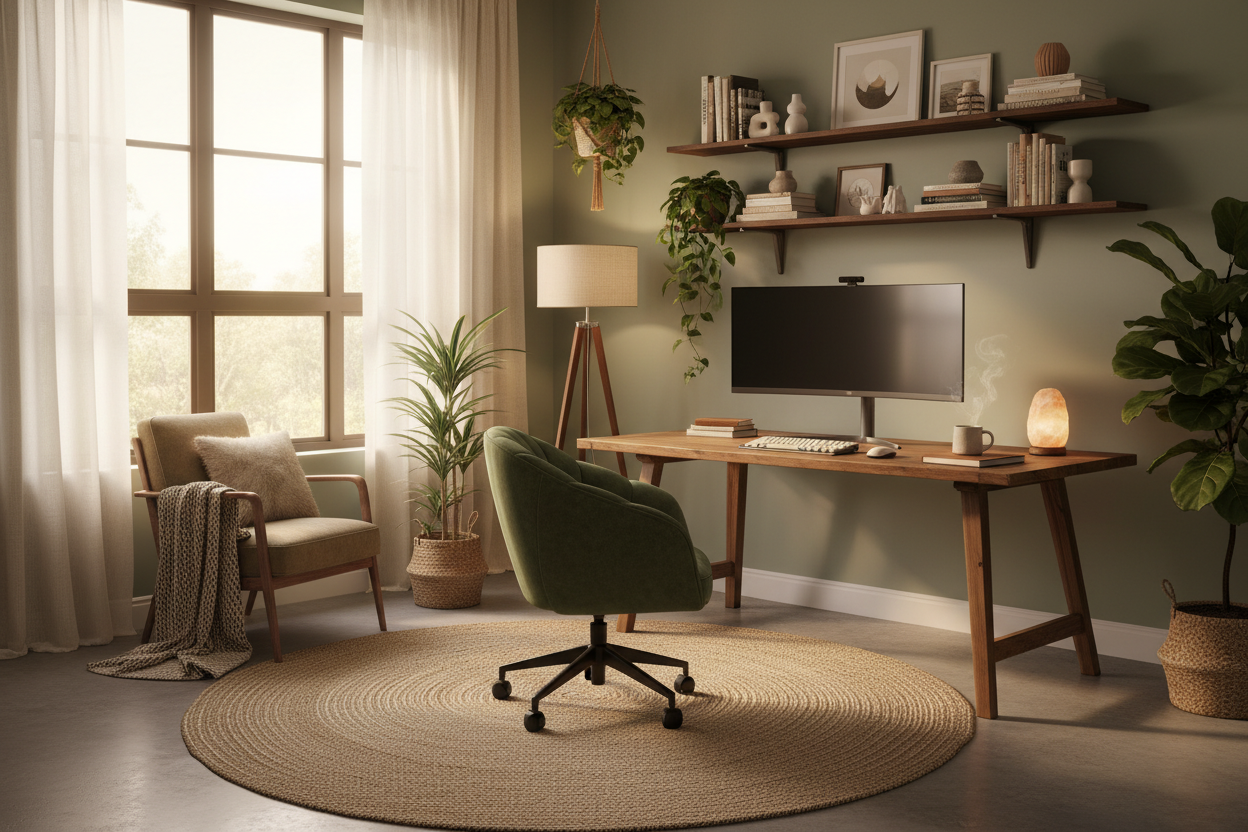
Use an area rug to visually zone the space. Even a small 4x6 rug under the desk and chair signals to the brain that this is a separate area from the rest of the living room or bedroom. Vertical shelving above the desk also draws the eye up, maximizing storage without eating up floor space.
Should I position my desk facing the window?
While a view is nice, facing a window directly can cause contrast glare, which tires the eyes. Ideally, position your desk perpendicular to the window. This allows for soft, side-lighting that illuminates your work surface without washing out your screen.

Leave a comment
This site is protected by hCaptcha and the hCaptcha Privacy Policy and Terms of Service apply.