










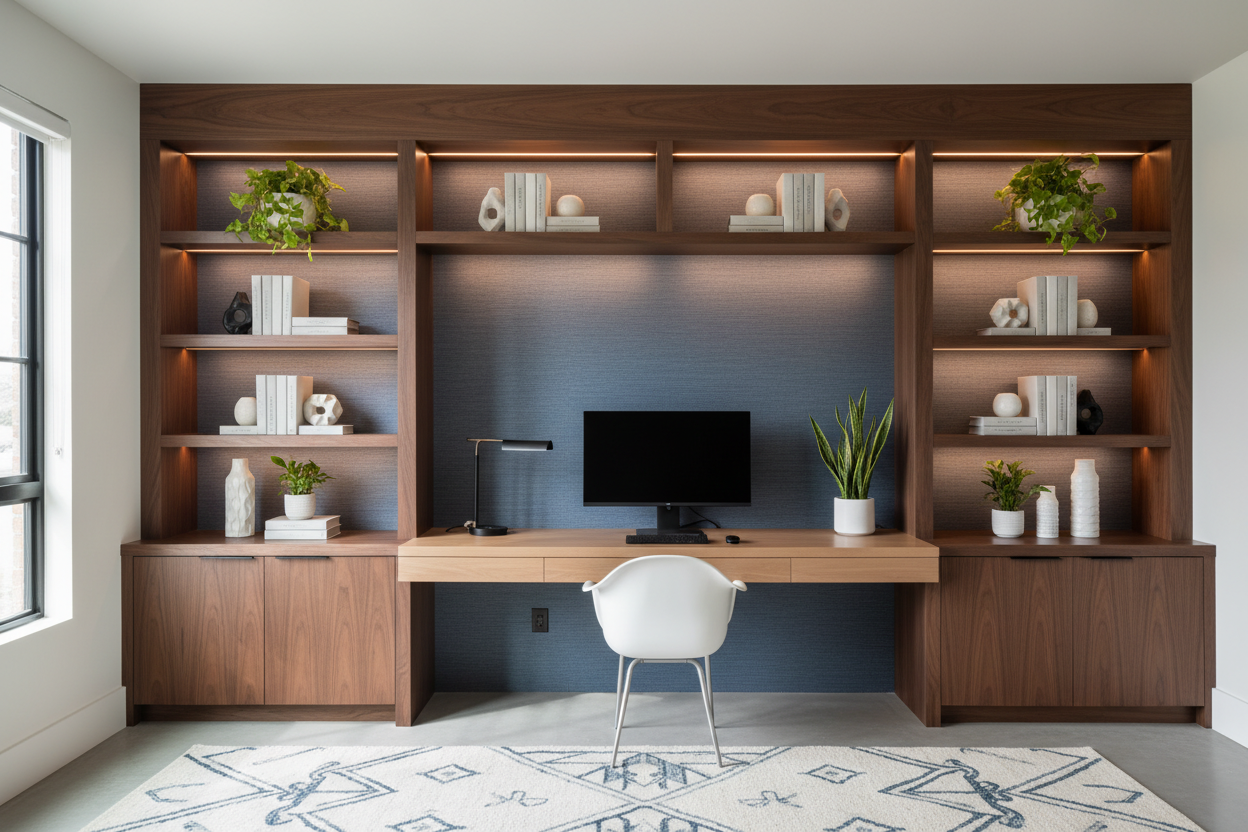
The wall behind your desk is the most viewed surface in your workspace—not just by you, but by every client and colleague you meet virtually. A blank expanse creates a sterile, temporary feeling, while a cluttered background distracts from your professionalism. As designers, we treat this vertical plane as a "credibility canvas." It is an opportunity to anchor the room and establish a tone of competence and style. By implementing thoughtful office back wall design ideas, you can create a focal point that enhances both your video presence and your daily workflow.
Key Considerations for a Professional Backdrop
- Acoustics: Hard surfaces create echo. Prioritize materials like wood slats, upholstered panels, or heavy drapery to dampen sound.
- Lighting Interaction: Avoid glossy finishes that create glare on camera. Matte paints and textured surfaces absorb light better.
- Visual Depth: Flat walls feel one-dimensional. Use shelving, molding, or 3D wall panels to add architectural interest.
- Symmetry vs. Asymmetry: Symmetrical layouts convey authority and order; asymmetrical arrangements suggest creativity and dynamism.
Mastering Materiality and Texture
When clients ask for office back wall ideas, I often steer them away from simple paint and toward texture. Texture adds warmth and sophistication that flat color simply cannot achieve.
The Wood Slat Feature
Vertical wood slats are a staple in modern office back wall design for a reason. They provide rhythm and height to a room. However, quality matters here. Avoid cheap, printed laminate slats. Opt for real wood veneer on acoustic felt backing. The tactile quality of real walnut or white oak catches the light differently, providing a richness that reads well even on a low-resolution webcam.
Textured Wall Coverings
If millwork isn't in the budget, commercial-grade vinyl wall coverings or grasscloth wallpaper are excellent alternatives. They offer a tactile finish that diffuses light, preventing the harsh "hot spots" caused by ring lights or window glare.
Strategic Shelving and Styling
Open shelving is a classic choice, but it requires discipline. The goal is curation, not storage. When planning your layout, consider floating shelves for a lighter, airy look, or floor-to-ceiling built-ins for a library aesthetic.
The styling rule of thumb: Leave 30% of the shelf space empty. This negative space allows the eye to rest. Group items in odd numbers (threes or fives) and mix vertical objects (books, vases) with horizontal ones (trays, stacked magazines) to keep the visual line moving.
Lighting as a Design Element
Your lighting plan should define the wall, not just illuminate it. LED strip lighting recessed behind shelves or along the perimeter of a wall panel creates a soft, ambient glow that separates you from the background, adding depth to the camera shot.
For a more traditional approach, picture lights or wall sconces provide symmetry. Ensure the color temperature of these fixtures matches your screen and task lighting (ideally around 3000K to 4000K) to avoid color clashing.
My Personal Take on Office Back Wall Design Ideas
In my years of designing executive suites, I’ve learned that the finish is often more important than the color. I once worked on a project where the client insisted on a high-gloss, deep navy lacquer wall behind their desk. It looked stunning in the renderings and incredible when walking into the room.
However, the moment they turned on their video conference lighting, the wall became a mirror. It reflected the ring light, the monitor screens, and even the movement of their hands, creating a distracting light show for anyone on the other end of the call. We had to retrofit the wall with a matte, anti-fingerprint laminate overlay to fix it. Now, I always test materials with a flashlight before installation. If you can see the bulb's distinct outline in the reflection, it’s too glossy for a back wall. Stick to matte, satin, or textured finishes—they are forgiving and always look high-end on camera.
Conclusion
Your office back wall is a prime real estate that should work as hard as you do. Whether you opt for the acoustic benefits of wood slats or the intellectual charm of curated shelving, the right design will ground your space. Move beyond the blank wall and build a backdrop that commands respect.
Frequently Asked Questions
What is the best color for an office back wall?
Mid-tone neutrals like sage green, charcoal, or terracotta are ideal. They provide enough contrast to make you stand out on camera without being as harsh as pure black or as washing-out as bright white.
How can I design my back wall without painting or construction?
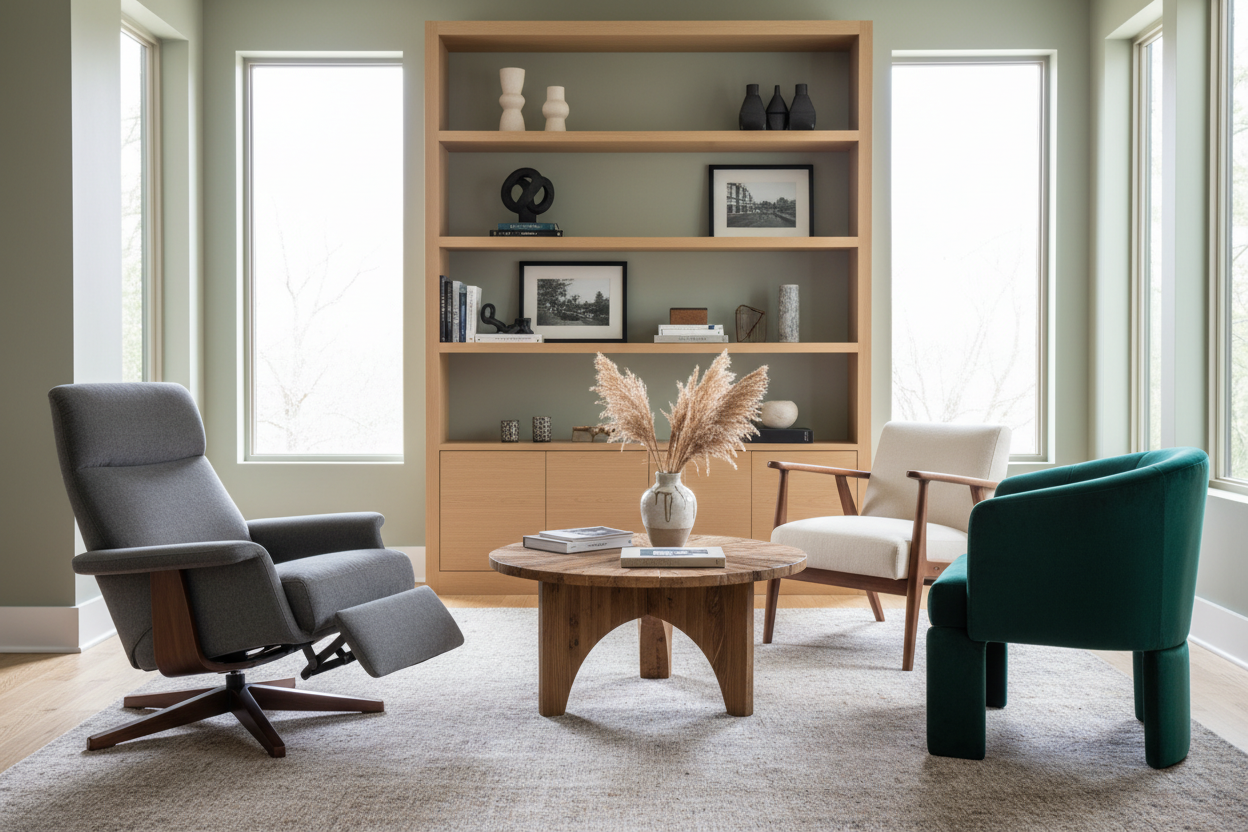
Use a large, high-quality open bookcase as a room divider or backdrop. Alternatively, large-scale art or a high-end folding screen can create an instant focal point without damaging rental walls.
Should the back wall be darker or lighter than the rest of the room?
Making the back wall slightly darker creates a "receding" effect that adds depth to the room. It anchors the space and draws the eye toward the desk area, establishing it as the command center.


Leave a comment
This site is protected by hCaptcha and the hCaptcha Privacy Policy and Terms of Service apply.