










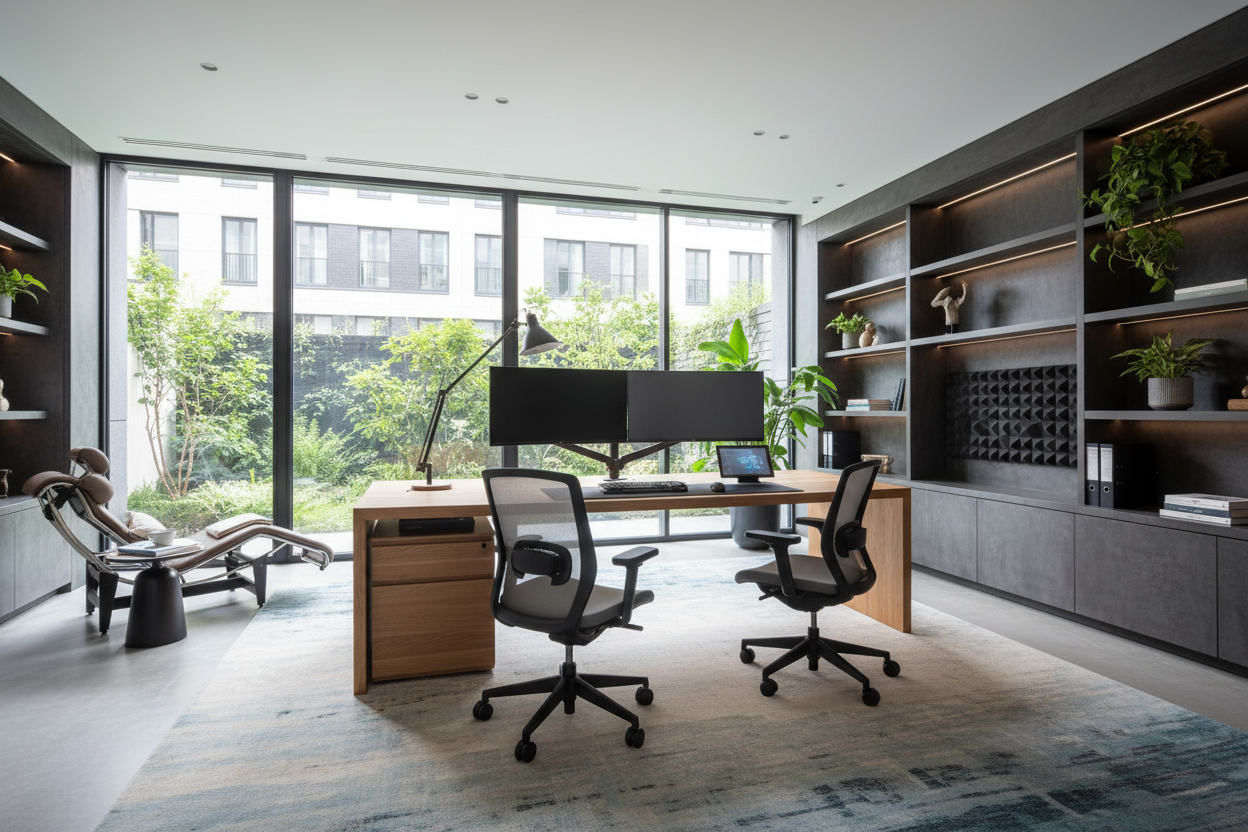
The makeshift office era is over. As major employers work from home policies shift from temporary emergency measures to permanent corporate strategies, the dining table is no longer a sufficient workstation. We are seeing a massive cultural pivot where companies that have gone fully remote are offloading the responsibility of environmental design onto the employee. If you are settled into a role with tech companies allowing remote work or an MNC company work from home news has just confirmed your status, your home environment must evolve to match your professional output.
Quick Decision Guide: The Permanent Office Checklist
If you are transitioning to a setup where you will work from home permanently, prioritize these design elements to ensure longevity and health:
- Ergonomics First: Prioritize a chair with lumbar adjustability and seat depth control over pure aesthetics.
- Lighting Layers: Combine ambient overhead light with task lighting and face-level diffusion for video calls.
- Spatial Zoning: Even in open plans, use rugs or shelving to visually demarcate 'work' from 'living'.
- Material Durability: Opt for high-pressure laminates or sealed hardwoods for desk surfaces to resist coffee rings and mouse friction.
- Acoustic Control: Incorporate textiles (curtains, upholstered furniture) to dampen echo during conference calls.
The Shift: Why Companies Are Staying Remote
Understanding the permanence of this shift is vital for justification of your investment. Will work from home be permanent? For many sectors, the answer is a resounding yes. Companies embracing remote work—particularly top remote software companies—have realized that overhead reduction pairs well with productivity. Because corporations working from home are here to stay, treating your home office as a 'temporary' zone is a design mistake. You need a space that functions like a headquarters but feels like a home.
Selecting the Right Desk for the Long Term
When looking at companies moving to remote work, the equipment stipend often covers a monitor, but rarely a high-quality desk. If you want to work from home permanently, the desk is your foundation.
Size and Scale
A common error is undersizing the desk. Tech companies offering remote work often require dual monitor setups. Ensure your desk depth is at least 30 inches to maintain proper focal distance from screens. If you are tight on space, look for 'floating' wall-mounted desks that free up floor area while maintaining surface utility.
Materiality and Touch
Since you will be in contact with this surface for 40+ hours a week, texture matters. Solid wood (walnut or white oak) offers warmth and ages beautifully, developing a patina over time. Avoid cheap thermofoils that peel; instead, look for commercial-grade veneers if solid wood is out of budget.
The Chair: Investing in Your Spine
Big companies offering remote work used to provide Herman Miller or Steelcase chairs. Now, that choice is yours. Do not be seduced by 'executive' style leather chairs that lack adjustability. For permanently remote roles, you need a task chair with a synchro-tilt mechanism.
Look for breathability. If you are in a warmer climate, a high-tension mesh suspension is superior to foam. However, if you prefer a softer, residential look to blend with your decor, seek out performance fabrics like Crypton that offer stain resistance without the scratchy texture of commercial polyester.
Acoustics and Video Call Aesthetics
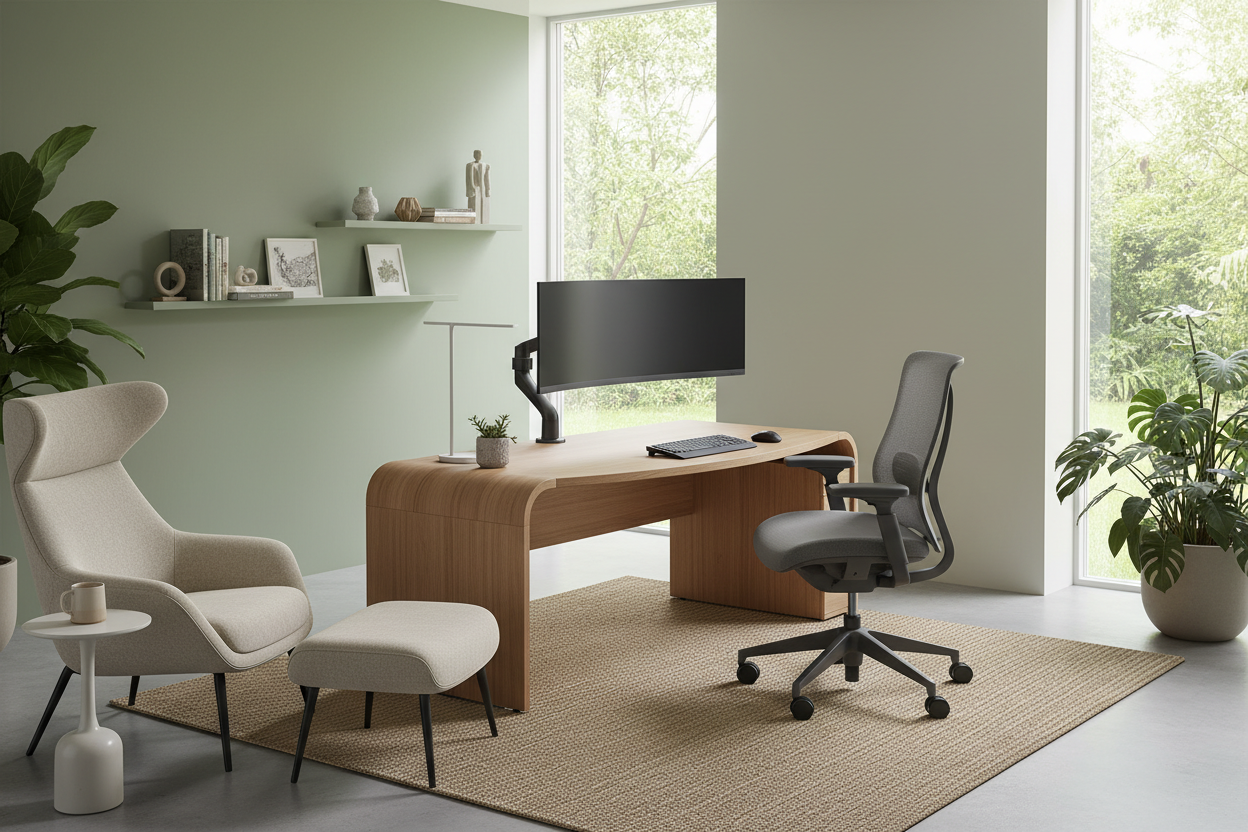
Companies offering fully remote work rely heavily on Zoom or Teams. Your background is now your professional attire. Avoid a flat white wall behind you; it creates a harsh, interrogation-room vibe. Install floating shelves with curated decor or artwork to add depth and personality.
Furthermore, companies that allow you to work remotely expect professional audio. Hard surfaces bounce sound. Introduce a high-pile rug, heavy velvet or linen drapery, and perhaps an upholstered armchair in the corner to absorb sound waves and reduce that 'empty room' echo.
Lessons from My Own Projects
I recently redesigned a home office for a client employed by one of the large companies that offer remote work. She had spent two years working from a mid-century modern vanity because she loved the look. The result was chronic shoulder pain and a cluttered surface.
We swapped it for a sit-stand desk, but here is the specific detail that changed everything: Cable Management. We routed every single cable through the leg of the desk and mounted a surge protector to the underside of the top. It sounds technical, not decorative, but eliminating the visual clutter of wires instantly elevated the room from 'tech support' to 'executive suite.' It allowed the eye to rest on the joinery of the bookshelves rather than a nest of black cords. When you work remotely permanently, visual calmness is as important as physical comfort.
Conclusion
As companies switching to work from home solidify their policies, your home design must rise to meet the occasion. Whether you are with it companies remote work or traditional sectors, the boundary between work and life is now defined by your furniture choices. Invest in pieces that respect your body and your home's aesthetic.
Frequently Asked Questions
1. If I switch jobs, will these investments be wasted?
No. Even if you leave companies that let you work remote, a high-quality ergonomic chair and solid desk retain significant resale value. Furthermore, a dedicated workspace adds value to your home regardless of your employment status.
2. How do I fit a permanent office in a small apartment?
Focus on verticality. Use wall-mounted shelving units with integrated drop-down desks. This utilizes the 'air space' rather than the floor footprint, which is essential for urban dwellers working for distributed companies jobs.
3. Do companies provide stipends for furniture?
Many companies offering permanent work from home do provide a one-time stipend. Check with HR at companies going remote permanently; often, they will reimburse ergonomic equipment if you can provide a receipt proving it meets health and safety standards.

Leave a comment
This site is protected by hCaptcha and the hCaptcha Privacy Policy and Terms of Service apply.