










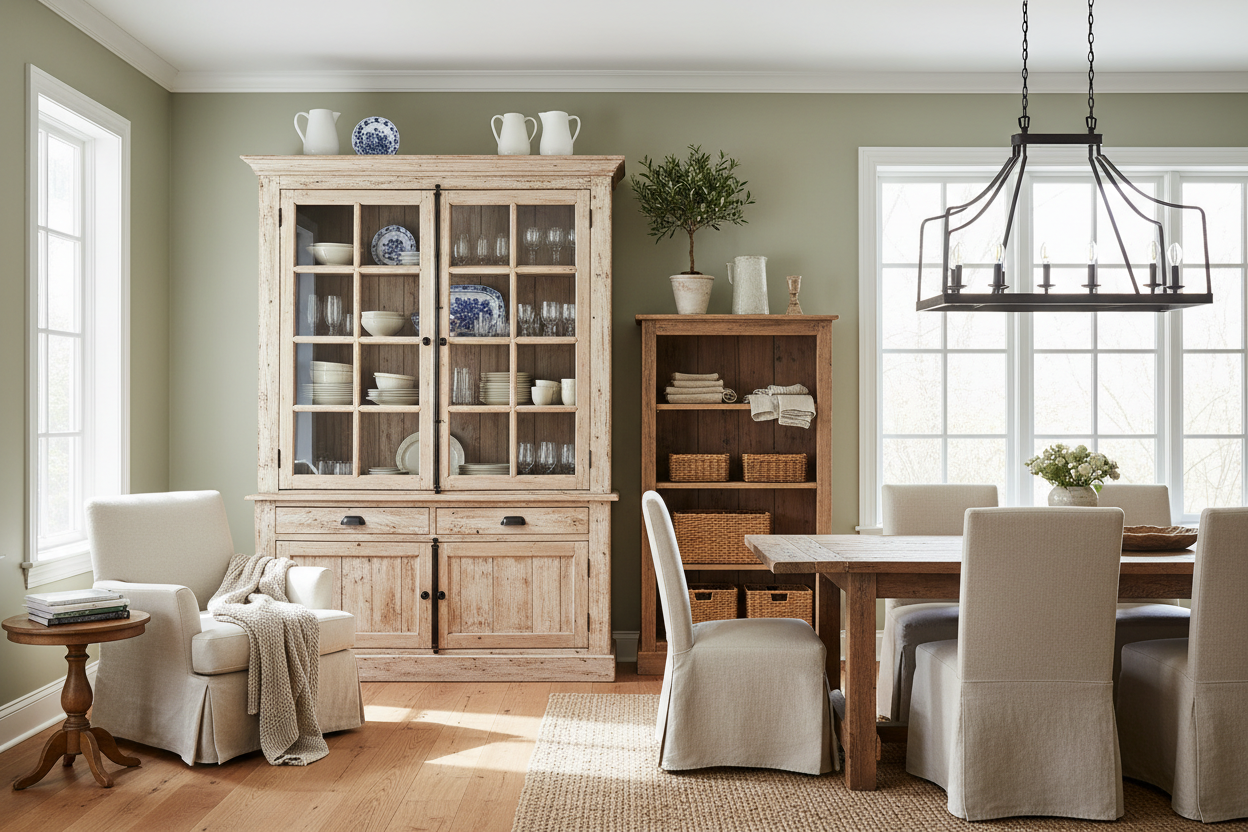
I've helped clients furnish over 200 homes, and I've seen it all—the gorgeous finds, the heartbreaking mistakes. Remember that time you bought a dining table online that looked massive in photos but arrived looking like dollhouse furniture? The same thing happens with farmhouse china cabinet purchases. You fall in love with the rustic charm in a catalog, but when it arrives, the proportions are off, the wood feels cheap, or it just doesn't 'talk' to the rest of your dining room.
Let's avoid that. I'm your designer friend walking you through the showroom. We'll look beyond the pretty facade to what truly makes a farmhouse china cabinet a lasting centerpiece.
Quick Takeaways
- It's a design anchor, not just storage. It sets your dining room's tone.
- Check the wood: kiln-dried solid wood (like oak or pine) beats veneered particleboard for durability and authentic rustic character.
- Measure thrice. A cabinet over 84 inches tall needs 10-foot ceilings to feel proportional, not cramped.
- Lighting is non-negotiable. Integrated LED strips with a warm color temperature (2700K-3000K) make your display sing.
- Style is a mix. Layer your grandmother's china with modern ceramics and woven textures for a curated, personal look.
Why a Farmhouse China Cabinet Isn't Just About Storage
When you first think 'china cabinet,' you probably think 'place for the good dishes.' And yes, that's part of it. But in over 200 projects, I've learned the right cabinet does so much more. It's the anchor of your dining space. In a North American home, where open-concept living is common, this piece often sits in clear view from the kitchen or living room. It needs to balance that welcoming, lived-in farmhouse feel with intentional design.
It's about creating a moment. A well-chosen cabinet with glass doors invites curiosity and tells a story about your home. It turns your everyday stoneware or heirloom china into a display that adds texture, color, and personality. I once had a client who used hers to showcase a mix of vintage milk glass, her child's pottery projects, and her wedding china. It became the most talked-about feature of the room because it felt authentic, not staged.
The 5 Non-Negotiables Designers Check First
Before you get swept away by a distressed finish or charming hardware, run through this checklist. These are the things I physically inspect on every client visit.
1. Wood Quality & Finish: Tap the sides. Solid wood, especially kiln-dried oak, maple, or pine, has a substantial sound and feel. Avoid cabinets where the 'distressing' is just a printed pattern on particleboard. Real distressing should show wear on edges and corners naturally. For a durable piece that ages gracefully, look for a hand-rubbed wax or oil finish over a thick paint layer.
2. Glass Door Construction: This is critical for both safety and style. Glass should be tempered—it's safer and often has a label etched in the corner. Check the glazing. Beveled glass adds a vintage touch, while clear, flat panes lean modern. I recently specified a modern rustic wood china cabinet for a project because its sliding glass doors saved space in a narrower dining room, a perfect example of form meeting function.
3. Interior Lighting: Never buy a display cabinet without a plan for light. Built-in LED strips are ideal. They should be hidden from direct view but cast an even glow across all shelves. A dimmer switch is a game-changer for setting mood. Without lighting, your beautiful pieces are just shadows in a box.
4. Shelving Adjustability: Can you move the glass shelves? Fixed shelves limit you to displaying items of one height. Adjustable shelving, supported by sturdy metal pins set into reinforced holes, lets you customize the space for platters, teacups, or tall vases.
5. Hardware Authenticity: Tug on a drawer pull or turn a knob. It shouldn't wiggle. Authentic, solid-cast hardware in iron, bronze, or brass has weight and detail. Cheap, lightweight hardware feels hollow and often loosens over time.
Rustic vs. Modern Farmhouse: Which Style Fits Your Home?
Farmhouse isn't one look. Choosing the right flavor is key to cohesion.
Traditional Rustic is all about heritage and patina. Think heavily distressed wood in natural oak or walnut tones, visible saw marks, and antique-style iron hardware with a black or oil-rubbed finish. The lines are often chunkier. This style works beautifully in homes with exposed beams, stone accents, or existing antique furniture. It adds warmth and a sense of history.
Modern Farmhouse takes that cozy feel and streamlines it. Clean, Shaker-style lines dominate. Finishes are often painted, especially in classic white, soft gray, or sage green. The distressing is subtler—maybe just on the edges. Hardware tends to be simpler, in brushed nickel or matte black. A piece like the white display case with glass doors exemplifies this. It brings light and airiness to a space, pairing well with subway tile, open shelving, and more contemporary dining sets.
My rule of thumb? If your dining table is a rustic, reclaimed wood piece, a traditional rustic cabinet will complement it. If your table has a clean, painted base, lean modern farmhouse.
Size and Placement: Avoiding the 'Too Big' Mistake
This is the most common error I fix. A cabinet that's too large overwhelms; one that's too small looks insignificant.
First, measure your space. For a freestanding cabinet, you need clearance. Leave at least 36 inches of walkway between the cabinet and the dining table for comfortable chair movement and traffic flow. Measure ceiling height. A tall hutch (over 78 inches) needs room to breathe—ideally 12 to 18 inches of space above it to the ceiling.
Consider scale. In a standard 12x14 foot dining room, a cabinet around 60 inches wide and 78 inches tall is often a sweet spot. It provides ample display without dominating. For smaller spaces, a 'small farmhouse china cabinet' around 48 inches wide can be perfect. Built-in options are fantastic for maximizing space in nooks or under staircases, but they're a permanent commitment.
Placement-wise, the wall opposite the entrance or anchoring the end of the room are classic, powerful spots. Ensure it's balanced with other furniture; if you have a large sideboard on one wall, the china cabinet on the opposite wall should have similar visual weight.
Styling Secrets: From Empty to Enchanting
An empty cabinet is a missed opportunity. Styling is where your personality shines. Start with a foundation. Use your best dinnerware or a matching set on one shelf for cohesion. Then, layer.
Mix textures and heights. Place a stack of woven chargers behind a set of porcelain plates. Use cake stands or small wooden crates to elevate smaller items like teacups. Add organic elements: a trailing pothos plant in a ceramic pot, a bundle of dried wheat, or a piece of driftwood.
Lighting is your secret weapon. If your cabinet doesn't have built-in lights, battery-operated LED puck lights placed at the top of each shelf work wonders. Aim for warm white light.
Don't be afraid of negative space. Crowding every inch looks cluttered. Group items in odd numbers (threes or fives) and leave some breathing room around them. For more inspiration on creating a layered, collected look, the china cabinet shabby chic makeover guide has great techniques.
From my experience, the most enchanting displays mix high and low—the expensive heirloom next to the thrift-store find, the formal china next to a child's handmade bowl. It tells your story.
Where to Shop and What to Avoid
Quality matters for a piece that gets daily visual use. For true vintage character, I love scouting local antique stores and estate sales. You'll find unique pieces with real history, like an 'antique farmhouse china cabinet' with dovetail joinery. For new pieces, specialty furniture retailers or direct-from-manufacturer websites often offer better construction than big-box stores.
Red Flags: Avoid cabinets with backs made of flimsy cardboard or thin hardboard. Doors and drawers should open smoothly without sagging. If it smells strongly of chemical off-gassing, that's a sign of low-quality materials. Be wary of prices that seem too good to be true; a solid wood, well-constructed cabinet is an investment.
Set a realistic budget. A quality new cabinet often starts around $1,200. If you love the farmhouse look but want a sleeker edge, a black cabinet with glass doors can offer a stunning, contrasting modern farmhouse vibe. And if you're comparing styles, our guide on the modern china cabinet upgrade highlights a different but equally impactful approach.
FAQ
Can a farmhouse china cabinet work in a non-farmhouse style home?
Absolutely. It's all about balance. A clean-lined, white modern farmhouse cabinet can add warmth and texture to a minimalist space. A rustic wood one can ground a more eclectic room. Think of it as adding a note of organic character.
How do I protect my china from sunlight?
If the cabinet will be in direct sunlight, consider UV-protective film for the glass doors. Alternatively, rotate your displayed items every few months to prevent fading. Don't display irreplaceable heirlooms in a sun-drenched spot.
Is a hutch or a lower cabinet better?
It depends on your needs and space. A full hutch offers maximum display and closed storage. A lower, wider buffet-style cabinet with glass doors provides display at eye level and often more practical storage below, which is great in smaller rooms or open-plan areas.
How do I clean and maintain a distressed wood finish?
Dust regularly with a soft, dry cloth. For smudges on painted/distressed finishes, a slightly damp cloth is usually enough. Avoid harsh chemicals or abrasive cleaners. For wax or oil-finished wood, use a specific wood cleaner or reapply a thin coat of wax once a year to nourish the wood.


Leave a comment
This site is protected by hCaptcha and the hCaptcha Privacy Policy and Terms of Service apply.