










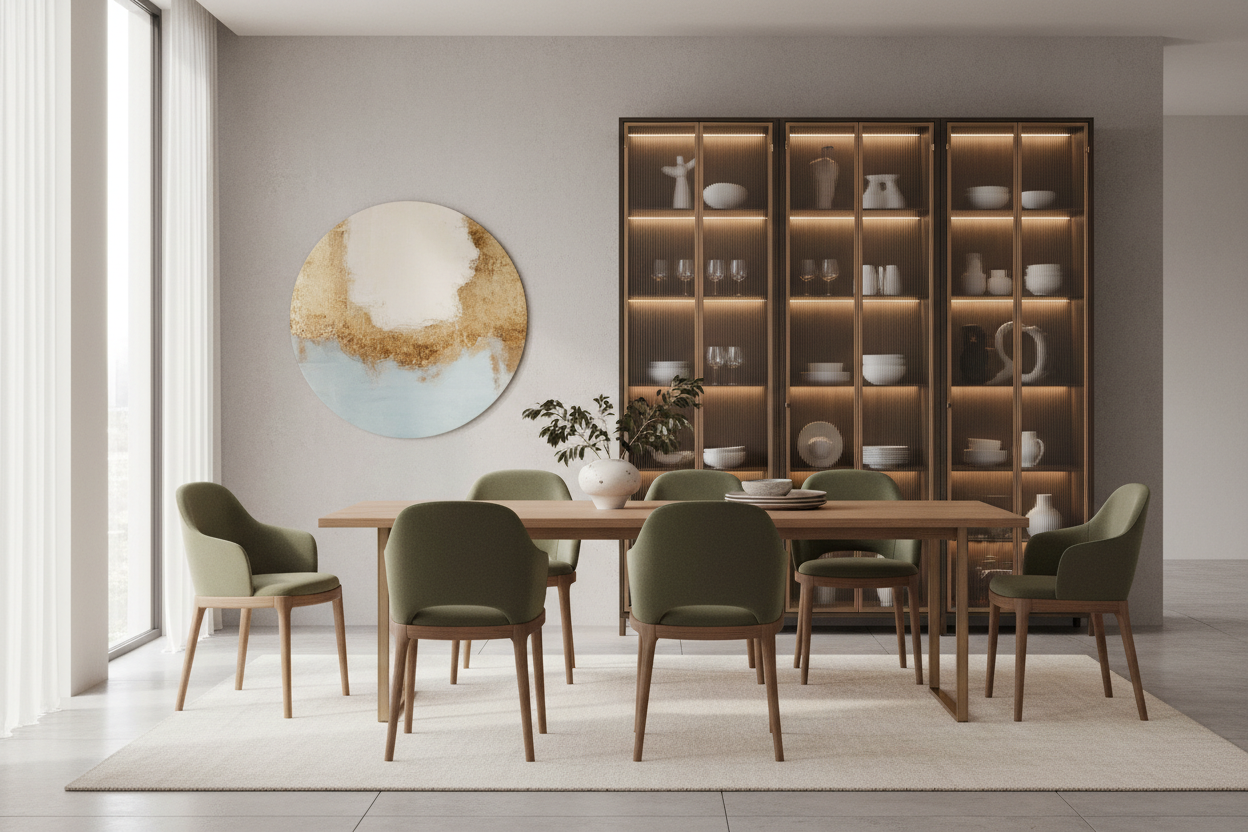
I remember walking into a client's dining room last year. They had beautiful dishes stacked on open shelves, a collection of wine glasses on the sideboard, and serving platters tucked in a corner cabinet. It felt busy, not beautiful. The problem wasn't their pieces—it was the lack of a cohesive, intentional home for them. That's when we talked about a modern china cabinet. It wasn't about adding more furniture; it was about creating a focal point that organized their treasures and cleared the visual clutter.
Quick Takeaways
- A modern china cabinet consolidates scattered items into one stylish storage unit, freeing up your sideboard and shelves.
- Look for clean lines, quality materials like solid wood or metal, and functional features like adjustable glass shelves and soft-close drawers.
- Measure your space carefully: ensure at least 36 inches of walkway clearance in front of the cabinet for comfortable movement.
- Style your display with intention—group items in odd numbers, vary heights, and leave 30% negative space to avoid a cluttered look.
- Invest in solid construction; a well-made cabinet with dovetail joints and a durable finish will last decades, not just years.
Why Your Dining Room Needs a Modern China Cabinet
Let's be honest. Dining rooms often become catch-alls. That lovely sideboard gets covered in mail. Your nice dishes are hidden in a pantry or stacked awkwardly. A modern china cabinet solves this by giving everything a designated, beautiful place. It's not your grandmother's ornate, towering hutch. Today's versions are about curation, not just containment. They turn your everyday glassware and special occasion china into part of your decor. I've seen it transform rooms from feeling scattered and unfinished to looking intentional and polished. It's the piece that says you've thought about how the room functions, not just how it looks.
Key Design Elements of a Modern China Cabinet
What makes a china cabinet 'modern'? It starts with simplicity. Look for straight, clean lines rather than curved legs or ornate carvings. The silhouette should feel light and intentional. Material choice is huge. While wood is classic, modern interpretations might mix materials—think a modern rustic wood china cabinet with metal framing or a sleek lacquered finish. Glass is non-negotiable for the display portion; it protects your items while showing them off. Functionally, I always recommend looking for adjustable shelves. This lets you accommodate tall vases or short tumblers. Drawers are a game-changer for storing linens, silverware, or smaller serving pieces you don't need on display. Soft-close mechanisms on doors and drawers are a small detail that makes a big difference in daily use.
Modern China Cabinet Styles for Different Spaces
Not every dining room can handle a large, traditional hutch. That's where modern styles shine. For smaller rooms or open-concept spaces, a low-profile, long cabinet (often called a credenza or sideboard with a hutch top) is perfect. It provides display space without overwhelming the room. A full-height contemporary hutch works in larger, more formal dining rooms, offering maximum storage. For a truly integrated look, consider a built-in style or a modular system. Color plays a role too. While natural wood tones are timeless, a black cabinet with glass doors collection offers a bold, graphic look that anchors a room. I recently used a 72-inch wide, 18-inch deep black cabinet in a mid-sized dining room; its sleek profile made the space feel larger, not crowded.
Practical Considerations Before You Buy
Before you fall in love with a photo online, grab your tape measure. The most common mistake is buying a cabinet that's too large for the space. You need at least 36 inches of clearance in front to pull out chairs and walk comfortably. Measure the wall where it will go, and mark the footprint on the floor with painter's tape. Think about what you're storing. Count your dinner plates, salad plates, bowls, and glassware. Do you have large platters or a tea set? This will tell you if you need more shelf space or deeper drawers. A good rule is to plan for 20% more storage than you currently need. Also, consider the balance between open display and concealed storage. Too much glass can look busy if you have a lot of mismatched items. For tips on editing your collection, my post on minimalist storage cabinet tips can help.
Styling Your Modern China Cabinet
This is the fun part. A curated display is key. Don't just fill every shelf. Start by grouping like items—all your glassware on one shelf, dinner plates stacked neatly on another. Use stands or plate holders to display special pieces vertically. Vary heights: place a tall vase next to a stack of bowls. I always recommend the 'rule of threes'—group items in odd numbers for a more dynamic look. Leave some breathing room; aim for about 30% negative space on each shelf. For the top of the cabinet, one large statement piece, like a sculptural bowl or a piece of art, works better than several small items. Lighting is crucial. If your cabinet doesn't have built-in lights, add a small, battery-operated LED strip inside the top to illuminate your display. For more visual inspiration, check out our feature on elegant modern china cabinets.
Making the Investment: Quality and Longevity
A china cabinet should be a long-term piece. Look at the construction. Solid wood frames (like oak, walnut, or maple) are more durable than particleboard or MDF, especially for the structural parts. Drawers should have dovetail or sturdy box joints, not just staples. Test the drawer slides—they should glide smoothly and hold weight without sagging. The finish should be even and durable; a lacquer or catalyzed varnish will resist scratches and moisture better than a simple stain. Don't forget the back panel; a solid back adds stability. A piece like our solid wood modern sideboard exemplifies this focus on material quality and versatile design. It's an investment, but one that pays off by looking good and functioning perfectly for years.
Personal Experience: The One That Almost Got Away
Early in my career, I sourced a stunning, minimalist china cabinet for a client's modern loft. It was all glass and pale oak—beautiful in the showroom. We got it into the space, and it looked... insubstantial. The ultra-thin glass shelves visibly bowed under a standard set of dinner plates. The lack of any solid backing made the contents look messy from certain angles. It was a lesson in balancing aesthetics with real-world function. Now, I always check the weight capacity of shelves (aim for at least 25 lbs per shelf) and ensure there's a mix of open and solid surfaces to give the display some structure.
FAQ
How deep should a modern china cabinet be?
Standard depth is between 16 and 20 inches. This is deep enough for most dinner plates (typically 10-11 inches in diameter) with room behind, but not so deep that items get lost at the back. For shallow rooms, look for a depth of 14-16 inches.
Can a modern china cabinet work in an open-plan living/dining area?
Absolutely. In fact, it's a great way to subtly define the dining zone. Choose a low-profile, long design (like a buffet with a hutch top) that acts as a visual anchor without blocking sightlines. Keep the styling cohesive with the living area's decor.
What's the ideal height for the display shelves inside?
Adjustable shelves are best. As a starting point, space them 10-12 inches apart. This accommodates most glassware (8-10 inches tall) and stacked plates with a little overhead clearance. Leave one taller section (14-16 inches) for vases or carafes.
How do I clean and maintain a glass-door china cabinet?
Use a microfiber cloth and a glass cleaner without ammonia for the doors. For wood surfaces, a lightly damp cloth followed by a dry one is sufficient. Dust the interior shelves regularly to keep your displayed items clean. Avoid placing it in direct sunlight, which can fade finishes and heat up the interior.

Leave a comment
This site is protected by hCaptcha and the hCaptcha Privacy Policy and Terms of Service apply.