










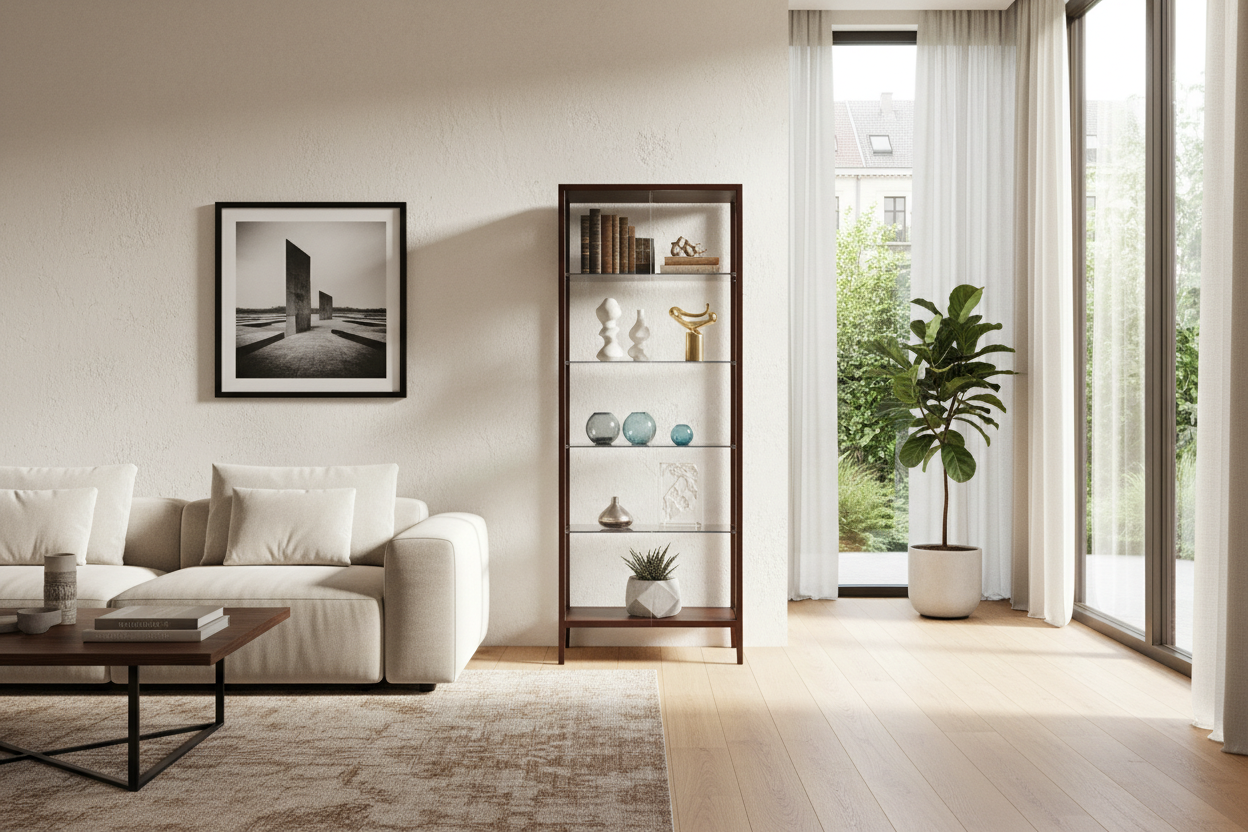
We have all seen it: a beautiful living room with an awkward, empty corner, or worse, a gorgeous collection of ceramics crammed onto an unsuitable bookshelf where they get lost in the shadows. A free standing display cabinet is often the missing piece that bridges the gap between functional storage and gallery-like art. But getting it right involves much more than just buying a box with doors and shoving your favorite items inside.
When placed incorrectly, these pieces can feel imposing and heavy. In this guide, you will learn how to select the right scale for your room, manage visual weight, and style your shelves so they look intentionally curated rather than cluttered.
Quick Decision Guide
- Measure for clearance: Always leave at least 36 inches of walkway space in front of the cabinet doors so they can open fully without hitting other furniture or impeding traffic flow.
- Consider visual weight: Solid wood backs anchor a large room, while glass-backed or open-sided cabinets keep small spaces feeling airy and bright.
- Lighting matters: Built-in LED puck lights or strip lighting inside the top frame draw the eye upward and highlight the texture of your displayed objects.
- The 60/40 rule: Fill only 60 percent of your shelf space. Leave 40 percent as negative space to let your pieces breathe and prevent visual overwhelm.
Space Planning and Visual Proportion
Managing Visual Weight
A tall cabinet naturally commands attention. If you are working with a standard eight-foot ceiling, a massive, dark mahogany piece can quickly swallow the room and make the ceiling feel lower than it is. Instead, look for a free standing glass cabinet with a slender metal or light oak frame to maintain your room's sightlines. The transparency of the glass allows the wall color to push through, reducing the bulk of the furniture while still offering ample shelving for your collections.
The Clearance Rules
Placement is critical in North American floor plans, which often blend open-concept living with tighter transition zones. I always advise clients to treat the swing radius of the cabinet doors as sacred ground. You need a minimum of 36 inches of clearance in front of the piece for comfortable access. If you are placing it in a dining room, ensure it sits at least 48 inches away from the dining chairs to prevent bottlenecks during dinner parties.
Material and Build Quality
Framing Your Collection
The material of your cabinet sets the tone for everything inside it. Solid white oak or walnut brings warmth and suits transitional or mid-century spaces beautifully. However, natural wood expands and contracts with our drastic seasonal humidity shifts. Check that the glass panels are secured with flexible silicone gaskets rather than rigid putty to prevent cracking. If you lean toward an industrial aesthetic, powder-coated steel is incredibly durable, though it tends to show dust much faster than natural wood grain.
Style and Coordination
Curating the Shelves
The biggest mistake people make is treating their display piece like a storage locker. To style it like a pro, group items by color palette or texture, and vary the heights of your objects. Stack three coffee table books horizontally to act as a pedestal for a small brass sculpture, then place a tall, slender vase on the adjacent shelf. This creates a zig-zag visual path that keeps the eye moving gracefully from top to bottom.
Designer's Honest Take
A few years ago, I sourced a stunning, matte-black steel cabinet for a client's modern farmhouse living room. It looked phenomenal on installation day. But here is the unpolished truth: the client had two toddlers and a golden retriever. Within a week, the bottom half of that beautiful free standing glass cabinet was a permanent mural of nose smudges and sticky fingerprints.
I learned the hard way that full-glass fronts down to the floor are a high-maintenance nightmare in homes with young kids or large pets. If I could do it over, I would have specified a piece with solid wood or reeded metal on the bottom third, reserving the clear glass display for the upper shelves safely out of reach. When you buy one of these, you have to be honest with yourself about your daily lifestyle and your tolerance for glass cleaner.
Frequently Asked Questions
How do I light a display cabinet without built-in lights?
If your cabinet lacks integrated wiring, use rechargeable, motion-sensor LED puck lights. Attach them to the underside of the shelves using double-sided mounting tape. They provide excellent spot lighting without the need to drill holes for cords.
Is a tall cabinet safe on carpet?
Tall, heavy furniture can lean forward on plush carpeting due to the tack strip near the baseboard. Always use furniture shims under the front legs to tilt the piece slightly backward, and absolutely use the included anti-tip hardware to anchor it directly to a wall stud.
What should I put in the bottom of a glass cabinet?
Anchor the bottom shelves with your visually heaviest items. Think large woven baskets, stacked hardcover books, or oversized ceramic bowls. This grounds the piece and prevents it from looking top-heavy or unbalanced.


Leave a comment
This site is protected by hCaptcha and the hCaptcha Privacy Policy and Terms of Service apply.