










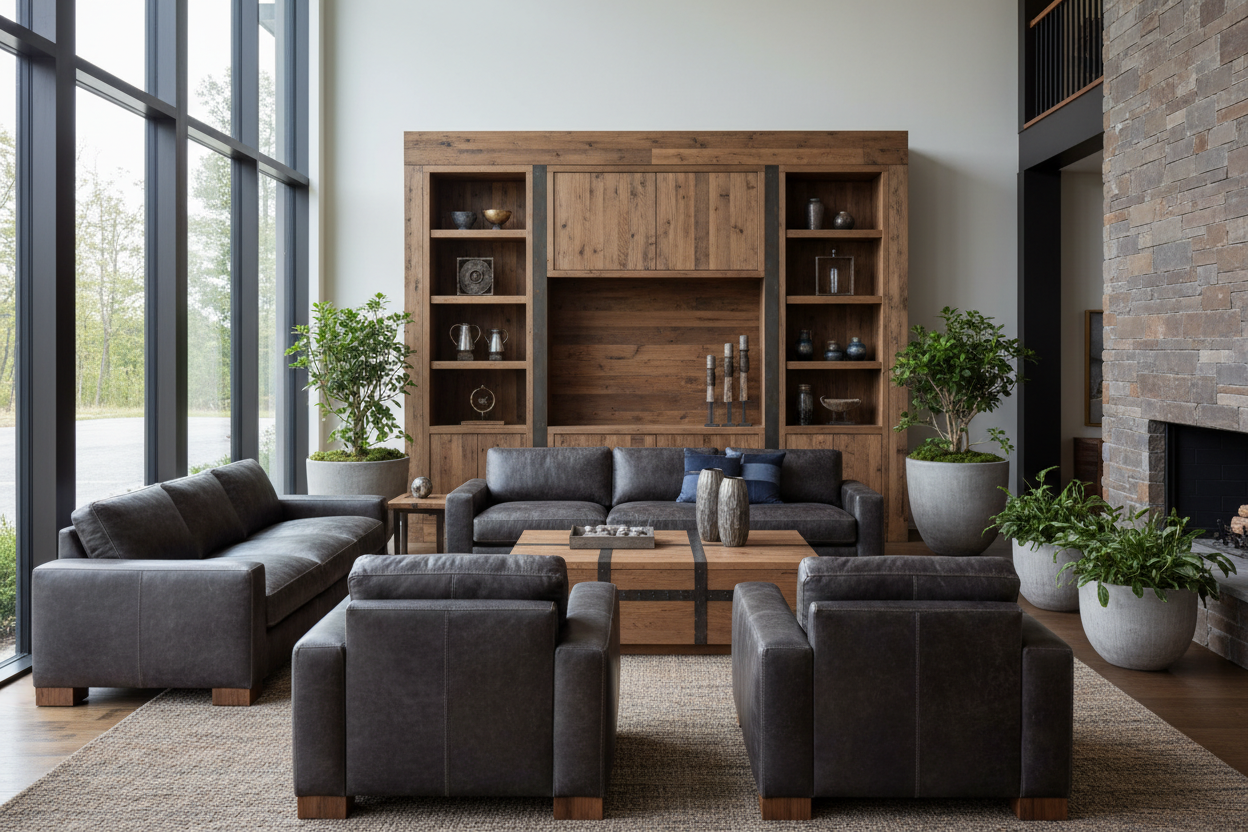
We have all been there: You purchase a sofa that looks stunning in the showroom, only to find the cushions sagging and the frame creaking less than two years later. As an interior designer, I see this constantly. The solution isn't just spending more money; it is knowing exactly how to identify structural integrity. Investing in heavy-duty living room furniture sets is about securing the visual anchor of your home for the next decade, not just the next season. Let’s bypass the marketing fluff and look at what actually makes furniture last.
Key Features to Look For
- Frame Material: Look for kiln-dried hardwood (maple, oak) or reinforced metal frames rather than particleboard or soft pine.
- Joinery Techniques: Corner-blocked, double-doweled, and glued joints offer superior stability compared to staples.
- Suspension System: Eight-way hand-tied springs or heavy-gauge sinuous springs prevent sagging over time.
- Cushion Density: High-resiliency foam with a density of 2.0 lbs or higher ensures the seat retains its shape.
- Fabric Durability: Check the "double rub" count; heavy-duty usage requires 15,000+ rubs (Wyzenbeek test).
Analyzing the Skeleton: Frame Construction
When I walk a client through a showroom, I tell them to lift one front corner of the sofa. If the other front leg doesn't rise immediately, the frame is too flexible and weak. For true heavy duty living room furniture sets, the frame is the non-negotiable foundation. You want kiln-dried hardwood. The kiln-drying process removes moisture, preventing the wood from warping or cracking as humidity levels change in your home. While engineered plywood can be durable if it is 7-ply or higher, solid hardwood remains the gold standard for longevity.
The Science of Seating Support
What happens underneath the fabric determines how the piece feels five years from now. In the design world, we often debate the merits of eight-way hand-tied springs versus sinuous wire. For heavy-duty requirements, eight-way hand-tied is traditional and incredibly supportive, distributing weight evenly across the seat. However, modern heavy-gauge sinuous springs (S-shaped wires) reinforced with steel bands can also provide exceptional durability at a slightly lower price point. Avoid web suspension alone; it simply does not offer the requisite tensile strength for heavy daily use.
Upholstery and Performance Fabrics
Durability extends to the surface. A reinforced frame is useless if the fabric pills or tears. I always steer clients toward performance fabrics like Crypton or Sunbrella, or top-grain leathers. If you are looking at leather, ensure it is full-grain or top-grain. Bonded leather is essentially a synthetic slurry on a paper backing and will peel. For fabric, ask for the "double rub" count. A rating over 30,000 is considered commercial grade and will withstand pets, kids, and heavy traffic effortlessly.
Balancing Visual Weight with Physical Strength
A common misconception is that durable furniture must look bulky or industrial. This is false. You can find reinforced joinery in sleek, mid-century modern silhouettes. The trick is to look for metal legs that are integrated into the frame or wood legs that are part of the chassis, rather than screwed in as an afterthought. When styling these robust pieces, balance their substantial nature with lighter accents—glass coffee tables or raised lighting—to keep the room from feeling claustrophobic.
Lessons from My Own Projects
I want to share a specific realization I had while installing a project for a family of five (plus two Great Danes). We ordered a custom, reinforced sectional that was marketed as "indestructible." When the delivery team arrived, they nearly refused to carry it up the stairs because the individual modular pieces were so dense. That weight was actually a quality indicator.
However, here is the unpolished truth I learned six months later: while the frame was a tank, the "heavy-duty" textured weave we chose acted like a magnet for dog hair. It was physically strong but functionally a nightmare to clean. The weave was too open. Since then, I advise that structural durability must be paired with surface practicality. Now, I carry a small velcro hook in my bag to test fabrics; if it snags easily on the velcro, it’s not truly heavy-duty, regardless of what the label says.
Conclusion
Selecting furniture is an investment in your home's future comfort. By prioritizing kiln-dried frames, high-density foam, and performance textiles, you ensure your living room remains a sanctuary rather than a source of frustration. Don't settle for disposable décor; choose pieces built to handle life.
Frequently Asked Questions
What is the minimum foam density for heavy-duty cushions?
Standard cushions often use 1.8 lb density foam. For heavy-duty performance, look for High Resiliency (HR) foam with a density of 2.0 to 2.5 lbs. This ensures the cushion bounces back immediately after use and resists cratering.
Can heavy-duty furniture still look elegant?
Absolutely. Durability comes from internal construction (joinery and springs), not external bulk. Many luxury brands offer reinforced frames with delicate, tailored silhouettes and velvet-like performance fabrics that look sophisticated while being incredibly tough.
How do I measure to ensure these sets fit through my door?
Heavy-duty sets often have rigid backs that don't detach. Measure the height and width of all doorways and hallways. Compare this to the furniture's diagonal depth (the measurement from the top back corner to the bottom front leg). This diagonal measurement must be smaller than your door width.

Leave a comment
This site is protected by hCaptcha and the hCaptcha Privacy Policy and Terms of Service apply.