










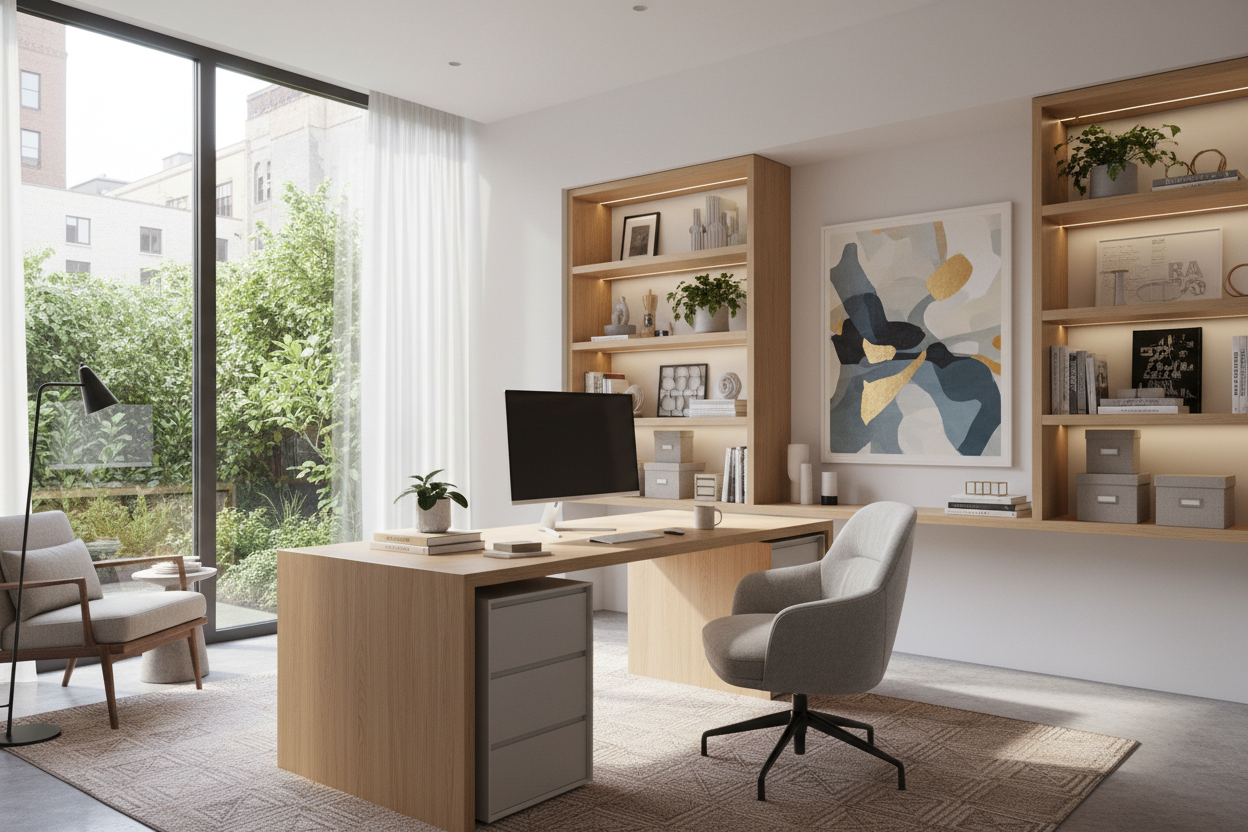
For years, many of us treated the home workspace as an afterthought—a laptop on the dining table or a cramped desk shoved into a guest room corner. But when your workspace lacks intention, it drains your focus. If you are struggling with a room that feels chaotic or a desk setup that leaves your back aching, exploring practical home office interior ideas is the first step toward a better workday.
In this guide, I will walk you through how to plan a layout, select furniture that actually supports your body, and create a visual aesthetic that looks professional on video calls without feeling sterile.
Quick Decision Guide
- Prioritize the desk placement first; ideally, position your monitor perpendicular to a window to reduce screen glare.
- Leave at least 36 to 42 inches of clearance behind your desk to comfortably roll your chair in and out.
- Do not compromise on ergonomics for aesthetics; a vintage wooden chair might look stunning, but it will ruin your posture by noon.
- Incorporate closed storage for paperwork and messy tech, leaving open shelving strictly for curated, inspiring decor.
Space Planning and Layout Strategies
When researching office home design ideas, the biggest mistake people make is buying furniture before measuring their functional footprint.
Nailing the Clearances
A standard North American bedroom-turned-office is usually around 10x10 feet. If you float your desk in the middle of the room—a popular executive look—you need substantial breathing room. Ensure you have 48 inches between the desk and the wall behind you if you plan to add a credenza. If space is tight, anchoring the desk to a wall is perfectly fine, but try to face the door so you do not feel boxed in.
Zoning the Room
If you have the square footage, create distinct zones. A primary workstation for computer tasks and a secondary soft seating area—like a tailored armchair—gives you a place to read or take phone calls. This approach is a staple in high-end home office interior design because it breaks up the monotony of sitting in one spot all day.
Ergonomics Over Aesthetics
The Desk and Chair Relationship
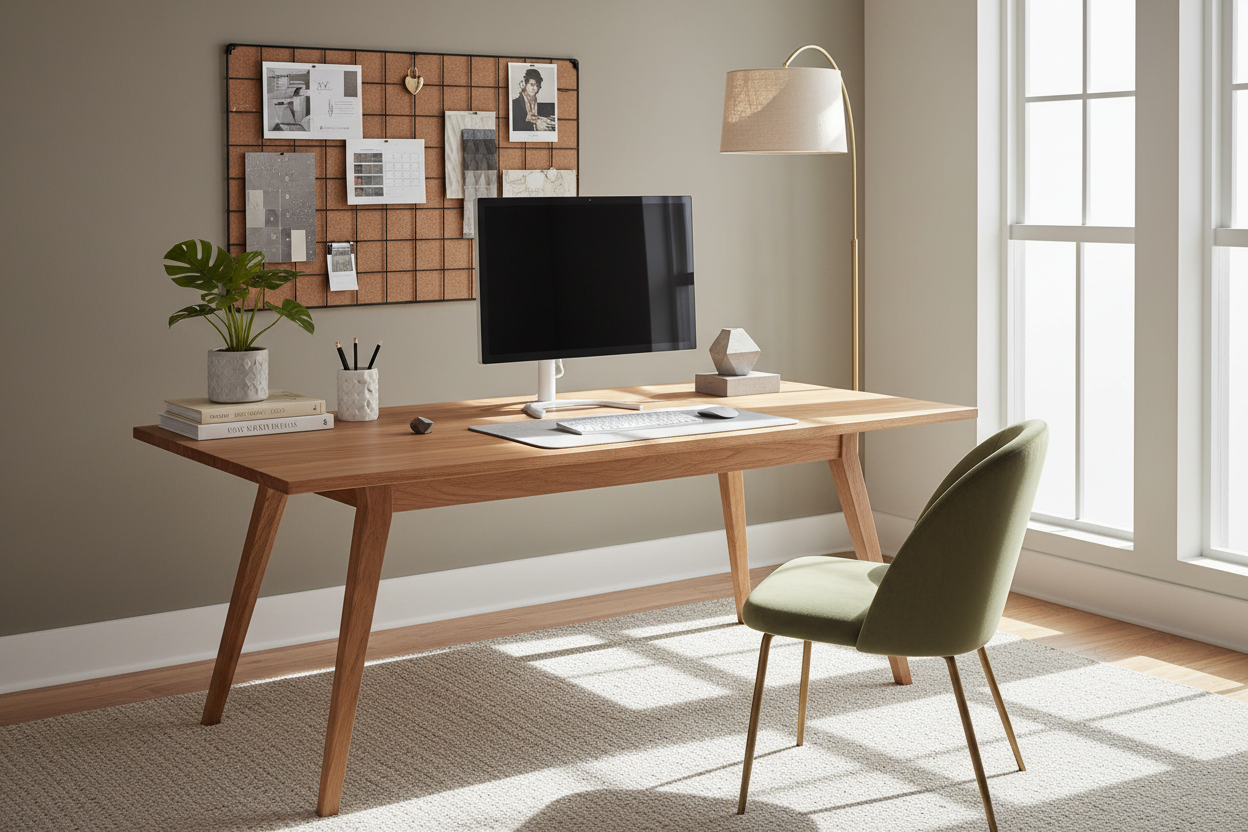
It is easy to get swept up in beautiful office home furniture ideas, but your physical comfort dictates how long you can actually use the room. The standard desk height is 29 to 30 inches, which is surprisingly too high for many people unless they use a keyboard tray or an adjustable chair with a footrest. When selecting a chair, look for adjustable lumbar support, seat depth, and armrests. If you prefer a highly stylized chair, consider pairing it with an adjustable-height standing desk so you can frequently shift your posture.
Style and Visual Coordination
Taming the Tech Clutter
Nothing ruins good interior design home office ideas faster than a tangle of black cords. To maintain a clean aesthetic, plan your cable management from day one. Drill grommet holes in custom millwork, use under-desk cable trays, and opt for wireless peripherals whenever possible. When executing interior design office at home, I always specify a power strip mounted directly underneath the desk surface so only one thick cord runs to the wall outlet.
Designer's Honest Take
Over the last 15 years, I have designed dozens of home workspaces, and I have made my share of mistakes. Early in my career, I specified a gorgeous, matte-black linoleum desk for a client's modern office. It looked incredibly sleek on installation day. However, within a week, every single fingerprint, dust particle, and coffee mug ring showed up like a beacon. We ended up having to commission a custom leather desk pad just to keep the surface looking presentable during client meetings.
I also learned that while built-in, wall-to-wall cabinetry looks highly customized, it locks you into a specific layout. If you ever upgrade to a larger dual-monitor setup or a wider standing desk, fixed millwork can suddenly become a major constraint. When browsing home office interior design ideas, remember that flexibility often beats permanence.
Frequently Asked Questions
How do I make a small home office feel bigger?
Maximize vertical space by installing floating shelves up to the ceiling. Paint the walls and trim the same color to blur the room's boundaries, and choose a desk with visually light legs (like metal hairpins or acrylic) rather than a heavy, solid wood pedestal base.
What is the best lighting for a home office?
Layered lighting is essential. Rely on natural light during the day, add a focused task lamp on your desk for reading, and use ambient overhead or floor lamps to reduce eye strain when looking at bright monitors in the evening.
Can I put a desk in my living room without ruining the decor?
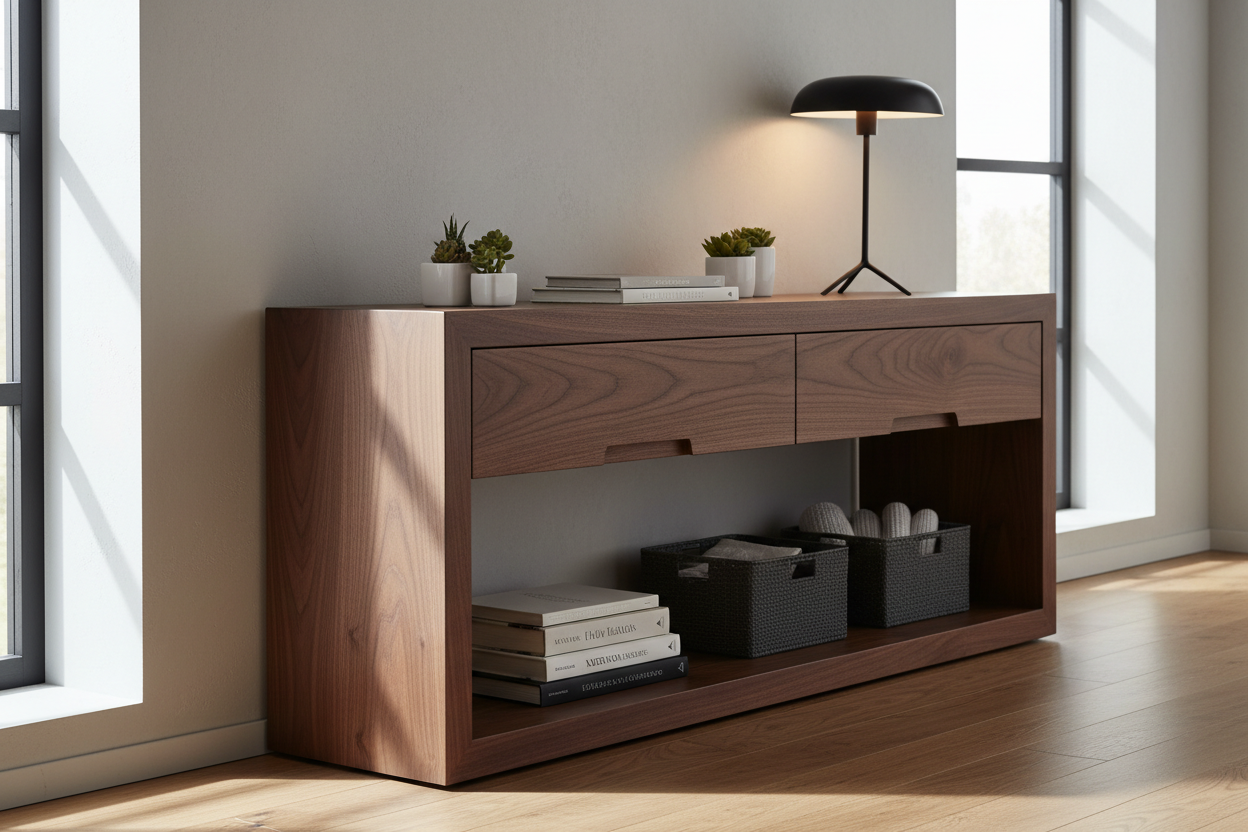
Absolutely. Look for a desk that mimics a console table when not in use. Choose finishes that match your living room's existing wood tones, and use a stylish dining or accent chair that blends with the room rather than a bulky, black ergonomic office chair.

Leave a comment
This site is protected by hCaptcha and the hCaptcha Privacy Policy and Terms of Service apply.