










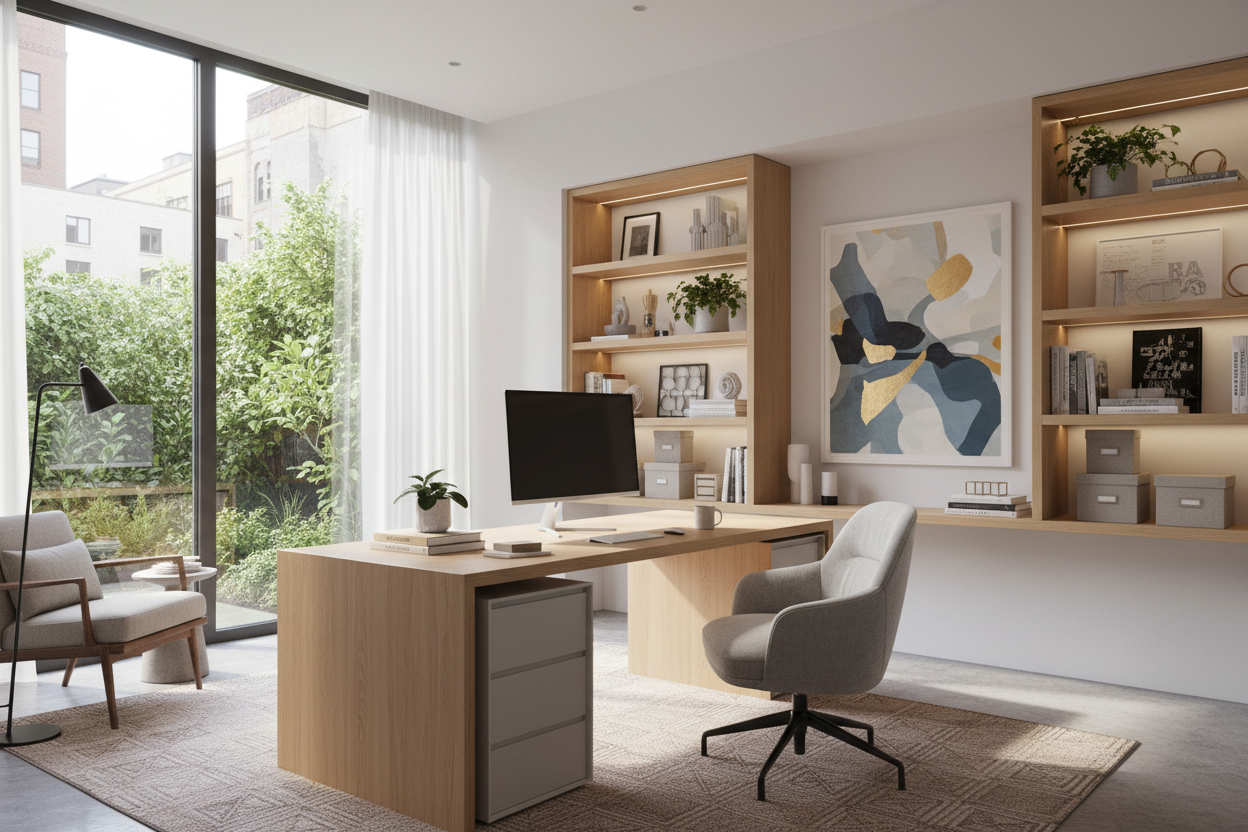
We often treat workspaces as purely utilitarian, ignoring the impact of aesthetics on our cognitive load. However, a chaotic surface leads to a chaotic mind. The challenge lies in creating a vignette that inspires creativity without sacrificing the utility required for the task at hand. When selecting the right room decor desk elements, the goal is not merely decoration; it is about curating a balance between negative space, texture, and ergonomic flow.
Quick Decision Guide: Styling Essentials
Before purchasing accessories or organizers, consider these foundational elements to ensure a cohesive look that functions beautifully:
- Scale & Proportion: Ensure decor items (lamps, plants) do not consume more than 20% of the active work surface.
- Material Contrast: If your desk is wood, opt for metal or ceramic organizers to add tactile depth.
- Lighting Temperature: Choose 3000K-4000K bulbs for task lighting to reduce eye strain while maintaining warmth.
- Vertical Utilization: Use wall shelves or risers to keep the primary "reach zone" clear of non-essentials.
Establishing Visual Weight and Balance
In interior design, every object carries "visual weight." A dark, chunky stapler feels heavier than a clear acrylic pen holder. When planning your layout, avoid clustering all heavy items on one side, which can make the desk feel ready to tip over visually.
Choosing the Right Materials
The surface of your desk dictates the decor you should choose. For a rich walnut or mahogany desk, I recommend brass or matte black accents to modernize the traditional grain. If you are working with a glass or white lacquer surface, introduce organic elements—like a woven leather blotter or a wooden tray—to ground the space and prevent it from feeling too clinical.
Ergonomics Meets Aesthetics
Styling room decor for desk setups often ignores the user's physical needs. Your monitor height and reach radius should dictate where decor lives. Place purely decorative items, such as sculptural art or framed prints, in the "tertiary zone" (the back corners of the desk), leaving the primary zone strictly for functional tools.
The Importance of Negative Space
In a showroom, we specifically leave empty space to let the furniture breathe. At home, you must do the same. Resist the urge to fill every square inch. A clear 18-inch semi-circle directly in front of your chair is non-negotiable for comfortable writing and typing.
Lessons from My Own Projects: The Texture Trap
I want to share a specific mistake I made early in my career so you don't have to. I once sourced a stunning, rough-hewn reclaimed oak desk for a client who was a graphic novelist. Visually, it was a masterpiece—rustic, warm, and full of character.
However, within a week, the client called me. The texture that looked so beautiful in the showroom was a nightmare for drawing; his sketchpad wouldn't lay flat, and the uneven surface caught dust that was impossible to wipe away without a vacuum. We had to rush-order a custom thick leather desk pad to create a usable surface. Now, whenever I curate a room decor desk scenario, I always run my hand across the surface first. If it isn't smooth enough to sign a check on, it needs a blotter or glass top immediately. Practicality must always support the aesthetic.
Conclusion
Elevating your workspace doesn't require a complete renovation. By focusing on material contrast, respecting negative space, and learning from tactile limitations, you can create a desk that serves as a sanctuary for focus. Start with one focal point—perhaps a sculptural lamp—and build your narrative around it.
Frequently Asked Questions
How do I hide cables while maintaining a stylish look?
Cable management is crucial for a luxury aesthetic. Use decorative boxes designed to house power strips, or route cables down the leg of the desk using color-matched Velcro sleeves. Never let wires dangle freely; it ruins the visual silhouette.
What is the best way to add color without painting the room?
Introduce color through functional textiles. A high-quality felt desk mat, a velvet chair cushion, or a colorful ceramic planter can shift the mood of the workspace without requiring permanent changes.
Can I mix metal finishes on my desk?
Yes, mixing metals adds sophistication, but follow the 80/20 rule. Choose one dominant metal (e.g., matte black) for 80% of the items, and use a contrasting metal (e.g., brass) for the remaining 20% to create a deliberate highlight.


Leave a comment
This site is protected by hCaptcha and the hCaptcha Privacy Policy and Terms of Service apply.