










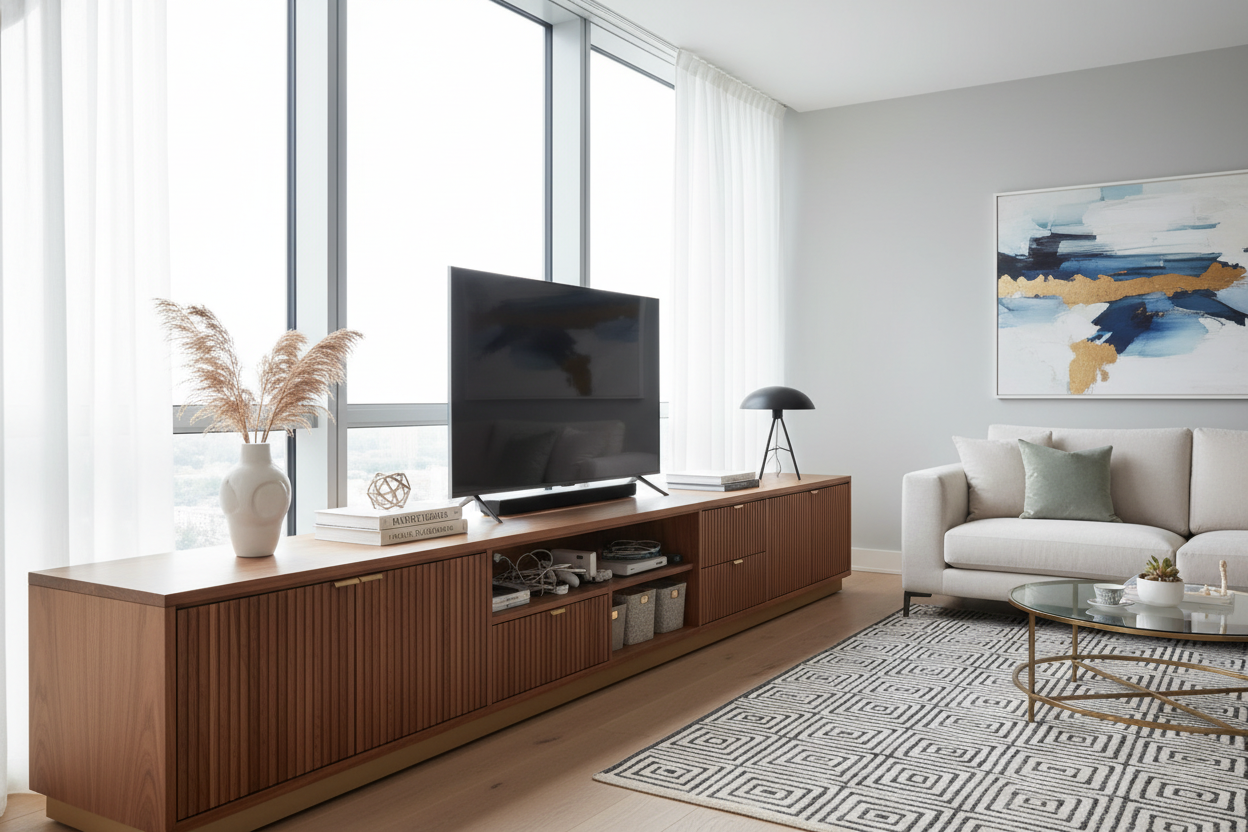
I spent three years staring at a tangle of black cords that looked like a nest of snakes behind my TV. No matter how many velcro ties I used, the router still sat there, blinking its judgmental green eyes at me from a tiny, cramped stand. It wasn't until I finally ditched the 'standard' size for a long entertainment unit that my living room actually felt like an adult lived in it.
We have this weird habit of buying furniture that is exactly as wide as our TV. It makes the whole setup look top-heavy and temporary. When I finally went wide—I'm talking wall-to-wall wide—the visual clutter just vanished. The room didn't feel smaller; it felt anchored.
- Horizontal lines trick the eye into thinking the wall is wider than it is.
- Closed storage is the only way to survive the 'cord apocalypse.'
- A unit should be at least 12 inches wider than your TV on each side.
- Reinforced center legs are non-negotiable for pieces over 70 inches.
The Floating Router Problem (Why Standard Stands Fail)
Standard stands are built for the TV, not for the reality of 2024. Between the soundbar, the PlayStation, the mesh router, and that one mysterious power brick no one knows the origin of, a basic long tv table is usually overmatched. I realized that my old open-shelf setup was basically a gallery for my worst junk. I needed to hide the mess, which is why wide storage cabinet with drawers became my new obsession.
The 'visual anxiety' of seeing a router perched on a shelf is real. When your furniture is too short, you end up with 'cord waterfalls' cascading down the sides. A long tv unit solves this by providing enough internal real estate to house a power strip inside the cabinet itself. No more visible plugs. No more dust bunnies congregating around the surge protector.
The Magic Math of Stretching Your Layout
There is a weird optical illusion that happens with a long tv console with storage. In my 12x14 living room, I thought a massive piece of furniture would swallow the space. Instead, it did the opposite. By creating one continuous horizontal line across the wall, it pushed the boundaries of the room outward. It’s the same reason designers tell you to use a large rug instead of a small one.
If you are dealing with an awkward wall or a fireplace offset, a modern TV console cabinet with modular or adjustable sections can save your sanity. It allows you to customize the length to hit that 'sweet spot'—usually about 75% of the wall's total width. This grounding effect makes the ceiling feel higher and the floor plan feel intentional rather than cluttered.
What I Look For Before Going Wide
Going big means more surface area to collect dust, but it also means more opportunities for structural failure. I’ve seen cheap MDF units sag in the middle after just six months because they weren't built to handle the span. You want weight-bearing capacity, not just length.
Doors vs. Open Shelving (Hide the Mess!)
I am a firm believer that open shelving is a trap set by people who don't own things. A long tv cabinet with solid doors is a sanctuary. Behind mine, I have board games, three spare throw blankets, and a graveyard of HDMI cables. A long cabinet under tv needs to be a workhorse, not just a pedestal.
When shopping, look for a large TV cabinet with spacious storage that specifically mentions cable management cutouts. If the back panel is solid with no holes, you're going to end up drilling into it yourself, and it’s never as clean as the factory finish. Deep shelves are a must—aim for at least 15 inches of depth if you plan on hiding a gaming console.
Making Sure It Actually Supports the Screen
If you are looking at a tv bench long enough to span eight feet, check the legs. Any unit over 60 inches should have a fifth or sixth support leg in the center. Without it, the 'smile' effect is inevitable—where the middle of the unit bows under the weight of the TV. I once bought a gorgeous mid-century piece that lacked center support; within a year, the doors wouldn't close because the frame had warped. Don't make my mistake.
My Favorite Way to Style the Empty Surface
The best part of a long under tv cabinet is the extra surface area. Most people make the mistake of centering the TV and then flanking it with two identical lamps. Don't do that. It looks like a hotel lobby. I prefer asymmetrical styling. Put the TV slightly off-center, then balance the other side with a tall plant or a stack of oversized coffee table books.
Leaning art is another great trick. It covers the cords that might be peeking out from the TV's input panel and makes the tech feel integrated into the decor. If you're still hunting for the right fit, browse a collection of TV stands to see how different widths change the vibe of a room. Just remember: when in doubt, go wider than you think you need.
FAQ
Is a long TV stand okay for a small room?
Yes. Counterintuitively, a long unit makes a small room feel bigger by creating a long, unbroken horizontal line. It reduces visual 'choppiness' that comes from having multiple small pieces of furniture.
How much wider should the stand be than the TV?
Aim for at least 6 to 12 inches of overhang on each side. If your TV is 55 inches wide, a 70-inch or 80-inch stand will look balanced. Anything less looks like the TV is about to fall off.
How do I hide cords if the unit has legs?
Use adhesive cable clips to run the wires down the back of the center support leg. If you have a lot of cables, a fabric cable sleeve that matches your wall color is a life-saver.
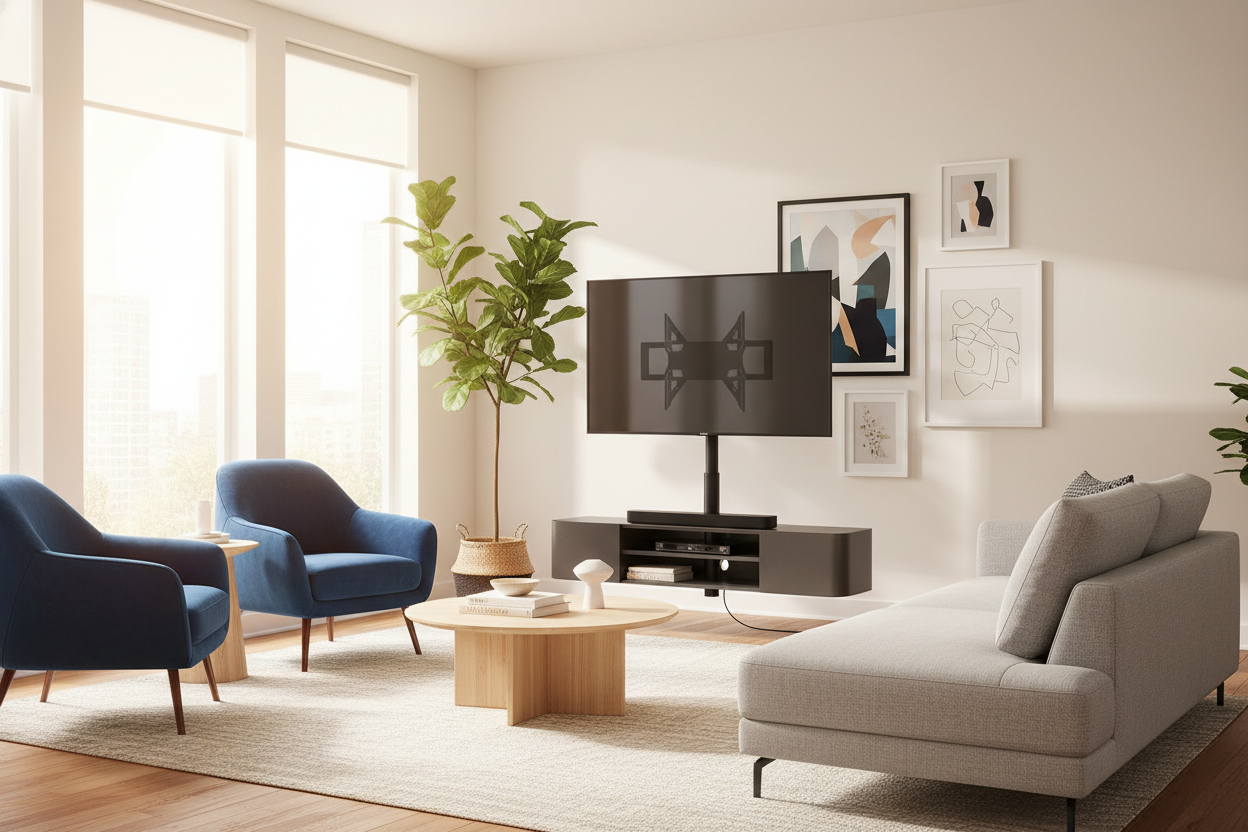
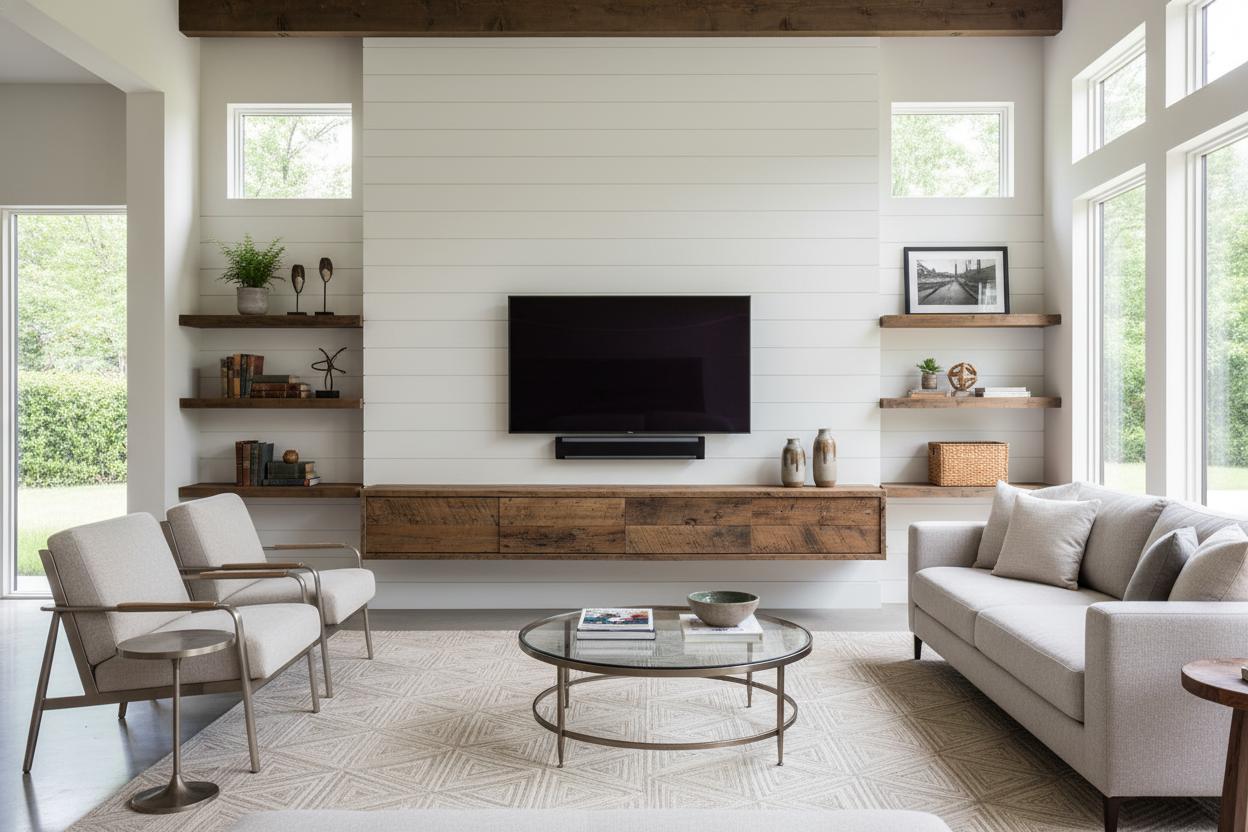

Leave a comment
This site is protected by hCaptcha and the hCaptcha Privacy Policy and Terms of Service apply.