










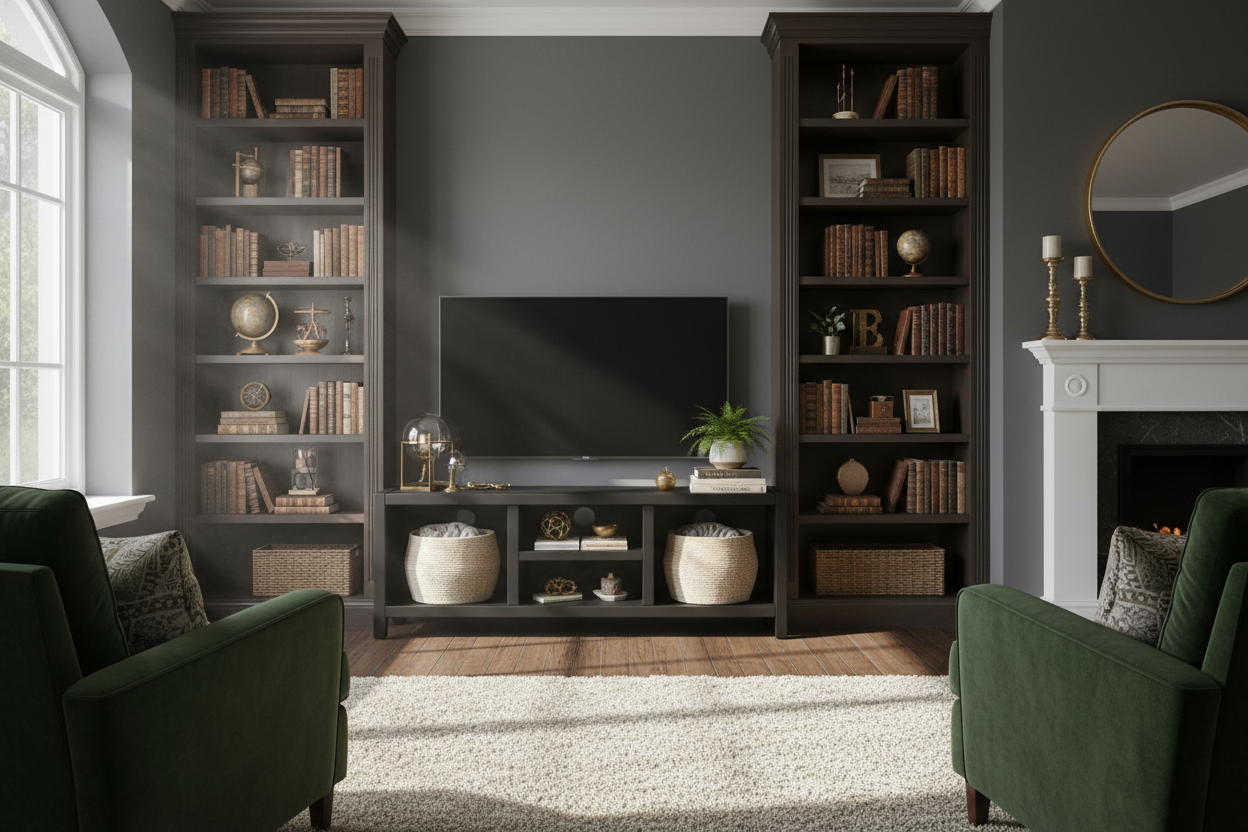
I remember staring at my living room wall for three hours, clutching a tape measure and a lukewarm coffee. I’d just ordered a tv stand 55 inch black, and the panic was setting in. Would it look like a sophisticated anchor for the room, or was I just inviting a massive shadow to live under my television?
We’ve all been there—scrolling through 50 tabs of media units at 2 AM, trying to figure out if that sleek obsidian finish is actually going to show every single fingerprint and speck of dust. Spoiler: it will. But after living with one for three years, I’ve realized that the 'void' is actually a design opportunity, not a mistake.
- Avoid flat, glossy finishes that look like plastic; go for matte or visible wood grain.
- Use warm-toned accessories like brass hardware or clay pots to break up the dark surface.
- Negative space is your friend—don't clutter the top, but don't leave it naked either.
- Texture on the cabinet doors helps the piece catch light instead of absorbing it.
The 'Double Black Hole' Problem (And Why I Did It Anyway)
The fear is real. When you pair a black screen with a black 55 tv stand, you risk creating a giant dark rectangle that sucks the light out of your living room. It’s the 'Double Black Hole' effect. For a while, I tried to play it safe with white furniture, but it always felt a little too much like a sterile clinic or a temporary dorm room setup.
I wanted something that felt substantial. During my initial search for modern freestanding TV stands, I realized that black furniture provides a visual weight that light wood just can’t match. It grounds the room. The trick isn't trying to hide the darkness; it's learning how to style it so it looks intentional rather than just heavy and forgotten in the corner.
Texture Is the Secret to Making Black Furniture Work
If you buy a flat, high-gloss black box, it’s going to look cheap. Period. I’ve made that mistake before with a laminate unit that ended up looking like a piece of 90s office equipment. You need something with a soul—visible wood grain, fluted details, or slatted doors that create shadows and highlights as the sun moves across the room.
I eventually landed on a stylish black TV stand entertainment center that used texture to its advantage. When the afternoon sun hits those textured panels, the light bounces off the ridges instead of disappearing into them. It stops being a 'black hole' and starts looking like a piece of architecture. If the light can't 'grab' onto anything on the surface, the piece will always look flat and lifeless.
Why I Stopped Trying to Make My Console Invisible
In my minimalist phase, I went the opposite direction. I bought the thinnest TV stand I could find, thinking that less was more. It was a disaster. My 55-inch screen looked like a billboard perched on a toothpick. It felt top-heavy and made me anxious every time the dog ran past it.
A solid black console provides a literal and figurative base. It tells the eye, 'The screen belongs here.' Yes, it’s a big piece of furniture, but by embracing the bulk, you actually make the room feel more settled. The key is to make sure the console is at least 10 inches wider than the TV itself. If the TV and the stand are the same width, you’ve failed the proportions test and the whole thing looks like a vertical monolith.
The Brass, Books, and Botanicals Formula
This is my ride-or-die styling method. To stop a dark console from feeling cold, you have to manually inject warmth. I look at warm oak TV stand designs with envy sometimes because that warmth is built-in, but with black, you have to work for it. It's about contrast, not camouflage.
Start with brass hardware. If your stand came with black handles, swap them out immediately for something metallic. Next, stack three or four oversized art books on one side—the white or colorful spines break up the black surface beautifully. Finally, add a trailing plant like a Pothos. The organic green against the stark black is one of the most satisfying color pairings in interior design. It softens the hard edges and makes the whole setup feel like it belongs in a home, not an electronics store showroom.
Does a black TV stand show a lot of dust?
Yes, absolutely. It’s the biggest downside. If you aren’t prepared to hit it with a microfiber cloth once a week, go with a lighter wood tone. Matte finishes are slightly more forgiving than gloss, but black is a magnet for every speck of lint in a five-mile radius.
Will a black stand make my small room look smaller?
Not necessarily. If you keep the walls light, the black stand acts as a focal point. It’s often better to have one bold, dark piece that grounds the room than a bunch of small, cluttered items that make the space feel busy and fragmented.
Should I get a stand that is exactly 55 inches wide?
No. A 55-inch TV is actually about 48 inches wide. You want a stand that is at least 58 to 60 inches wide so the TV has 'breathing room' on the sides. A stand that is exactly the same width as the screen looks cramped and top-heavy.

Leave a comment
This site is protected by hCaptcha and the hCaptcha Privacy Policy and Terms of Service apply.