










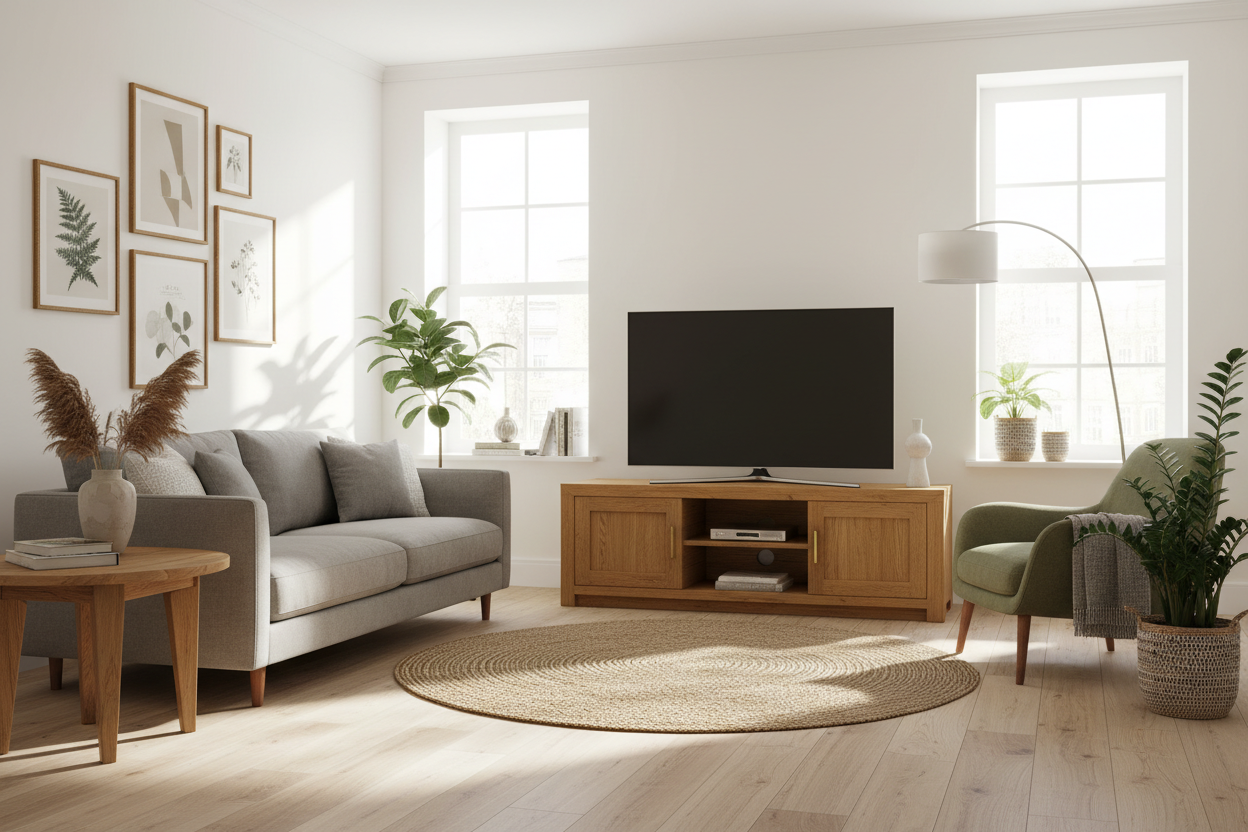
I remember unboxing my first 55-inch TV in a tiny studio apartment. I thought my old side table would handle it until I could 'get something real.' Wrong. The legs of the TV hung off the edges by a hair, and every time I walked past, the screen wobbled like a high-stakes Jenga tower. Finding a proper oak tv stand 55 inch screens actually fit on shouldn't be this hard, yet most of us end up with furniture that's just a few inches too short.
Quick Takeaways
- A 55-inch TV is actually about 48 inches wide; your stand should be at least 55-60 inches wide to look balanced.
- Natural oak hides dust and fingerprints significantly better than black glass or dark walnut.
- Solid wood backing is a must for cable management if you hate seeing a 'spaghetti mess' of wires.
- Always measure your wall space first—a massive console in a narrow walkway is a recipe for bruised shins.
The 'Overhang' Problem Nobody Warns You About
Most people make the mistake of buying a stand that is the exact same width as their TV. It sounds logical, but it looks terrible. When the edges of your screen line up perfectly with the edges of the wood, the whole setup feels precarious and top-heavy. It creates this weird visual tension, like a bodybuilder standing on a toothpick.
I've lived through the anxiety of a 'flush' setup. Not only does it look cheap, but it’s also a safety hazard if you have pets or kids. You need those extra few inches on the sides to act as a visual buffer. It grounds the TV and makes the screen feel like a deliberate part of the room rather than an oversized appliance you're trying to hide.
Why I Narrowed My Search to Warm Wood Tones
I went through a phase of buying stark black furniture because I thought it looked 'modern.' All it did was show every single speck of dust five minutes after I cleaned it. Plus, a giant black TV on a giant black stand makes your living room look like a Best Buy clearance aisle. It’s cold and uninviting.
Natural oak brings an organic, grounding warmth that balances the cold, black void of a modern television. It feels intentional. If you want to get really fancy with the layout, you can style an oak curved TV stand to break up the harsh straight lines of your walls and tech. The wood grain adds texture that plastic or MDF simply can't replicate, making the room feel like a home instead of a dorm room.
The Visual Math of an Oak TV Stand for 55 Inch TV Setups
Let’s talk numbers. A 55-inch TV refers to the diagonal measurement. The actual physical width is usually around 48 inches. To achieve the 'Golden Rule' of interior design—where the base is wider than the top to create a stable pyramid—you want a console that is at least 56 to 60 inches wide.
This extra width gives you room for a soundbar or a couple of curated objects like a ceramic vase or a small stack of books. Before you pull the trigger on a purchase, browse various TV stands and pay attention to the depth as well. If the stand is too shallow, your TV legs might sit dangerously close to the edge. I always look for at least 15-18 inches of depth to ensure everything stays centered and secure.
Hiding the Chaos (Because Cords Are the Enemy)
Nothing ruins the vibe of a beautiful oak console like a tangled nest of black power cords and HDMI cables peeking out from the bottom. I’ve tried those sticky plastic cord clips, and they inevitably peel off, taking the finish with them. It's a nightmare.
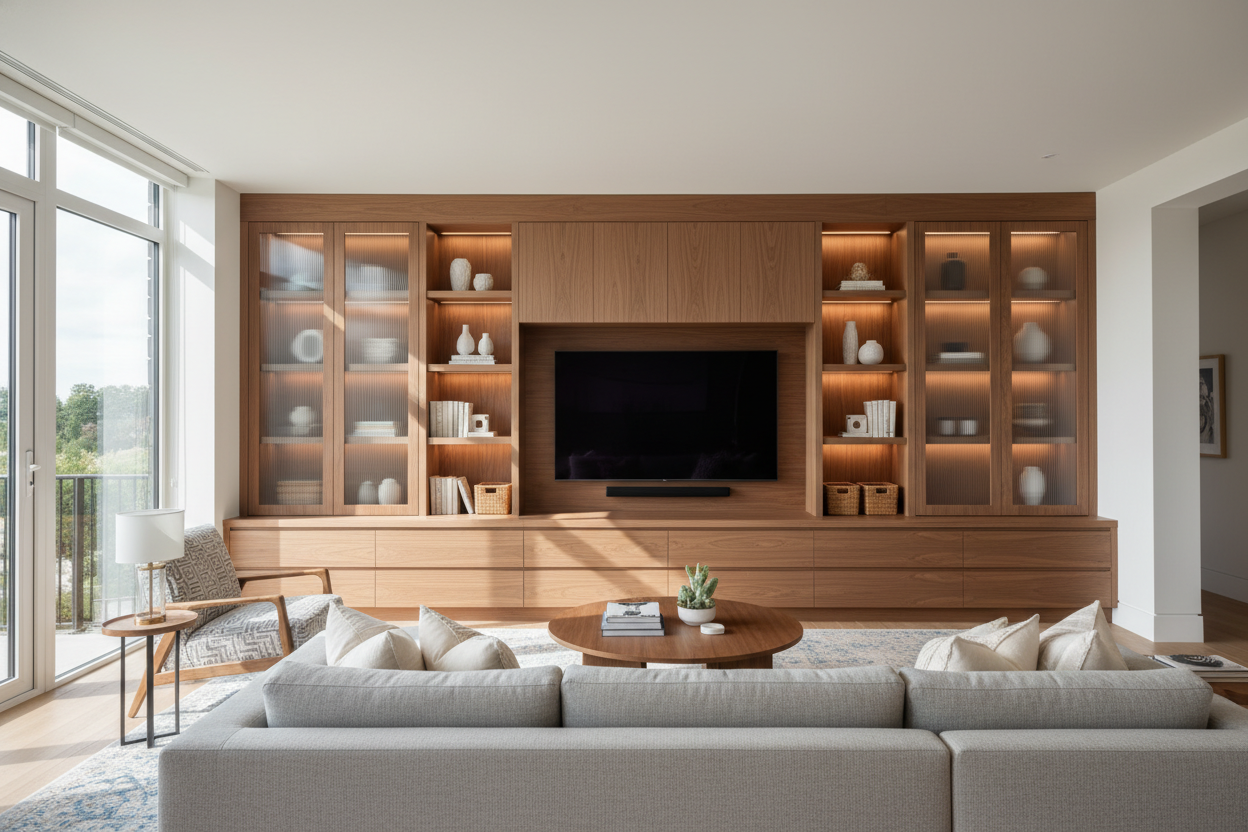
The best solution I’ve found is a solid wood back with dedicated cord cutouts. Avoid open shelving if you have more than one gaming console or a streaming box. You want doors—preferably soft-close ones—that can hide the plastic clutter while letting the natural beauty of the oak take center stage. It’s the difference between a room that looks 'decorated' and a room that just looks 'busy.'
What If You Simply Don't Have the Wall Space?
Sometimes the layout of an apartment just won't cooperate. If you're dealing with a weird corner or a wall that’s interrupted by a radiator, a 60-inch wide oak console might block your walking path. I've been there, trying to squeeze past a sharp corner every time I needed to get to the kitchen.
In those tight spots, you have to pivot. A hidden TV mechanism is a brilliant alternative for small or awkwardly shaped rooms. It allows you to keep your screen tucked away inside a cabinet when you're not using it, freeing up visual space and making the room feel much larger than it actually is.
Frequently Asked Questions
How high should my TV stand be?
For a 55-inch screen, you want the center of the TV at eye level when you're sitting on your sofa. Usually, this means a stand height of about 20 to 24 inches. If you have a low-profile sofa, go shorter. If you're a fan of the 'giant puffy couch,' you might need a bit more height.
Is solid oak better than oak veneer?
Solid oak is a tank—it will last decades but it's heavy and expensive. Oak veneer over high-quality plywood is often more stable in humid climates because it won't warp as easily. Just stay away from the cheap paper-thin veneers that peel at the corners after six months.
Will a 55-inch TV fit on a 50-inch stand?
Technically? Yes, the legs will probably stay on. Visually? No. It will look cramped and top-heavy. You'll regret it every time you sit down to watch a movie. Spend the extra money for those few inches of breathing room on the sides.


Leave a comment
This site is protected by hCaptcha and the hCaptcha Privacy Policy and Terms of Service apply.