










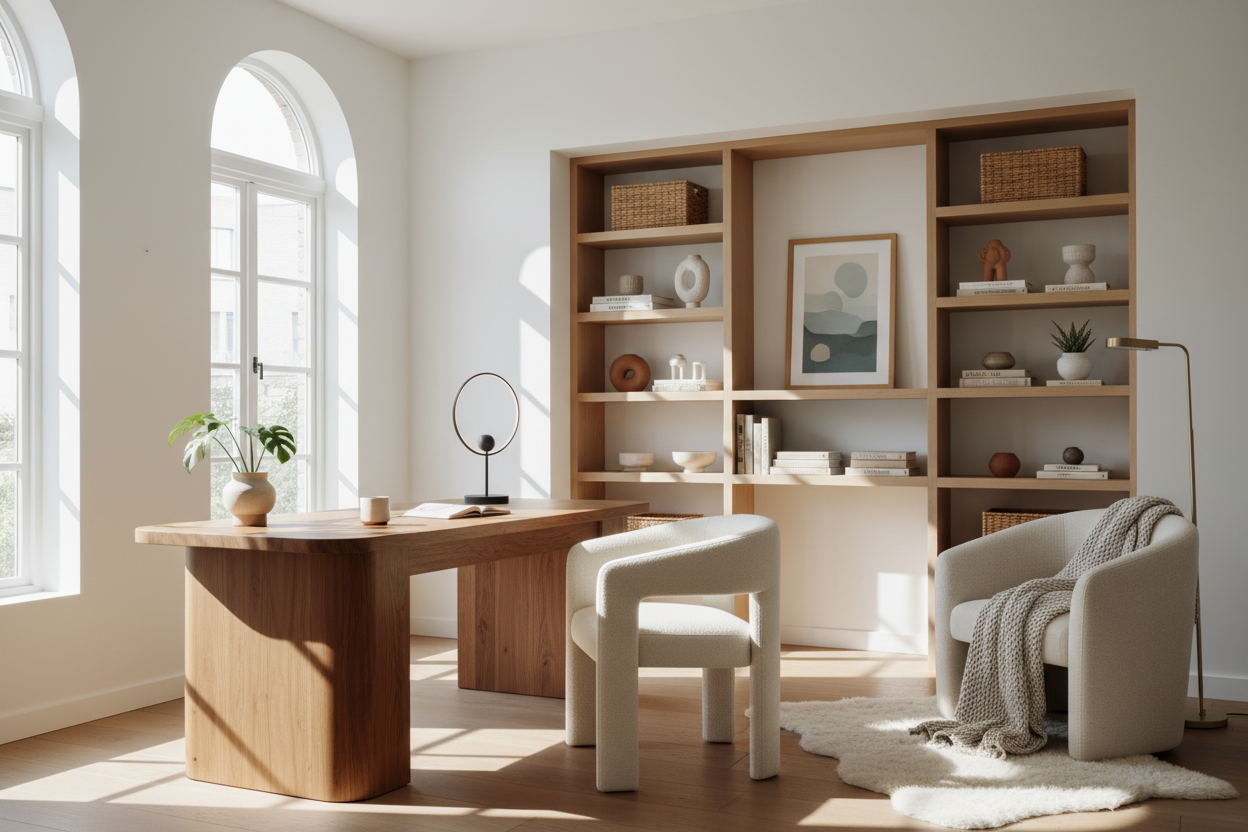
The difference between a sterile workstation and a productive sanctuary often lies in the layers. Staring at a flat, white wall or shifting constantly in a utilitarian chair kills creativity faster than a tight deadline. As designers, we often see clients prioritize function so heavily that they neglect the psychological impact of their environment. The goal is to curate cozy home office decor that softens the edges of your workday without sacrificing professionalism.
Key Elements for a Warm Workspace
- Layered Lighting: Combine warm ambient light (2700K-3000K) with focused task lighting to reduce eye strain and create depth.
- Tactile Materials: Prioritize natural wood grains, wool rugs, and linen drapery over high-gloss synthetics or cold metals.
- Ergonomic Softness: Look for task chairs that conceal mechanical structures with high-quality fabric or leather upholstery.
- Biophilic Accents: Integrate living plants or organic shapes to improve air quality and visual calmness.
Establishing the Foundation: Texture and Materiality
When we talk about cozy home office design, we are really discussing texture. A room filled with hard surfaces—laminate desks, plastic mats, metal filing cabinets—bounces sound and feels psychologically cold. To counter this, start from the ground up.
The Acoustics of Comfort
In a cozy office room, sound dampening is essential. A high-pile wool rug or a vintage Kilim doesn't just anchor the furniture visually; it absorbs the echo of typing and phone calls. Window treatments should follow suit. Swap aluminum blinds for Roman shades or floor-to-ceiling drapery. This adds a vertical layer of softness that immediately changes the room's acoustic profile.
Lighting: The Mood Setter
Lighting is the most underestimated tool in interior design. Avoid relying solely on overhead recessed cans, which cast unflattering shadows. Instead, layer your lighting to create pockets of warmth. A brass library lamp on the desk provides focused illumination, while a floor lamp with a linen shade in the corner creates a soft glow that makes late-night work sessions feel less harsh.
Solving the Small Space Dilemma
Designing a small cozy home office requires vertical thinking. When floor space is limited, heavy furniture makes the room feel claustrophobic rather than snug. Opt for floating shelves in rich walnut or oak to display books and personal artifacts. This draws the eye upward and keeps the footprint open. Use a desk with a slender silhouette—think mid-century modern legs rather than heavy pedestal bases—to maintain visual flow.
Curating Visual Balance
For genuine cozy home office inspo, avoid the temptation to over-decorate. Clutter induces anxiety, which is the antithesis of cozy. Select accessories with intention. A ceramic artisan mug for your pens, a leather desk blotter, or a single statement art piece creates a focal point without overwhelming the senses.
Lessons from My Own Projects: The "Pinterest Trap"
I feel compelled to share a specific mistake I made early in my career—and one I see homeowners make constantly. I was designing a study for a client who wanted the ultimate "cozy reading nook" vibe. I specified a deep, overstuffed velvet armchair as their primary desk chair. It looked incredible in the photos.
Three weeks later, the client called. Their back was killing them, and the velvet trapped heat, making it uncomfortable to sit in for more than an hour. The lesson? Never sacrifice ergonomics for aesthetics in a workspace.
Now, when I source for a project, I look for "hybrid" chairs. These are technically ergonomic office chairs (with lumbar support and adjustable height) but are upholstered in residential fabrics like tweed or boucle. I also learned the hard way that matte finishes on desks hide fingerprints and dust much better than glossy lacquer, keeping the space looking serene rather than messy.
Conclusion
Creating a workspace that feels like a retreat requires a delicate balance of soft textures and hard-working function. By layering your lighting, investing in tactile materials, and respecting the flow of the room, you can build a space that invites you in rather than pushes you away. Your environment dictates your output; make it a place where you actually want to be.
Frequently Asked Questions
How do I make a rental office feel cozy without painting?
Focus on textiles and lighting. Large area rugs cover cold rental flooring, and plug-in wall sconces or warm floor lamps can override harsh overhead lighting. Heavy curtains can also hide unappealing window frames.
Is a cozy home office design unprofessional for video calls?
Not at all. A curated background with bookshelves, plants, and warm lighting looks more sophisticated than a blank wall. Ensure your background is tidy; "cozy" should not mean "cluttered."
What is the best desk surface for a warm aesthetic?
Solid wood or high-quality wood veneer is superior. Walnut and white oak offer natural warmth and age beautifully. If real wood isn't in the budget, a high-quality leather desk pad can add that necessary tactile warmth to a laminate surface.

Leave a comment
This site is protected by hCaptcha and the hCaptcha Privacy Policy and Terms of Service apply.