










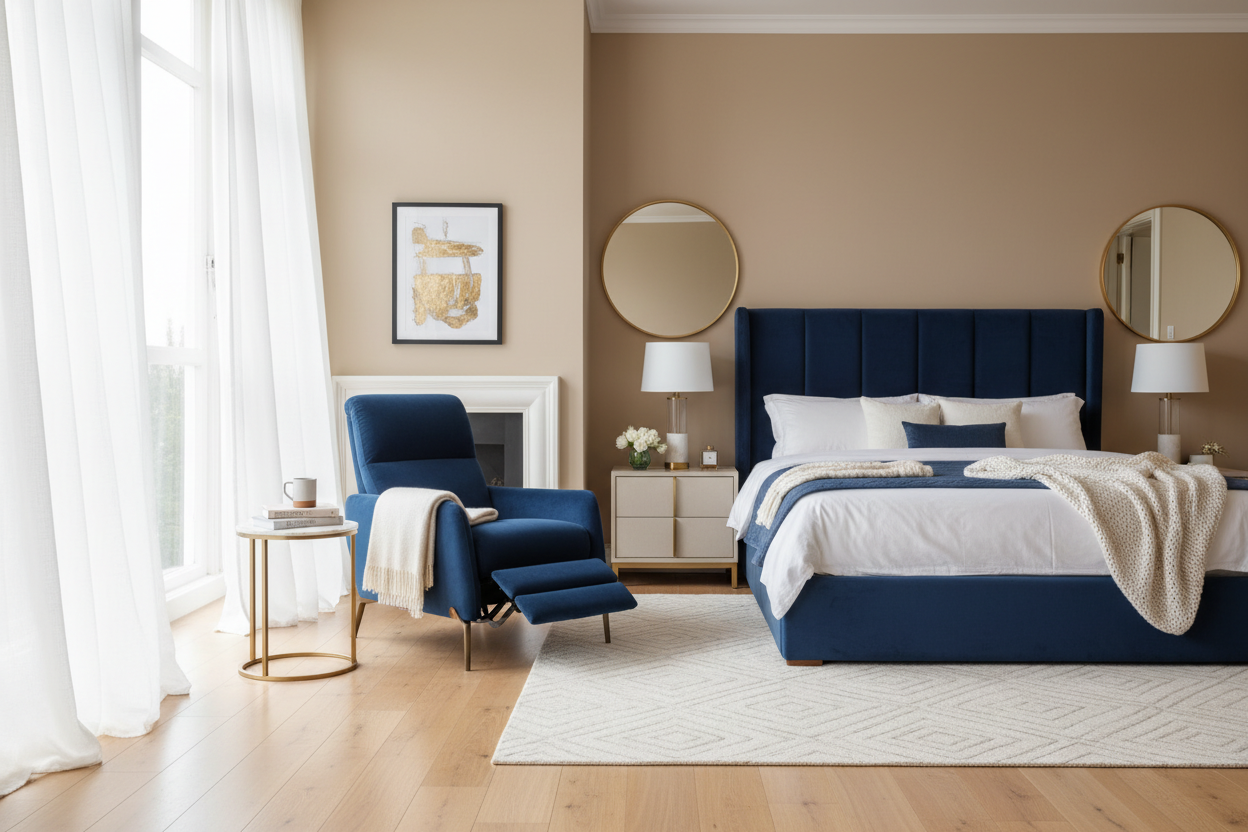
There is a persistent myth in the interior design world that comfort must come at the cost of aesthetics. This is rarely more debated than when discussing the addition of a **recliner chair bedroom** setup. Many homeowners fear that bringing a recliner into their sanctuary will turn a serene master suite into a clunky extension of a media room. However, as a designer, I can tell you that the modern furniture landscape has shifted. With the right silhouette and textile selection, a recliner can actually elevate the sophistication of your sleeping quarters while providing a functional reading nook or relaxation spot.
Key Features to Look For
Before committing to a purchase, consider these four critical pillars of design and function to ensure the piece complements your space rather than cluttering it:
- Wall Clearance: For bedrooms, prioritize "wall-hugger" mechanisms that require only 3-5 inches of clearance to fully recline, preserving valuable floor space.
- Visual Weight: Opt for designs with exposed legs or slender profiles to keep the room feeling airy; heavy, skirted bases can make a bedroom feel cramped.
- Upholstery Texture: Choose tactile, quiet fabrics like velvet, bouclé, or soft linen over cold leathers that may creak during movement.
- Mechanism Type: Decide between manual push-backs (cleaner look, no cords) vs. power recliners (infinite positions, requires an outlet).
Mastering Scale and Layout
The most common error I see with bedroom recliners is a disregard for scale. Unlike a living room, where furniture is expected to be substantial, a bedroom relies on tranquility and flow. A recliner for bedroom use should never compete with the bed, which is the natural focal point of the room.
When planning your layout, ensure there is at least 30 inches of walking space around the chair when it is in its un-reclined position. If you are placing the room recliner in a corner, angle it slightly toward the center of the room to create an inviting conversation area, rather than isolating it against the wall.
Choosing Materials for a Restful Ambiance
Texture plays a massive role in how a bedroom recliner chair is perceived. In a living area, we might prioritize performance leather for durability against spills. In the bedroom, however, the priority shifts to softness and acoustics.
I often advise clients to look for recliners for bedroom settings upholstered in high-performance velvets or chunky weaves. These materials absorb sound, contributing to the hushed atmosphere required for sleep. Furthermore, a lazy chair for bedroom relaxation should feel warm to the touch immediately; leather can often feel shockingly cold on bare skin in the morning or late at night.
The Balance of Form and Function
Gone are the days of the overstuffed, lever-operated monstrosities. Contemporary recliners in bedroom designs often disguise themselves as standard armchairs or wingbacks. High-leg recliners—those that look like stationary accent chairs until you push back—are particularly effective recliner in bedroom ideas.
When selecting a recliner chair for bedroom placement, pay close attention to the headrest. It needs to be high enough to support your neck while reading, but not so imposing that it blocks the line of sight across the room. Low-profile designs with pop-up headrests are an excellent compromise for maintaining visual balance.
Lessons from My Own Projects
I want to share a specific realization I had while designing a master suite for a client in Chicago. We had selected a stunning, high-end leather power recliner for a reading corner. Visually, it was perfect—a rich cognac hue that warmed up the grey walls.
However, two weeks after installation, the client called me with a regret I hadn't anticipated: the noise and the light. Every time her husband adjusted the position late at night, the mechanical whir of the motor was just loud enough to disturb her sleep, and the LED light on the control button (which many power recliners have) was acting like a beacon in the dark room.
We ended up swapping it for a manual, push-back recliner in a soft chenille. The lesson? In a bedroom, analog is often luxury. The silence of a manual push-back mechanism and the lack of glowing buttons preserved the sleep hygiene of the space. Now, when I specify a room recliners chair, I always check the decibel level of the motor and tape over LED indicators if we must use power.
Conclusion
Integrating a recliner into your sleeping space doesn't mean sacrificing style for comfort. By focusing on streamlined silhouettes, soft textures, and appropriate scale, you can create a private retreat that feels both luxurious and functional. Whether you choose a manual push-back or a sleek power model, the right chair will become your favorite spot to unwind.
Frequently Asked Questions
How much space do I need behind a bedroom recliner?
Standard recliners generally require 10 to 14 inches of wall clearance to fully recline. However, for bedrooms, I highly recommend "wall-hugger" or "zero-wall" models. These move the seat forward on a track as they recline, requiring as little as 3 to 5 inches of space behind the chair.
Is a manual or power recliner better for a bedroom?
While power recliners offer infinite positioning, manual recliners are often better suited for bedrooms. They eliminate the need for unsightly power cords trailing across the floor and are silent to operate, ensuring you don't wake a sleeping partner.
Can I put two recliners in a master bedroom?
Yes, if the square footage allows. A pair of recliners in bedroom settings works best when placed at the foot of the bed (if there is a seating area) or in a bay window. Ensure you place a small drink table between them to ground the arrangement and prevent the chairs from looking like floating islands.

Leave a comment
This site is protected by hCaptcha and the hCaptcha Privacy Policy and Terms of Service apply.