










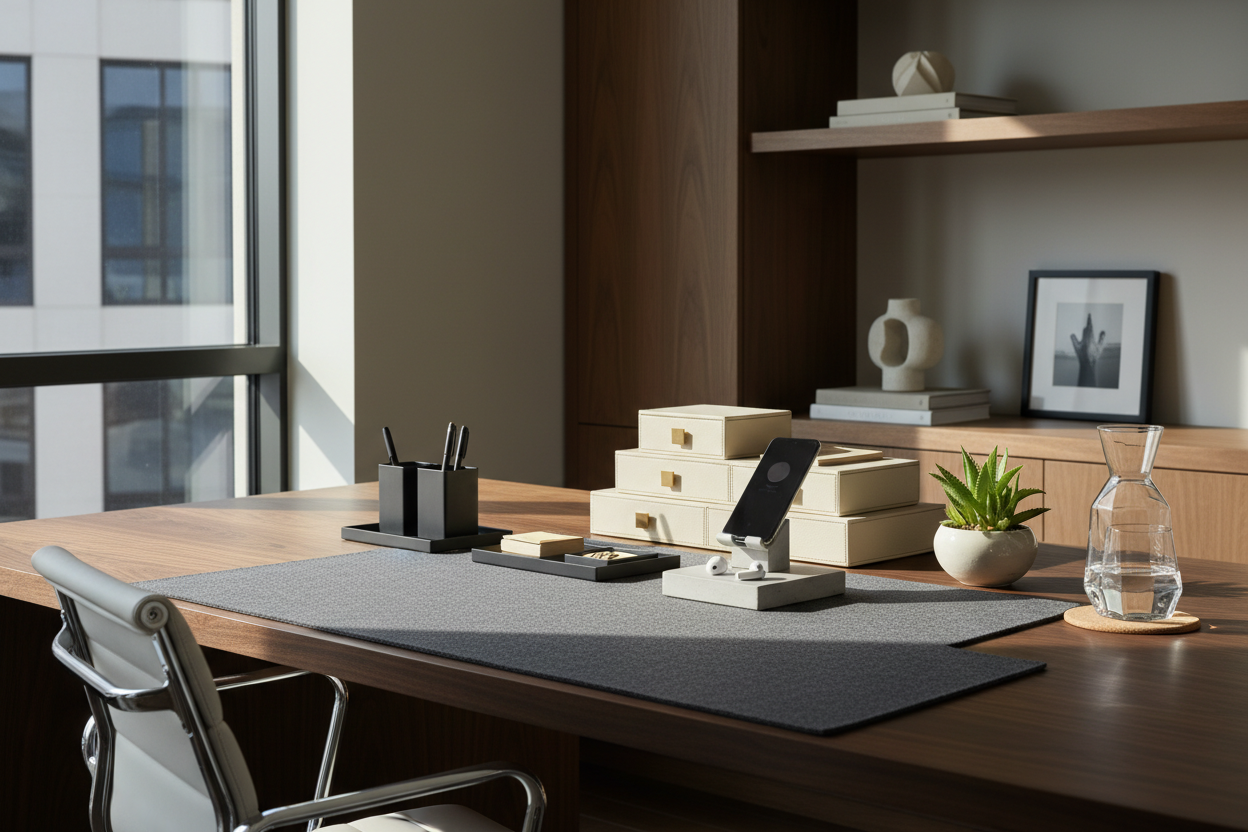
Visual noise is the silent killer of productivity. When I walk into a client’s home office, the first thing I assess isn’t the chair ergonomics or the lighting temperature—it’s the surface clutter. The difference between a chaotic drop zone and a curated workspace often comes down to selecting good desk organizers that bridge the gap between utility and sculpture. It is not merely about storage; it is about respecting the architecture of your desk and the flow of your daily tasks.
Key Features to Look For
Before investing in new accessories, consider these core elements to ensure longevity and style. This checklist effectively answers what should a desk organizer have to qualify as a premium addition to your space:
- Material Integrity: Prioritize solid woods, full-grain leather, or powder-coated steel over thin plastics to add visual weight and luxury.
- Appropriate Scale: The footprint must leave 40% of the desk surface clear to avoid a cramped aesthetic.
- Modularity: Separate trays often outperform all-in-one units, allowing you to customize the layout based on your dominant hand.
- Protective Base: Look for cork or felt bottoms to prevent scratching delicate veneer or glass desktops.
Choosing Materiality Over Utility
As a designer, I constantly steer clients away from the standard wire mesh options found in big-box stores. To find a top desk organizer, you must treat the accessory as a piece of furniture in its own right.
For executive spaces featuring heavy mahogany or walnut desks, leather-wrapped organizers provide a soft, tactile contrast that absorbs sound. If you are aiming for a modern, industrial look, concrete or matte aluminum offer a cool desktop organizer vibe that feels substantial. The goal is to match the finish quality of your desk. If your desk is solid oak, a cheap plastic bin will cheapen the entire room. Conversely, a brass tray on a lacquer desk elevates the vignette instantly.
The Ergonomics of Organization
Even the coolest desk organizers are useless if they impede your workflow. When planning the layout, I use the concept of 'reach zones.' Your primary tools—pens, current files, notepad—should be in the primary zone (within forearm reach). Secondary items belong in the periphery.
Many homeowners make the mistake of buying the ultimate desk organizer—usually a massive, tiered unit—only to realize it dominates their writing space. Instead, look for low-profile horizontal trays for papers and vertical vessels for writing instruments. This maintains a low center of gravity visually, keeping the room feeling open.
Curating the "Awesome" Factor
We often look for awesome desk organizers that act as conversation starters. This is where form meets function. Consider a vintage ceramic bowl for paperclips or a mid-century modern letter holder. By mixing vintage pieces with modern organizational systems, you create a collected, intentional look rather than a sterile corporate atmosphere.
My Personal Take on Good Desk Organizers
I learned a hard lesson early in my career regarding materials. I once specified a stunning, high-end clear acrylic organizer set for a client's glass desk. It looked invisible and chic in the photos. However, within three weeks, the client called me. The static charge from the acrylic was attracting dust like a magnet, and the daily friction of metal pens and staplers had left a web of micro-scratches that caught the light terribly.
Since then, I rarely recommend high-gloss clear acrylic for high-traffic zones. I now lean heavily toward felt, leather, or matte-finished wood. These materials develop a patina over time rather than looking worn out. They forgive the occasional ink mark and handle dust much more gracefully. It’s a small detail, but when you are sitting at a desk for eight hours, those tactile nuances dictate how premium the space feels.
Conclusion
Transforming your workspace requires a shift in perspective. View your organizers not as bins for junk, but as the infrastructure of your creativity. By selecting materials that age well and layouts that support your natural movement, you turn a mundane necessity into a design statement.
Frequently Asked Questions
How do I stop my desk organizers from sliding around?
This is a common annoyance. If your organizer doesn't come with a non-slip base, I recommend applying small silicone bumper pads or a sheet of adhesive velvet to the bottom. This adds friction and protects your desktop finish.
Should I mix and match materials or keep them uniform?
In high-end interior design, we love texture. However, for a desk, too much variety can look cluttered. Stick to a dual-texture palette—such as wood and brass, or leather and steel. This provides visual interest without the chaos.
What is the best way to organize cables on top of the desk?
Avoid plastic clips. Look for weighted cable blocks made of silicone or heavy metal. They sit on the desk surface and hold cables in place by weight rather than adhesive, allowing you to move them as your setup changes.


Leave a comment
This site is protected by hCaptcha and the hCaptcha Privacy Policy and Terms of Service apply.