










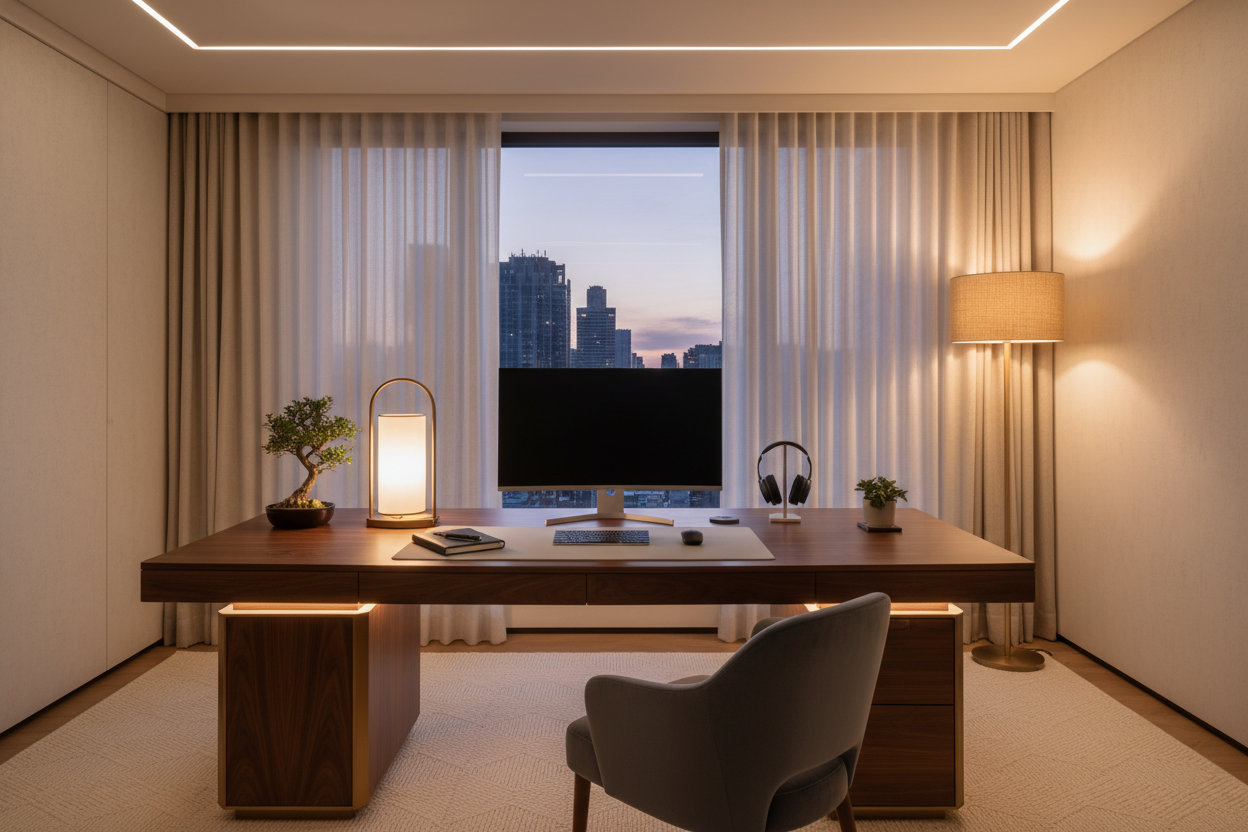
We have all experienced the fatigue that comes from working under harsh overhead fluorescents or, conversely, staring at a bright monitor in a pitch-black room. The contrast creates visual noise that kills productivity. The solution isn't just a brighter bulb; it is a thoughtfully curated ambient lighting desk setup. By treating light as a material—just like wood or fabric—you can sculpt a workspace that invites focus without straining your eyes.
Key Features to Look For
- Color Temperature (Kelvin): Aim for adjustable ranges between 2700K (warm/relaxing) and 4000K (cool/focus).
- Color Rendering Index (CRI): Look for a CRI of 90+ to ensure your desk finishes and documents look true to life.
- Diffusion: Essential for LED strips to avoid the "dotted line" reflection effect on glossy surfaces.
- Dimmability: The ability to control lumen output is non-negotiable for transitioning from work to evening moods.
- Footprint: Ensure the base of any ambient light desk lamp does not clutter your primary work zone.
The Art of Layering Light
In interior design, we never rely on a single light source. To achieve that high-end, cohesive look, you must balance three layers: task lighting, accent lighting, and ambient lighting. Your desk is the stage. While a task lamp illuminates your paperwork, the ambient light desk setup softens the shadows and reduces the contrast ratio between your screen and the back wall. This technique, often called bias lighting, is the secret to working long hours without headaches.
Selecting the Right Fixtures and Materials
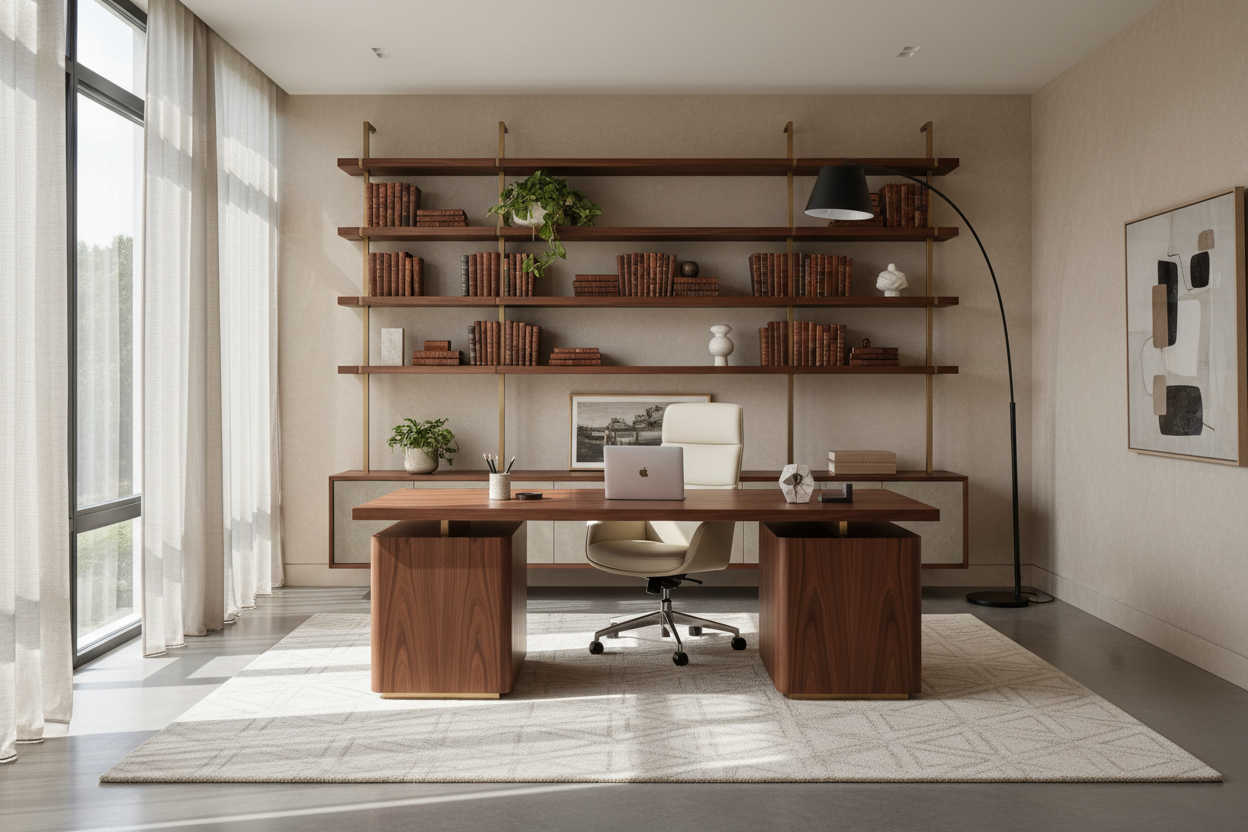
When curating your setup, consider how light interacts with your furniture materials. If you have a glass or high-gloss lacquer desk, direct downlighting will create distracting glare. In these cases, matte-finish fixtures or diffused LED strips mounted behind the desk edge work best.
The Role of the Ambient Light Desk Lamp
An ambient light desk lamp serves a different purpose than a standard architectural task lamp. Here, we are looking for fixtures with translucent shades—linen, frosted glass, or Japanese rice paper—that cast a multidirectional glow. This "fills" the room with a soft wash of light rather than a focused beam. Placing this lamp to the side of your dominant hand creates a visual anchor and balances the tech-heavy look of monitors.
Integrating Desk Mood Light Elements
For a truly immersive experience, consider the "mood" aspect. This doesn't mean RGB gamer lights flashing in neon colors (unless that is your specific aesthetic). In luxury design, a desk mood light refers to warm, low-lumen sources that mimic candlelight or sunset hues. Think of a small alabaster stone lamp or a brass fixture with an Edison bulb. These elements add texture and warmth, making the office feel less like a cubicle and more like a library.
Space Planning and Visual Balance
Symmetry is pleasing, but asymmetry is interesting. If you have a dual-monitor setup, avoid placing a lamp directly in the center behind the screens. Instead, offset your lighting. Place a taller ambient lamp on one side and balance it with a lower plant or decorative object on the other. This creates a dynamic silhouette that draws the eye across the space.
My Personal Take on Ambient Lighting Desk Setups
I learned a hard lesson about lighting textures during a project for a client who was a video editor. We designed a beautiful custom walnut desk and installed standard LED strips along the back edge to wash the wall in light. It looked great on paper.
However, once we installed it, I noticed the "hotspots"—those individual little dots of light from the LED strip—were reflecting perfectly off the satin finish of the monitor stand and the semi-gloss wall paint. It looked cheap and unfinished. I had to rip them out and replace them with COB (Chip on Board) LEDs housed in a deep aluminum channel with a milky diffuser cover. The difference was night and day. The light became a solid, seamless bar of glow rather than a dotted line. If you are doing this yourself, never skimp on the diffuser; it’s the difference between a showroom look and a DIY disaster.
Conclusion
Designing a workspace is about more than just utility; it is about creating an environment that supports your well-being. By carefully selecting your ambient lighting desk components and paying attention to diffusion and placement, you elevate a simple table into a command center for creativity. Start with one quality light source, and build your layers from there.
Frequently Asked Questions
What is the best color temperature for a home office desk?
For daytime productivity, 3500K to 4000K is ideal as it mimics natural daylight and keeps you alert. For evening work, transitioning to a warmer 2700K helps signal to your body that it is time to wind down while still providing visibility.
How do I hide the cords for my desk lighting?
Cable management is crucial for a luxury look. Use adhesive cable clips along the back legs of the desk or invest in a "cable spine" that runs from the desktop to the floor. Many modern ambient lamps now come with battery-operated options to eliminate cords entirely.
Can ambient lighting reduce eye strain?
Absolutely. This is often referred to as "bias lighting." By placing a light source behind your monitor, you increase the ambient light levels in your peripheral vision, which reduces the strain on your iris caused by constant adjustment to a bright screen in a dark room.

Leave a comment
This site is protected by hCaptcha and the hCaptcha Privacy Policy and Terms of Service apply.