










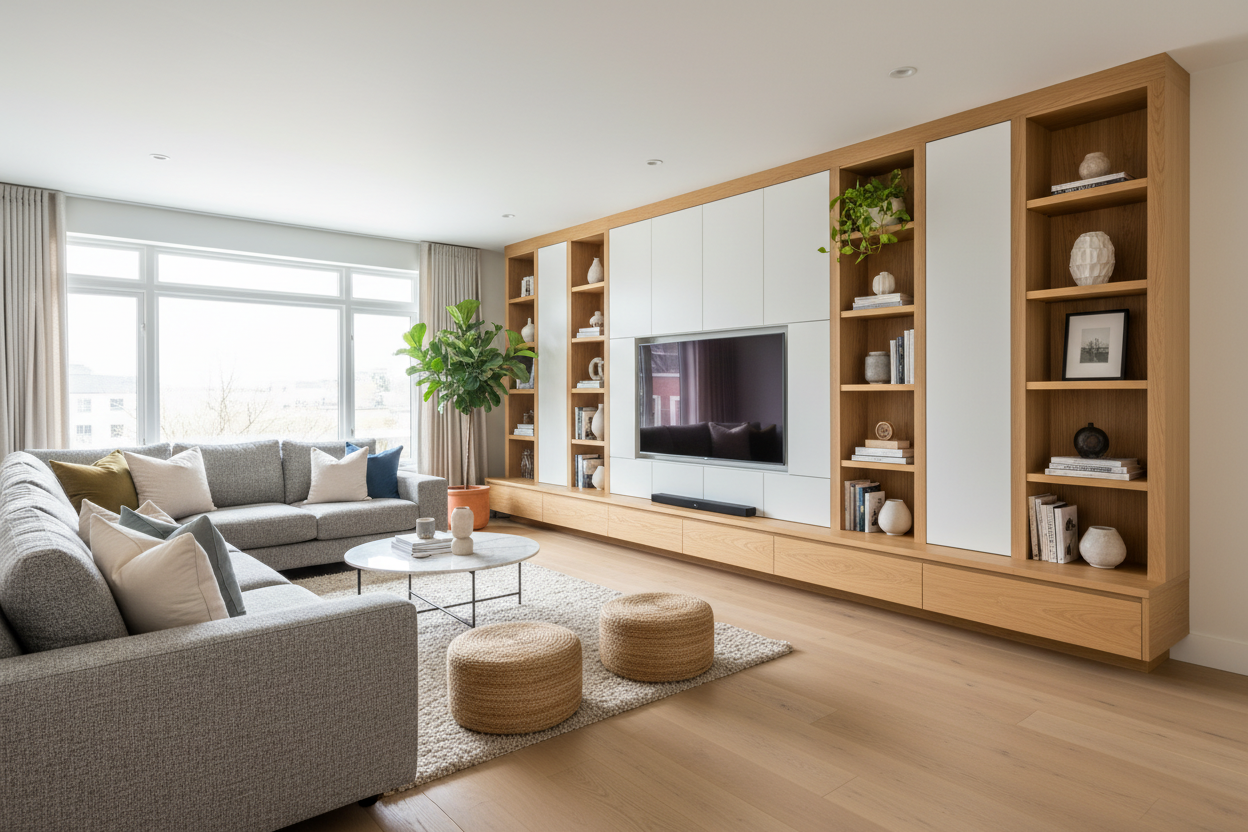
I spent three months staring at a 16-foot expanse of drywall in my new apartment. Every time I sat on my sofa, I felt like I was in a waiting room at a very chic but very empty dentist's office. I tried a gallery wall, but it just looked like a scattered mess of tiny frames trying way too hard to be 'eclectic.' It was clear: my living room had the 'bowling alley' effect, and I was losing.
Finally, I realized the problem wasn't the art. It was the scale. I needed wall tv cabinets to actually ground the room and give my eyes a place to land that didn't feel like a vast void. Once I committed to a piece that actually took up some visual real estate, the whole room finally clicked into place.
Quick Takeaways
- Scale matters more than decor; a tiny stand on a big wall looks like an accident.
- Modern wall units aren't the bulky 90s monsters you remember—they're modular and sleek.
- The 'full wall' look actually makes a room feel larger by creating a singular focal point.
- Hidden storage for routers and cables is the secret to a high-end look.
The 'Big Blank Wall' Paralysis (And Why Gallery Walls Fail)
We've all been there. You move into a place with great 'bones' and a massive living room, only to realize your existing furniture looks like dollhouse accessories against the architecture. My first instinct was to buy a bunch of small prints and try to fill the space with a gallery wall. It was a disaster. It looked cluttered, not curated. The eye didn't know where to rest, and the wall still felt essentially empty.
The biggest culprit, however, was my media setup. Most standard TV stands are designed to be about 50 to 60 inches wide. On a 15-foot wall, that's a postage stamp. It leaves awkward gaps on either side that you then try to fill with floor plants or floor lamps, creating a 'staccato' visual effect that makes the room feel disjointed and unfinished. You don't need more stuff; you need bigger stuff.
I learned the hard way that 1.5 lb density foam in a cheap sofa sags in two years, and a tiny TV stand makes a big room look cheap. You have to match the furniture to the volume of the room, or you'll never feel settled. When you use a piece that spans the majority of the wall, you eliminate those 'dead zones' that make a room feel cold.
Enter the Full Wall TV Console: My Layout's Savior
When I finally pulled the trigger on a full wall tv console, the transformation was instant. There's a psychological trick at play here: when you fill a wall with a substantial, cohesive unit, the brain stops seeing the 'void' and starts seeing a 'destination.' It anchors the entire seating area. Instead of the room feeling like a cavernous hallway, it felt like a cozy, intentional lounge.
I went with a modular system that stretched nearly 10 feet. By covering that much horizontal ground, the furniture became part of the architecture. It stopped being a 'thing' sitting against a wall and started being the wall itself. This is the secret to getting that high-end, custom-built look without actually hiring a carpenter for $8,000. It draws the eye across the room, emphasizing the width rather than the empty height.
The mistake people make is thinking a big piece will 'swallow' the room. In reality, one large, well-proportioned piece makes a space feel much more organized than six small pieces of furniture fighting for attention. It’s about visual peace. My living room finally stopped feeling like a bowling alley and started feeling like a home.
Wait, Won't a TV Wall Cupboard Look Like a 90s Entertainment Center?
This was my biggest fear. I grew up in a house with a honey-oak monster that took up half the basement and had dedicated slots for VCR tapes. It was hideous. But a modern tv wall cupboard is a completely different animal. We're talking clean lines, handle-less push-to-open doors, and matte finishes that don't scream 'suburban showroom.'
The difference lies in the modularity. Today's wall cupboard for tv options allow you to mix open shelving with closed cabinetry. You can keep the 'heavy' storage at the bottom and use floating shelves or glass-fronted units at the top to keep things airy. I spent a lot of time researching before swapping my TV stand for a modern wall cabinet, and the key is avoiding that 'all-in-one' chunky look. Look for units with slim profiles and consistent finishes.
If you choose a unit with a slight wood grain or a soft charcoal finish, it acts as a backdrop for your life rather than a dated monolith. It’s the difference between a piece of furniture that holds a TV and a cohesive storage system that happens to house your tech. It’s grown-up furniture for grown-up spaces.
The Unexpected Bonus: Hiding Every Single Ugly Router and Wire
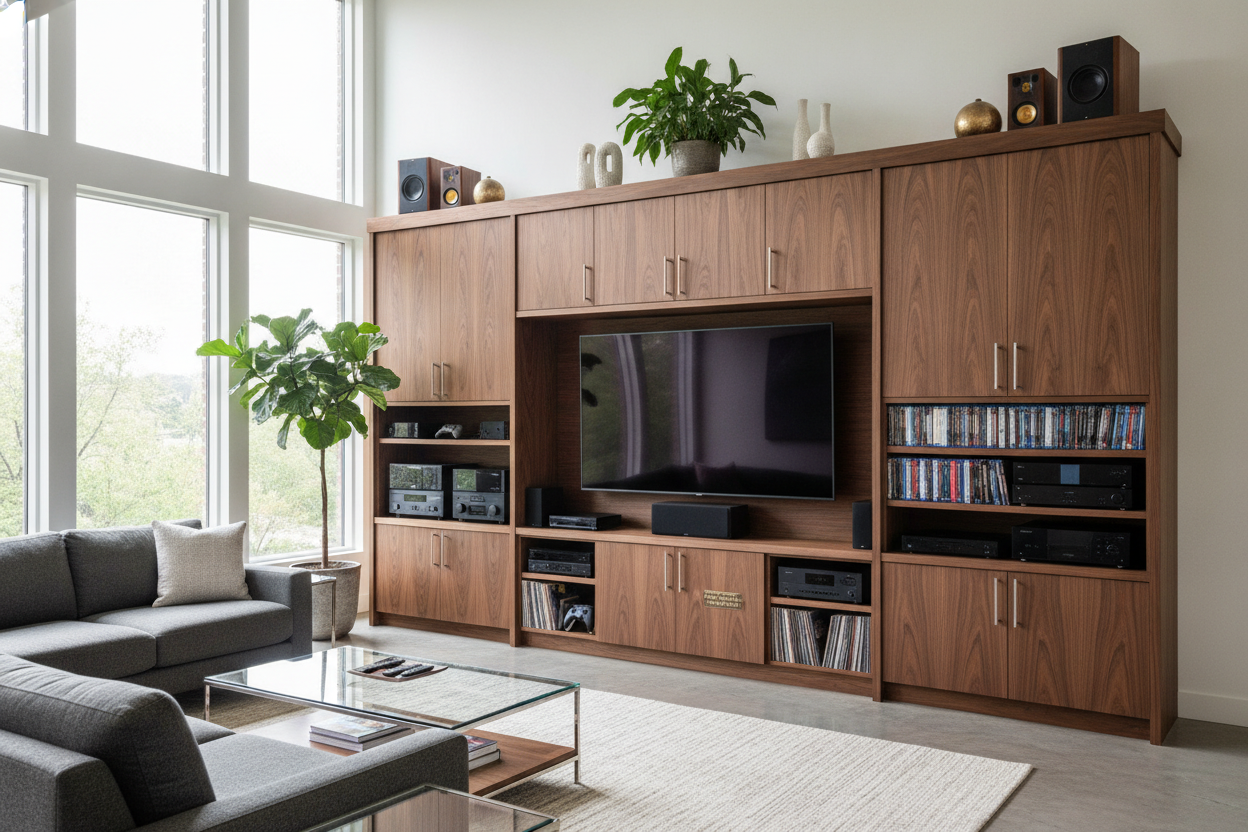
Let’s be honest: technology is ugly. My old setup had a tangle of black cords, a blinking router that looked like a spaceship, and three different gaming consoles gathering dust. It was a visual nightmare. A dedicated tv wall cupboard solved this in a way no cable management sleeve ever could. It gave everything a literal home behind closed doors.
Most of these units come with pre-drilled cable ports, but I went a step further and installed a power strip inside one of the lower cabinets. Now, the only thing visible is the screen itself. For people who want this level of organization but don't want a floor-to-ceiling unit, a wall mounted media console is a fantastic middle ground. It keeps the floor clear, which makes the room feel even larger, while still hiding the 'tech guts.'
I actually felt my blood pressure drop once the router was hidden. No more blinking green lights while I’m trying to watch a movie. It’s the kind of practical luxury that you don’t realize you need until you have it. It turns your living room from a 'media center' back into a living room.
The Golden Rule for Styling Living Room Wall Units for TV
The fastest way to ruin living room wall units for tv is to treat them like a tech shelf. If every cubby has a remote or a controller in it, the room will feel like a dorm. The golden rule is the 70/30 split: 70% of the visible space should be 'lifestyle' (books, ceramics, plants) and only 30% should be tech-related.
I personally use the 'rule of three' for the open shelves. Group a tall vase, a medium-sized book stack, and a small decorative bowl together. Leave some white space—don't feel the need to cram every inch. Also, add a trailing plant like a Pothos on a higher shelf. The organic shape of the leaves breaks up the hard, rectangular lines of the cabinetry and the TV screen. It makes the unit feel like a piece of living room furniture, not a Best Buy display.
FAQ
How do I stop a large wall unit from feeling too heavy?
Go for a 'floating' look or choose a unit with legs. Seeing the floor continue underneath the cabinet tricks the eye into thinking the piece is lighter than it actually is. Also, keep the top shelves open rather than closed to maintain a sense of height.
Can I install a wall TV cupboard in a rental?
Yes, if you go for a floor-standing modular unit. You might need to anchor it to the wall for safety (which requires a few small holes), but it's no different than hanging a heavy mirror. Just patch the holes when you move out.
What depth should my wall cabinets be?
Aim for 15 to 18 inches. Anything deeper starts to eat into your walking space and looks like a wardrobe, and anything shallower won't fit a standard receiver or gaming console comfortably.

Leave a comment
This site is protected by hCaptcha and the hCaptcha Privacy Policy and Terms of Service apply.