










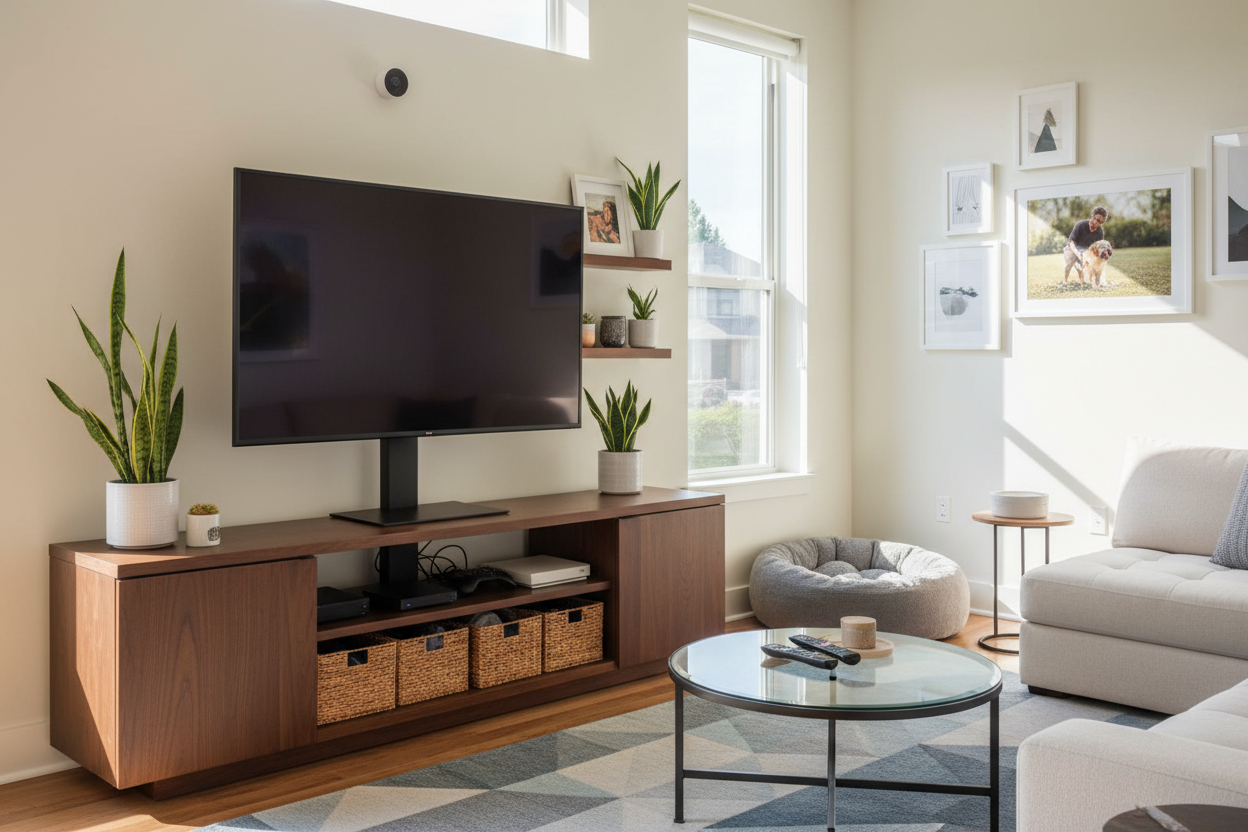
My cat, Gus, has a 3 AM ritual: he treats my living room like an American Ninja Warrior course. Last Tuesday, he overshot a jump and clipped the corner of my 65-inch flat screen. I watched, frozen in horror, as the entire TV swayed like a palm tree in a hurricane. Those tiny, V-shaped plastic legs that came in the box were doing their best, but their best was barely enough to keep twelve hundred dollars of tech from face-planting onto the hardwood. That was the moment I realized I needed a real stand for lcd setups, not just the factory-included scraps.
- Factory legs are often made of hollow plastic and have a narrow center of gravity.
- Integrated stands offer much better weight distribution for heavy 4K panels.
- Anti-tip features are non-negotiable if you have pets or toddlers.
- A proper base allows for better viewing angles and height adjustments.
The Terrifying Wobble of Factory TV Legs
Let’s be honest: the legs that come with most modern TVs are an insult. They’re usually two flimsy plastic feet pushed to the extreme edges of the screen, designed more for shipping convenience than for actual stability in a real home. If you have a soundbar, they’re even worse, because they rarely leave enough clearance. When Gus hit that screen, I didn't just see a wobble; I saw my weekend plans of binge-watching disappear into a pile of shattered glass. I spent the next hour frantically finding a sturdy replacement quickly because I couldn't bear the thought of going to sleep with that screen still teetering.
I’ve assembled plenty of furniture in my time, and I can tell you that the weight of a modern LCD panel is deceptively front-heavy. When you rely on those stock legs, you’re basically trusting a couple of half-inch screws to hold back gravity. It’s not just about the cat, either. Even a heavy footstep near a cheap media console can send vibrations up through those legs, causing a distracting shimmer on the display. It feels cheap, and frankly, it's dangerous.
Why Your Dresser Isn't a Safe Backup Plan
A lot of people try to solve the stability issue by just shoving the TV onto a bedroom dresser or a dining sideboard. I tried this in my guest room, and it was a mistake. Most bedroom furniture is only 15 to 18 inches deep. When you put an lcd on stand feet that are widely spaced, you end up with the legs hanging dangerously close to the front and back edges. It’s a recipe for a tip-over.
Standard furniture also isn't built to handle the concentrated weight of a large screen in the center of its top surface. I’ve seen beautiful mid-century sideboards start to sag in the middle because they weren't reinforced for a 50-pound electronics load. A dedicated base is designed to distribute that weight across a wider footprint, ensuring your furniture doesn't warp and your screen doesn't take a tumble because of a structural failure you didn't see coming.
The 'Cat Test': What Makes a Base Actually Sturdy?
When I started shopping for heavy-duty lcd display stands, I had one metric: could it survive Gus? To pass the 'Cat Test,' a stand needs a heavy tempered glass or steel base. You want something with a 'low and wide' profile. A wider base means a more stable center of gravity, making it much harder for a jumping feline to tip the screen forward. I recommend anyone with high-traffic living rooms browse dedicated TV stands that offer a mounting bracket rather than just a flat surface.
Look for weight ratings that are at least 20% higher than your actual TV weight. If your screen is 40 pounds, look for a stand rated for 50 or 60. This gives you a safety buffer for when the cat decides to use the top of the TV as a lookout post. Also, check for rubberized feet on the bottom of the stand; these prevent the entire unit from sliding across your furniture if it gets bumped during a particularly intense game of fetch.
Finding an Upgrade That Doesn't Look Like Office Tech
One of my biggest gripes with heavy-duty tech gear is that it often looks like it belongs in a corporate boardroom. I didn't want my living room to look like a Zoom-call annex. I spent way too much time searching for an l c d stand—sometimes even typed as an 'l c d stand' in those weirdly translated online catalogs—that actually looked like furniture. You want something that hides the cables and offers a bit of warmth through wood tones or matte finishes.
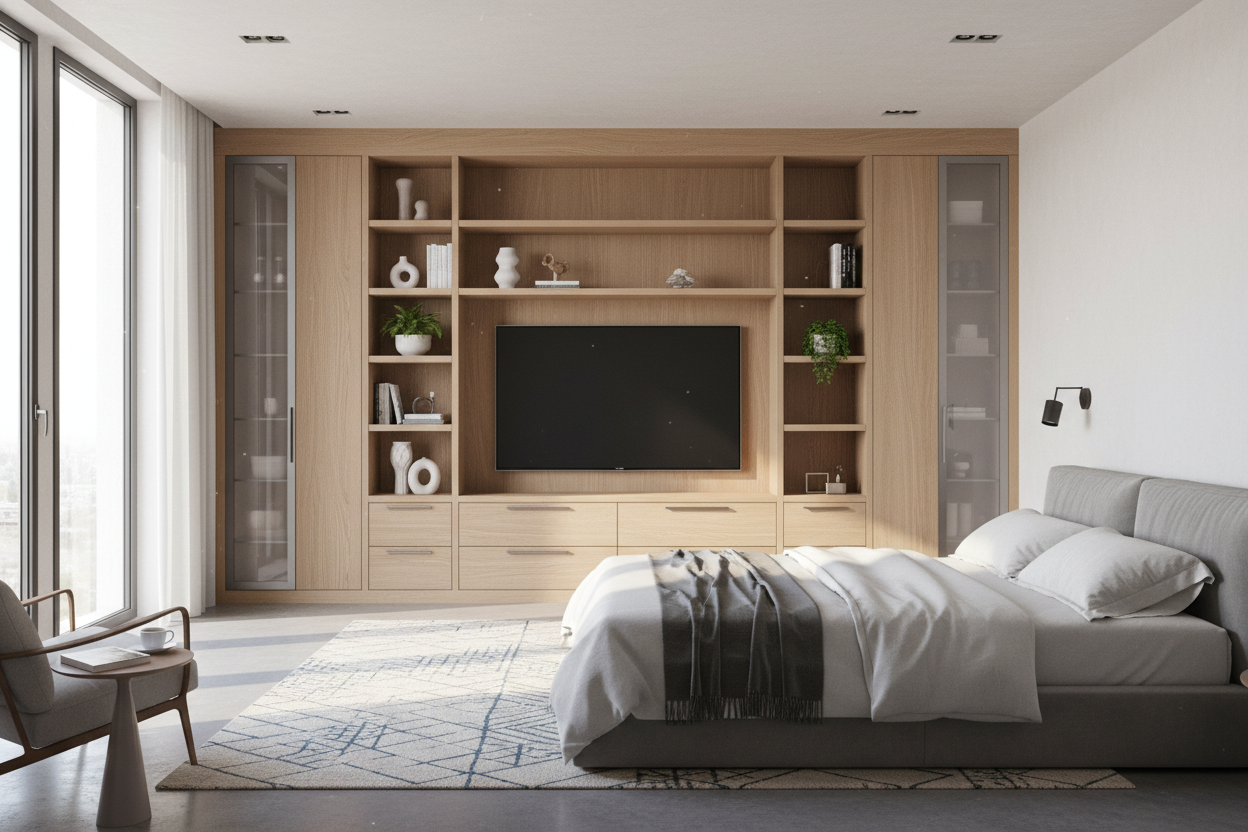
If you have a lot of peripherals, like a PS5 or a cable box, a modern TV stand with cabinets is the way to go. It anchors the screen to a solid structure while hiding the 'spaghetti' of wires behind closed doors. For those with awkward room layouts, an adjustable wide entertainment stand can be a lifesaver. These allow you to shift the position of the screen or the shelves to fit into a corner or along a narrow wall without sacrificing the heavy-duty stability you need for a large lcd stand.
The Peace of Mind is Worth Every Penny
At the end of the day, upgrading your screen support is basically an insurance policy. I spent a few hundred dollars on a solid, heavy-duty base, and now I don't jump out of my skin every time I hear a thud in the living room. The TV stays put, the viewing height is actually at eye level (unlike those low-slung factory legs), and the whole setup looks intentional rather than like I just pulled it out of the box and gave up.
If you're still using the plastic legs that came with your screen, do yourself a favor and give them a literal shake test. If the screen wobbles for more than a second, it's time to upgrade. Your sanity—and your expensive electronics—will thank you.
Is a universal stand better than wall mounting?
Wall mounting is the sturdiest option, but a universal stand is better if you're a renter or if you like to rearrange your furniture. It gives you the same stability as a mount without the holes in the drywall.
Will these stands fit any TV?
Most use the VESA standard, which is a square or rectangular bolt pattern on the back of your screen. As long as the stand matches your TV's VESA size and weight, you're good to go.
Are glass bases safe?
Yes, as long as they are tempered glass. Tempered glass is incredibly strong and designed to crumble into small, dull pieces if it breaks, rather than sharp shards. It also adds significant weight to the bottom, which aids stability.

Leave a comment
This site is protected by hCaptcha and the hCaptcha Privacy Policy and Terms of Service apply.