










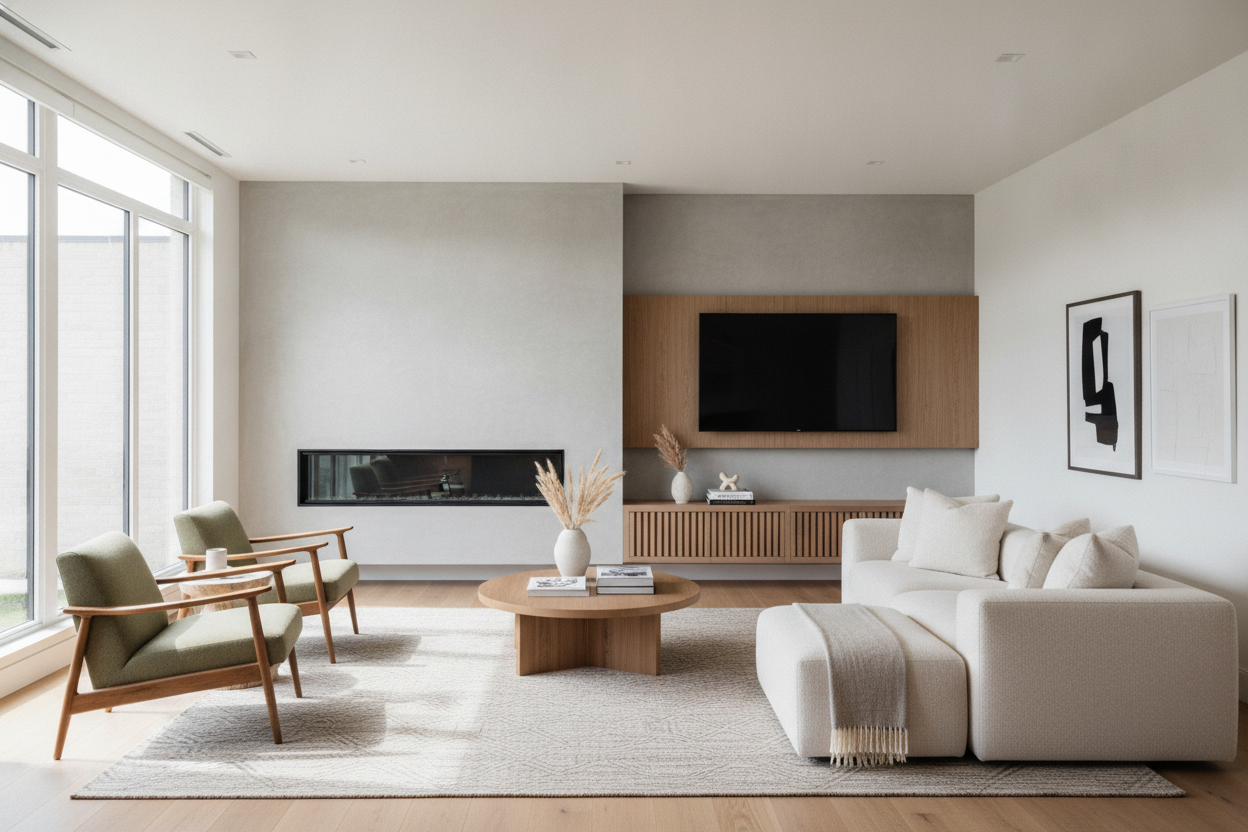
I spent three years staring at a 65-inch screen mounted five feet above my living room floor. Every time I wanted to watch a movie, I felt like I was sitting in the front row of a budget IMAX theater. My neck hurt, the colors on the screen looked washed out because of the viewing angle, and the massive black rectangle completely killed the vibe of my hand-carved oak mantel. It was a classic fireplace and tv struggle that I see in almost every suburban living room, and honestly, I'm over it.
Quick Takeaways
- Mounting a TV over a mantel is usually 12-18 inches too high for comfortable viewing.
- Heat from a traditional hearth can drastically shorten the lifespan of your TV's internal components.
- Asymmetrical layouts create a more relaxed, modern feel that doesn't force you to choose between 'cozy' and 'functional.'
- Integrated low-profile consoles offer the best of both worlds without the ergonomic nightmare.
The Real Problem With the 'Screen Over the Hearth' Rule
The standard 'TV over the fireplace' setup is a relic of builders who didn't know where else to put the cable jack. From an ergonomic standpoint, it’s a disaster. Your eyes should naturally rest on the middle third of your screen when you're seated. For most of us on a standard 18-inch-high sofa, that means the center of the TV should be about 42 inches from the floor. When you put a fireplace with tv on top of it, that center point jumps to 60 or 70 inches. It’s literally a pain in the neck.
Then there’s the aesthetic clash. Fireplaces are meant to be the soul of a room—warm, tactile, and grounding. TVs are cold, glass-fronted tech. When you stack them, you create a giant vertical monolith that dominates the space. I’ve seen 12x14 rooms feel like closets because the fireplace-TV tower sucked all the air out of the room. Plus, if you have a real wood-burning setup, the soot and rising heat are basically slow-cooking your expensive OLED. I once measured the air temp just above my mantel during a Christmas fire, and it hit 115 degrees. That’s not a 'cozy' environment for sensitive electronics.
Why an Asymmetrical Fireplace With TV Setup Actually Works
Once I accepted that symmetry is overrated, my living room finally started to breathe. By moving the TV to the side of the hearth, you create two distinct zones. You can have a conversation by the fire without a giant blank screen looming over you, or you can watch a game without feeling like the fire is a distraction. Modern designers are redefining living rooms by embracing this 'offset' look, which feels much more like a curated gallery than a showroom floor.
I personally moved my screen onto a low credenza to the left of the chimney breast. This allowed me to hang a piece of actual art over the mantel—something with texture and soul, not pixels. It also meant I could finally use a proper 2.0 lb/ft³ HR foam sofa without worrying about whether the backrest was high enough to support my head while I looked upward at a 30-degree angle. The room feels wider, the ceiling feels higher, and the flow is just better. You aren't forced into one rigid 'viewing' position; you can lounge naturally.
My Favorite Solution: The Low-Profile Integrated Console
If you don't have a built-in hearth or you're dealing with a rental, the integrated console is the smartest move you can make. I eventually helped a friend set up a white TV stand with adjustable light in her condo, and it was a revelation. It keeps the TV at that magical eye-level height while tucking the heating element safely below it. No drywall surgery required, and no heat rising directly into the screen’s motherboard.
These units are a far cry from the tacky 'space heaters' of the 90s. They use realistic LED flame tech and offer actual storage for your PS5 or soundbar. When you choose the perfect TV stand with fireplace, you’re looking for a unit that is at least 10-12 inches wider than your TV to keep the proportions balanced. I’ve seen too many people put a 75-inch screen on a 60-inch stand, and it looks like a lollipop. Stick to a low-profile unit—something around 24 to 30 inches tall—to ensure your neck stays happy for the long haul.
The 'Zone' Approach to Styling Your Living Room Walls
The biggest fear people have with an asymmetrical setup is that the wall will look 'messy.' The trick is to treat the wall as a single composition rather than two separate items. I like to use floating shelves or a tall plant to bridge the gap between the fireplace and the TV stand. If your TV is on a stylish minimalist TV stand, the clean lines help anchor the tech so it doesn't feel like it's just floating in space.
Try to balance the 'visual weight.' If your fireplace is heavy brick, balance the other side with a dark wood media unit or a gallery wall around the TV. I used a matte black floor lamp next to my TV to mirror the black of the firebox on the other side. It creates a rhythm that the eye follows. You want the room to feel like it was put together over time, not like a pre-packaged set from a big-box store. Don't be afraid to leave some negative space, either—not every square inch of the wall needs a 'feature.'
Before You Rearrange: 3 Specs You Absolutely Cannot Ignore
Before you start dragging furniture across your hardwood, get your measurements right. First, heat clearance: if you are using a real fireplace, you need at least 12 inches of non-combustible material between the fire and anything else. Second, the viewing angle: if you must mount the TV, never go higher than 48 inches to the center of the screen unless you enjoy visiting the chiropractor. Third, cable management: nothing kills a 'designer' look faster than a nest of black wires hanging down a white wall.
I always recommend looking at a wide collection of TV stands before committing to a wall mount. A stand gives you a place to hide the clutter and allows you to swap your layout next year if you get bored. I’ve moved my living room around three times in four years, and I’m so glad I didn't have to patch giant holes in the masonry every time I wanted a change of scenery. Trust me, your neck and your home's resale value will thank you for keeping that TV down where it belongs.
FAQ
Is it ever okay to put a TV over the fireplace?
Only if you have a 'linear' fireplace that sits very low to the ground, or if you use a specialized pull-down mount. Otherwise, you're just signing up for chronic neck strain.
How do I hide the TV when it's not in use?
The 'Frame' style TVs are great, but even better is just making the TV part of a larger gallery wall so it blends in with art and photography rather than standing out as a lone tech object.
What if my fireplace is the only focal point?
Create a second one! An L-shaped sectional can help define a 'TV zone' that faces away from the fireplace, or you can use a swivel mount on a side wall to pull the screen into view only when you need it.

Leave a comment
This site is protected by hCaptcha and the hCaptcha Privacy Policy and Terms of Service apply.