










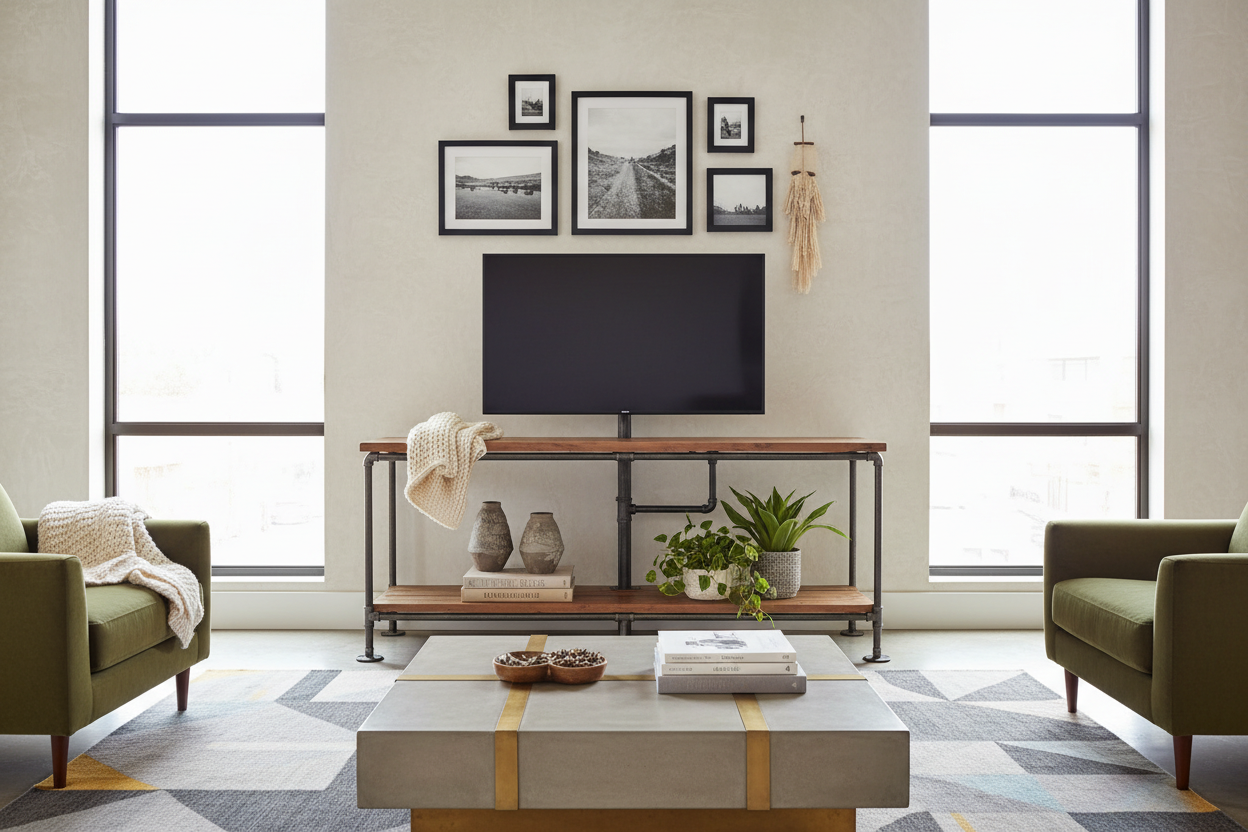
You have finally found the perfect piece of furniture online. It has that rugged mix of raw metal and distressed wood, and it looks incredible in the perfectly lit studio photos. But when you place an industrial tv stand in your actual living room, suddenly the space feels less like a cozy home and more like an abandoned 19th-century warehouse. This is the most common design dilemma I see when clients attempt to bring factory-inspired furniture into typical North American homes.
The secret to making an industrial tv console work isn't about committing strictly to a warehouse aesthetic. It is about mastering visual weight and contrast. In this guide, we will break down how to choose the right materials, scale the piece to your room, and soften those hard metal lines so your space feels intentional and inviting.
Quick Decision Guide
- Balance the materials: If your room already has heavy leather furniture, opt for a modern industrial tv stand with more wood than metal to avoid a cold, sterile feel.
- Watch your proportions: An industrial tv stand 70 inches wide is the minimum size you should consider if you are mounting a 65-inch television above it.
- Consider the flooring: A heavy industrial tv stand on wheels looks authentic, but raw iron casters will permanently dent hardwood floors without proper locking pads.
- Cable management is crucial: An open-shelf industrial look tv stand exposes everything. If you have multiple gaming consoles and a cable box, choose an industrial storage media console with solid doors.
Choosing the Right Materials and Build
Wood vs. Metal Ratios
The defining characteristic of an industrial media console is the marriage of wood and metal. However, the ratio of these materials dictates the entire mood of the room. A black industrial tv stand constructed entirely of powder-coated steel carries immense visual weight. It works beautifully in bright, sun-drenched lofts with high ceilings, but it can easily swallow the light in a standard suburban family room with eight-foot ceilings.
If you want a softer approach, look for a tv stand rustic industrial mix. Seek out pieces where warm-toned solid wood—like mango, acacia, or reclaimed oak—makes up the primary structure, while metal is reserved strictly for the framing, hardware, or legs. This keeps the silhouette grounded but introduces organic warmth.
Sizing Your Console for Modern Living Rooms
The Two-Thirds Rule
One of the biggest layout mistakes I see is a massive 75-inch flat screen sitting on top of a tiny industrial tv console table. It makes the room look top-heavy and anxious. Your modern industrial entertainment center should always be wider than the television itself. A good rule of thumb is that the TV should span no more than two-thirds the width of the console.
Additionally, pay attention to depth. A standard industrial style entertainment center is usually between 15 to 20 inches deep. If you are working with a narrow townhouse living room, look for a slim-profile industrial modern media console that keeps walkways clear. Always leave at least 36 inches of negative space between the front of the console and the edge of your coffee table.
Softening the Factory Aesthetic
To prevent your living room from feeling like a brewery tasting room, you have to introduce contrasting textures. An industrial metal media console demands soft counterparts. Layer a plush wool or vintage-inspired distressed rug underneath. Flank the industrial media cabinet with woven baskets for extra blanket storage, or place a tall, leafy olive tree or fiddle leaf fig nearby.
The organic shapes of plants and the soft weave of textiles break up the rigid, linear geometry of an industrial-style media console. You want the furniture to be the anchor, not the entire theme.
Designer's Honest Take
A few years ago, I sourced a stunning industrial tv stand with storage for a loft project in Chicago. It had beautiful reclaimed wood shelves and heavy iron mesh doors. Visually, it grounded the room perfectly and fit the client's aesthetic to a tee. But I learned a hard lesson about industrial tv cabinets that day.
First, those authentic iron mesh doors completely blocked the infrared signals from the client's remotes. We had to retrofit the entire AV system with an RF repeater just so they could change the channel without opening the cabinet doors. Second, the piece featured authentic vintage iron casters. While they looked incredible, they dug a visible trench right into the newly restored maple floors the first time we rolled the unit to plug in a cable. I always tell my clients now: if you buy an industrial tv stand on wheels, immediately buy high-density felt caster cups before you put an ounce of weight on it.
Frequently Asked Questions
How do I keep an industrial style tv console from looking too harsh?
Pair it with contrasting soft textures. Drape a chunky knit throw over the nearby sofa, use a plush area rug, and add organic elements like potted plants or ceramic vases to the top of the console to break up the hard metal lines.
Is an industrial media cabinet good for hiding messy cables?
It depends entirely on the design. Open-shelving industrial units are terrible for cable management. If you have a lot of wires and devices, look for an industrial storage media console that features solid wood or frosted glass doors and a dedicated cable management cutout in the back panel.
What size modern industrial tv stand do I need for a 65-inch TV?
Because TVs are measured diagonally, a 65-inch TV is roughly 57 inches wide. To maintain proper visual proportion, your console should be at least 8 to 10 inches wider than the TV. You should be shopping for an industrial tv stand 70 inches wide or larger.

Leave a comment
This site is protected by hCaptcha and the hCaptcha Privacy Policy and Terms of Service apply.