










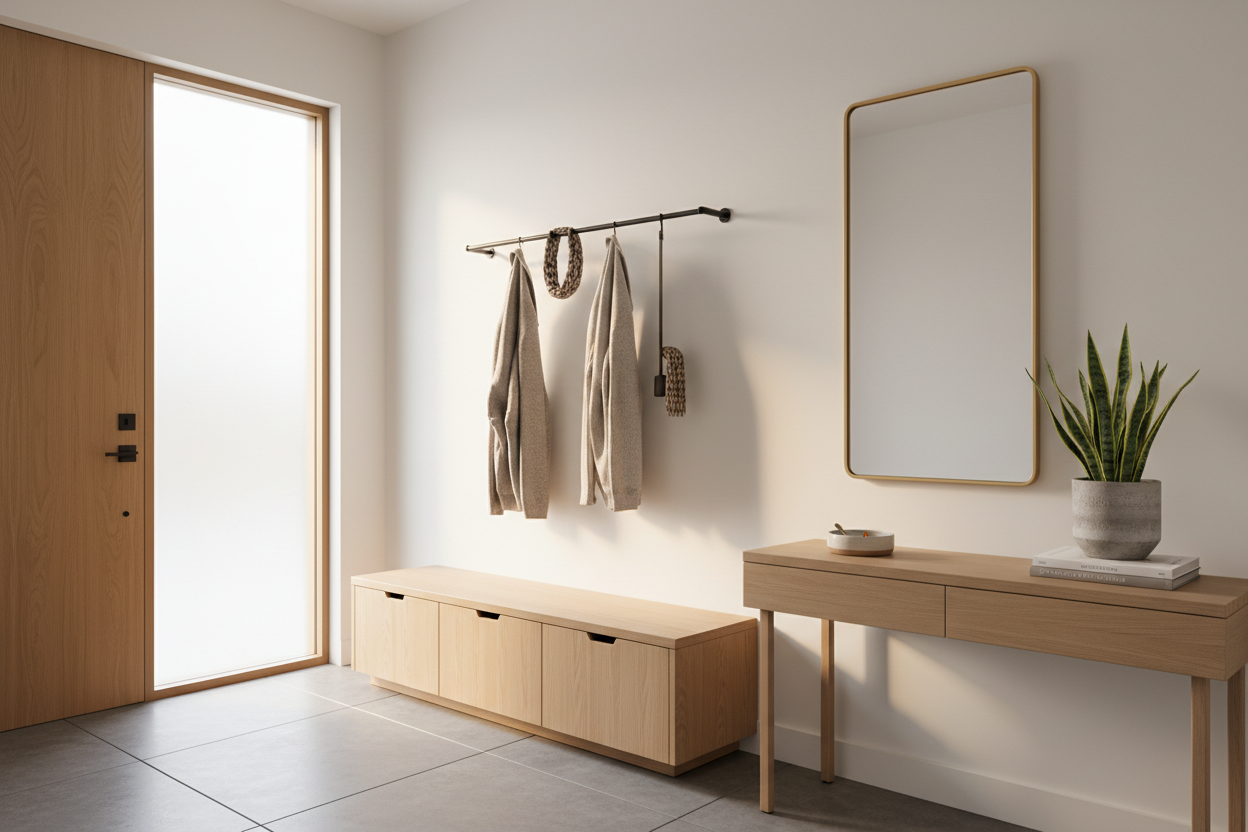
Walking through the front door sets the tone for the rest of your home, yet this space often becomes the most neglected area in terms of design. You are likely torn between two primary needs: a place to sit and put on shoes, or a surface to drop your keys and mail. This creates the classic dilemma of choosing a bench or console table in entryway design. The answer depends entirely on your lifestyle priorities and the square footage available to you. If your household is prone to shoe pile-ups and you value comfort, the bench wins. If you need a decorative focal point and an organized drop zone for small items, the table is your best bet. However, for those who refuse to compromise, a hybrid approach might be the solution.
The Reality of Entryway Traffic
I learned the hard way that aesthetics cannot override function in a high-traffic zone. In my first apartment, I fell in love with a sleek, glass-top console table. It looked incredible in photos. In reality, I spent every morning hopping on one foot trying to put my boots on because I had nowhere to sit. The table became a magnet for junk mail, and the floor underneath became a graveyard for kicked-off sneakers. When I moved to a home with a slightly wider foyer, I pivoted completely to a storage bench. Suddenly, the shoes disappeared into bins, but I lost the convenient spot to leave my sunglasses. This experience taught me that the decision isn't just about what looks good; it is about analyzing exactly what you do the moment you walk inside.
The Case for the Console Table
A console table is often the default choice for narrower hallways. Because they are generally taller and shallower than benches, they draw the eye upward, allowing you to play with vertical space using mirrors or artwork. The primary function here is organization of small items. A table provides a specific home for keys, wallets, and mail—items that otherwise end up on the kitchen counter.
When debating a bench or table in entryway layouts, consider the visual weight. Tables with open legs make a cramped space feel airier. If you opt for a table, you are prioritizing a "landing strip" over a lounge area. This creates a more formal, curated look. To reclaim some storage, you can place baskets underneath the table, though this is less accessible than a dedicated storage bench. If you rarely take your shoes off immediately upon entering, or if you have a separate mudroom for the heavy lifting, the console table is the superior choice for a welcoming vignette.
Why You Might Need a Bench Instead
Comfort and concealed storage are the main drivers for choosing a bench. For families with children or households with a strict "no shoes" policy, a place to sit is not a luxury; it is a necessity. A bench invites you to pause. It signals a transition from the busy outdoors to the relaxation of home.
The struggle with choosing an entryway bench or table often comes down to clutter management. A bench with a lift-top or cubbies underneath swallows bulky items like backpacks, umbrellas, and winter gear. It keeps the floor clear, which is the quickest way to make a small space feel larger. However, a bench alone lacks surface area. Without a nearby shelf or hook system, your keys might end up on the bench seat, which is far from ideal. If you choose this route, you almost certainly need to pair it with wall-mounted floating shelves or a coat rack to compensate for the lack of table surface.
The Best of Both Worlds: The Combo
You do not always have to choose one or the other. An entryway bench with table features offers a hybrid solution that maximizes utility. This can manifest in a few different ways. The most traditional form is the "telephone bench" or a gossip bench—a vintage-inspired piece where the seat and a small raised table surface are connected as one unit. These are fantastic for smaller spaces where you need a bit of both but lack the wall length for separate pieces.
Another option is the hall tree, which functions as an entryway bench table combo by integrating seating, hooks, and often a high shelf or small side ledge. For a more modern, custom look, you can arrange a console table directly behind a low bench (if you have an open floor plan where the furniture floats) or place them side-by-side if you have a long hallway. This arrangement allows you to sit while having a surface within arm's reach.
Analyzing Your Space and Dimensions
Before buying furniture, get out the measuring tape. The width of your hallway dictates whether you can accommodate an entryway bench with table elements or if you must stick to a single slim profile piece. You need to maintain a walkway clearance of at least 36 inches for comfortable traffic flow. If your entry is tight, a bench is usually safer because it sits lower to the ground; bumping your hip into a table corner is painful, whereas brushing past a low bench is less intrusive.
Visual balance matters just as much as physical clearance. A high ceiling pairs well with a console table and a tall mirror. A window in the entryway might be better served by a low bench that doesn't block the light. If you are fortunate enough to have a large foyer, placing a round table in the center with a bench against the wall creates a dynamic, high-end feel.
Styling Your Choice
Regardless of whether you land on a bench or console table in entryway design, the styling brings the look together. If you choose a table, use the "rule of three" for decor: a lamp for height, a tray for organization, and a sculptural object for personality. Anchor the table with a runner rug to define the zone.
For a bench, texture is your friend. Add throw pillows and a blanket to soften the hard lines and make the seat inviting. Since you don't have a table surface for lamps, install a sconce above the bench or use a floor lamp nearby. The wall space above the bench is prime real estate for a gallery wall or oversized art, which compensates for the lack of furniture height. If you have gone with an entryway bench table combo unit, keep the accessories minimal to avoid the piece looking heavy or cluttered.
Making the Final Decision
Ultimately, look at what is currently in your hands when you walk through the door. If it is grocery bags and mail, you need a table. If you are carrying a toddler or dragging muddy boots, you need a bench. By identifying the primary friction point in your daily routine, the choice becomes obvious. And if you truly have equal needs for seating and surface area, hunting down a piece that integrates an entryway bench or table function into one unit will save you from future frustration.
Frequently Asked Questions
Can I put a bench and a console table in the same entryway?
Yes, if you have the space. A popular layout involves placing a console table on one wall with a mirror, and a bench on the opposite wall or adjacent wall. Just ensure you have at least 36 inches of walking space between them so the hallway doesn't feel like an obstacle course.
What is the standard height difference between a bench and a console table?
Standard benches sit about 18 to 20 inches high, which is ideal for sitting. Console tables are significantly taller, usually ranging from 30 to 36 inches high. This height difference is why combining them side-by-side can create a nice visual hierarchy in a long hallway.
Is a hall tree better than a separate bench and table?
A hall tree is often more space-efficient for small footprints because it utilizes vertical storage. However, separate pieces offer more flexibility in design and layout. If you have a very narrow entry, separate pieces often look less bulky than a large, monolithic hall tree.

Leave a comment
This site is protected by hCaptcha and the hCaptcha Privacy Policy and Terms of Service apply.