










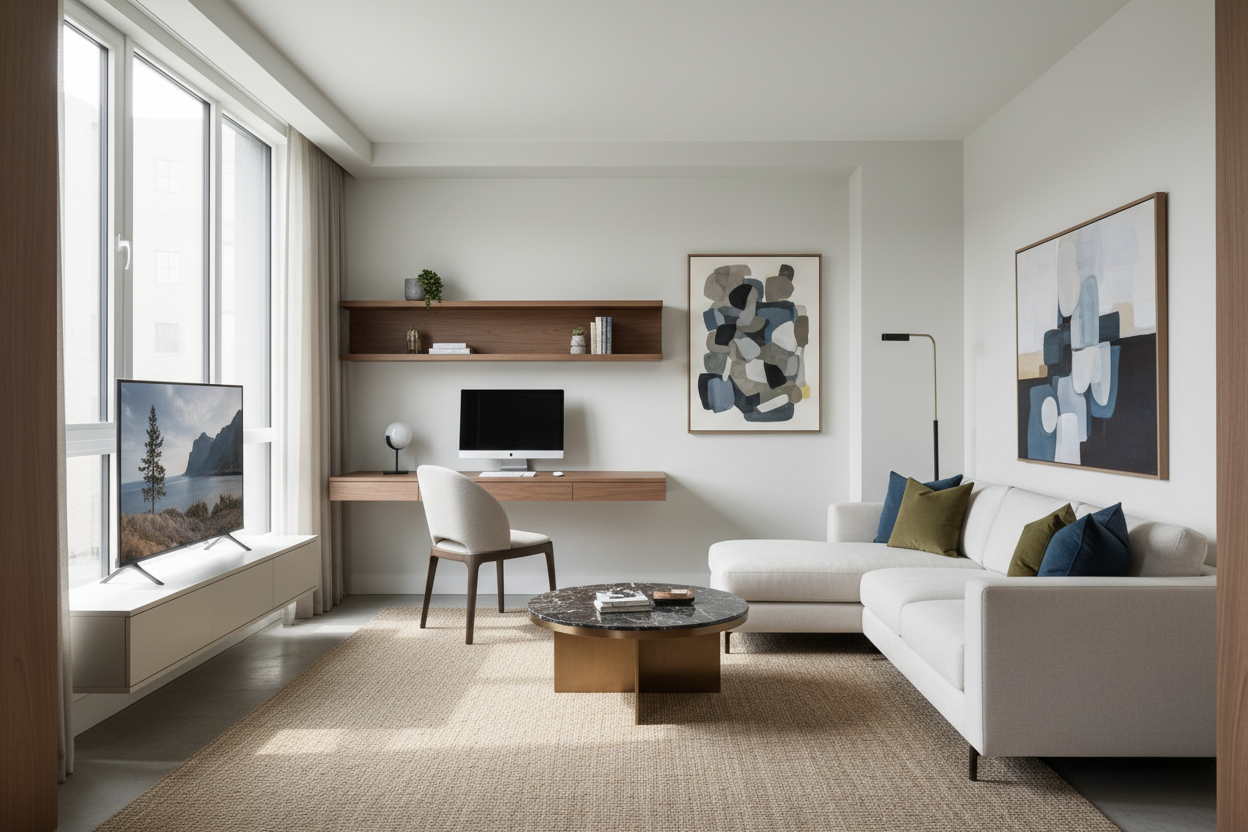
Merging a productive workspace with a relaxing sanctuary is one of the most complex challenges in residential design. The dilemma is clear: you need functionality without your living area feeling like a corporate cubicle. When executing small living room/office decorating ideas, the goal is not just to fit a desk in a corner, but to curate a seamless blend of ergonomics and aesthetics. This guide explores how to maintain the visual integrity of your lounge while establishing a dedicated zone for deep work.
Key Considerations for Hybrid Layouts
- Visual Weight: Opt for furniture with exposed legs or glass surfaces to maintain a sense of openness.
- Zoning Strategy: Use area rugs or lighting changes to define the workspace without physical barriers.
- Vertical Utilization: Maximize height with wall-mounted shelving to keep the floor footprint minimal.
- Cohesive Palette: Ensure office furniture finishes match the living room's existing wood tones and textiles.
Mastering the Layout and Flow
In a limited footprint, placement is everything. Avoid facing the desk directly against a blank wall if possible; this creates a distinct "cubicle" feeling that clashes with a residential vibe. Instead, consider the "floating desk" technique. placing the desk perpendicular to a window or even behind the sofa. This acts as a console table when not in use and allows you to command the room while working.
Defining the Zone
To implement chic small home office ideas effectively, you must define the perimeter. A round rug under a compact desk chair can visually separate the "work zone" from the "lounge zone" without erecting walls. Lighting is equally crucial; swap the harsh utilitarian desk lamp for a table lamp with a linen shade or a brass architectural task light that complements your media console or coffee table.
Furniture Selection: Scale and Silhouette
The most common error I see in small living room office decorating ideas is the selection of bulky executive-style furniture. In a shared space, the silhouette must be slender. Look for writing desks with shallow depths (under 24 inches) or ladder desks that draw the eye upward.
Materiality matters. A heavy oak desk absorbs light and shrinks the room. Conversely, a desk with a glass top or a white lacquer finish reflects ambient light, helping the piece disappear into the surroundings. For seating, consider a task chair upholstered in bouclé or leather rather than standard office mesh. It should look like a piece of lounge furniture that happens to swivel.
My Personal Take on Small Living Room/Office Decorating Ideas
In my years of designing tight urban apartments, I’ve learned a hard lesson about "tuck-under" clearance. I once specified a stunning, vintage-inspired velvet armchair for a client's workspace niche. It was aesthetically perfect. However, I failed to account for the thickness of the desk's apron (the vertical strip under the tabletop).
Because of that one inch of wood, the chair arms couldn't slide fully under the desk. The result? The chair permanently protruded two feet into the living room walkway, creating a constant tripping hazard and visual clutter. Now, I explicitly measure the floor-to-armrest height against the floor-to-apron height before buying anything. It’s a gritty, unglamorous detail, but missing it can ruin the flow of a small room.
Conclusion
Creating a dual-purpose room doesn't require sacrificing style for function. By prioritizing scale, selecting materials that reflect light, and ensuring your office furniture speaks the same design language as your sofa, you can build a space that works as hard as you do. Treat your workspace as a curated vignette, not an afterthought.
Frequently Asked Questions
How do I hide cables in a floating desk layout?
If your desk is not against a wall, cable management is vital. Use cord covers that match your flooring color, or route cables down the leg of the desk using Velcro ties. I often recommend furniture with built-in power strips inside a drawer to keep the surface pristine.
Can I use a dining chair as a desk chair to save space?
While visually appealing, standard dining chairs lack lumbar support for 8-hour workdays. If you must use a dining chair for cohesion, add a high-quality lumbar pillow and a seat cushion. Alternatively, look for "crossover" chairs that have casters but are fully upholstered.
What is the minimum depth for a functional small desk?
For laptop work, you can get away with a depth of 18 to 20 inches. However, if you use an external monitor, aim for at least 24 inches to maintain proper focal distance and prevent eye strain.

Leave a comment
This site is protected by hCaptcha and the hCaptcha Privacy Policy and Terms of Service apply.