










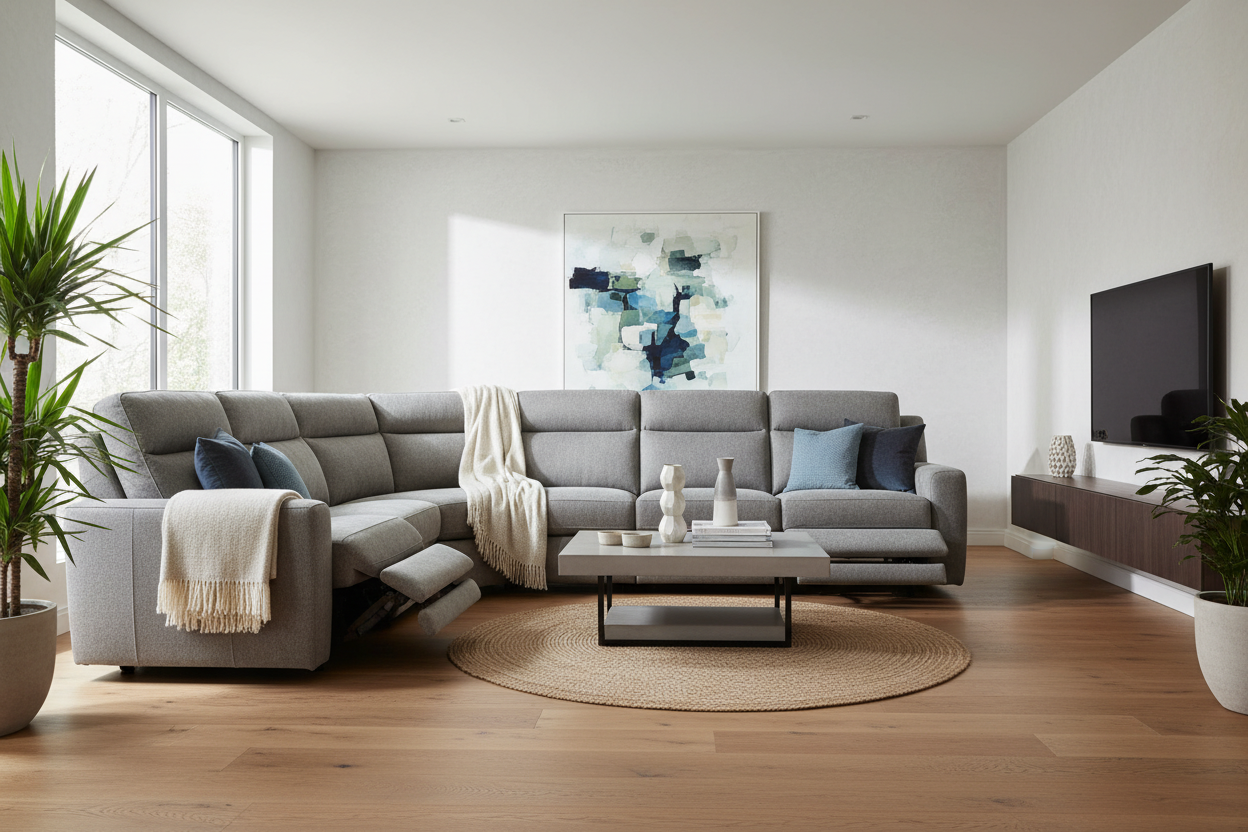
There is a classic tug-of-war in interior design: the battle between the sleek, low-profile aesthetics of modern furniture and the undeniable, enveloping comfort of motion seating. For years, clients felt they had to choose one or the other. However, the modern 3 recliner sectional has bridged that gap, offering a solution that provides theater-level comfort without necessarily dominating the room with bulky silhouettes.
If you are considering this substantial investment, you need to look beyond just the color. This guide breaks down the ergonomics, material durability, and spatial requirements to ensure this piece elevates your living area rather than overcrowding it.
Key Features to Look For
Before committing to a purchase, review this checklist to ensure you are selecting a piece that balances longevity with comfort. These are the primary factors I evaluate for my clients:
- Wall-Hugger Mechanism: Essential for tighter spaces; ensures the seat slides forward rather than leaning back into the wall.
- Upholstery Durability: Look for performance fabrics with a rub count over 25,000 or top-grain leather for longevity.
- High-Resiliency Foam: Ensure seat cushions have a density of at least 1.8 to 2.0 lbs to prevent sagging over time.
- Modular Configurability: Verify if the reclining modules can be rearranged to suit future home layouts.
Choosing the Right Material
When selecting a large-scale piece like a three recliner sectional, the material choice dictates not just the look, but the lifespan of the furniture. Because motion furniture involves friction—fabric rubbing against fabric during operation—durability is paramount.
Leather vs. Performance Fabric
For a sophisticated, masculine aesthetic, top-grain leather is the gold standard. It develops a patina over time and handles the friction of reclining mechanisms better than lower-grade split leathers, which may crack. However, do not discount performance velvets or crypton fabrics. These offer a softer, more tactile experience and help dampen sound in a room with high ceilings, adding necessary warmth to the acoustic environment.
Space Planning & Layout
The most common error homeowners make is underestimating the footprint of motion furniture. A static sectional has a fixed boundary; a reclining one changes shape.
Managing Traffic Flow
You must account for the "fully extended" footprint. I recommend leaving at least 18 to 24 inches of clearance around the footrest when it is fully deployed. This ensures that the flow of traffic through the living room isn't completely severed when the family is relaxing.
Visual Balance
A sectional with three recliners carries significant visual weight. To keep the room from feeling heavy, pair it with leggy, open-frame coffee tables or side chairs. Avoid blocky, solid wood accents nearby, as they will compete with the bulk of the sofa. Rug size is also critical here; ensure the front legs of the sectional sit well onto the rug to ground the composition.
Lessons from My Own Projects
I want to share a specific challenge I encountered recently while installing a high-end three recliner sectional for a client in a downtown loft. On paper, the dimensions worked perfectly. However, we planned to "float" the sofa in the center of the room rather than pushing it against a wall.
Here is the unpolished truth that spec sheets rarely mention: cord management is a nightmare on power recliners that float in a room. We realized too late that the power cords would snake across the open floor, creating a tripping hazard and an eyesore. We ended up having to purchase specialized rechargeable battery packs specifically for furniture to eliminate the cords. Furthermore, moving these units is deceptive. The mechanisms make them incredibly heavy. During the install, we realized the modular clips were metal-on-metal and scratched the hardwood when we slid the pieces to lock them together. My advice? Always use thick felt pads under the feet before you clip the sections together, and budget for battery packs if your sofa isn't hugging a wall.
Conclusion
A 3 recliner sectional is more than just seating; it is a commitment to a specific lifestyle centered on relaxation and gathering. By paying close attention to the mechanism quality, fabric friction ratings, and the spatial dynamics of your room, you can secure a piece that offers luxury comfort without compromising your home's design integrity.
Frequently Asked Questions
How much space do I need behind a reclining sectional?
This depends on the mechanism. Standard recliners need 8 to 12 inches of clearance. However, "zero-wall" or "wall-hugger" designs require as little as 2 to 4 inches, making them ideal for maximizing usable floor space.
Are power recliners prone to breaking more than manual ones?
Surprisingly, power motors often outlast manual pull-cords. Manual mechanisms rely on spring tension and physical force, which can wear out the lever cables over time. Power motors provide a smoother, controlled motion that puts less stress on the frame structure.
Can I separate the pieces of a 3 recliner sectional?
It depends on the design. Modular sectionals are finished on all sides and can be separated. However, many traditional reclining sectionals have unfinished sides where the pieces join (often exposing metal brackets), meaning they must stay connected to look presentable.

Leave a comment
This site is protected by hCaptcha and the hCaptcha Privacy Policy and Terms of Service apply.