










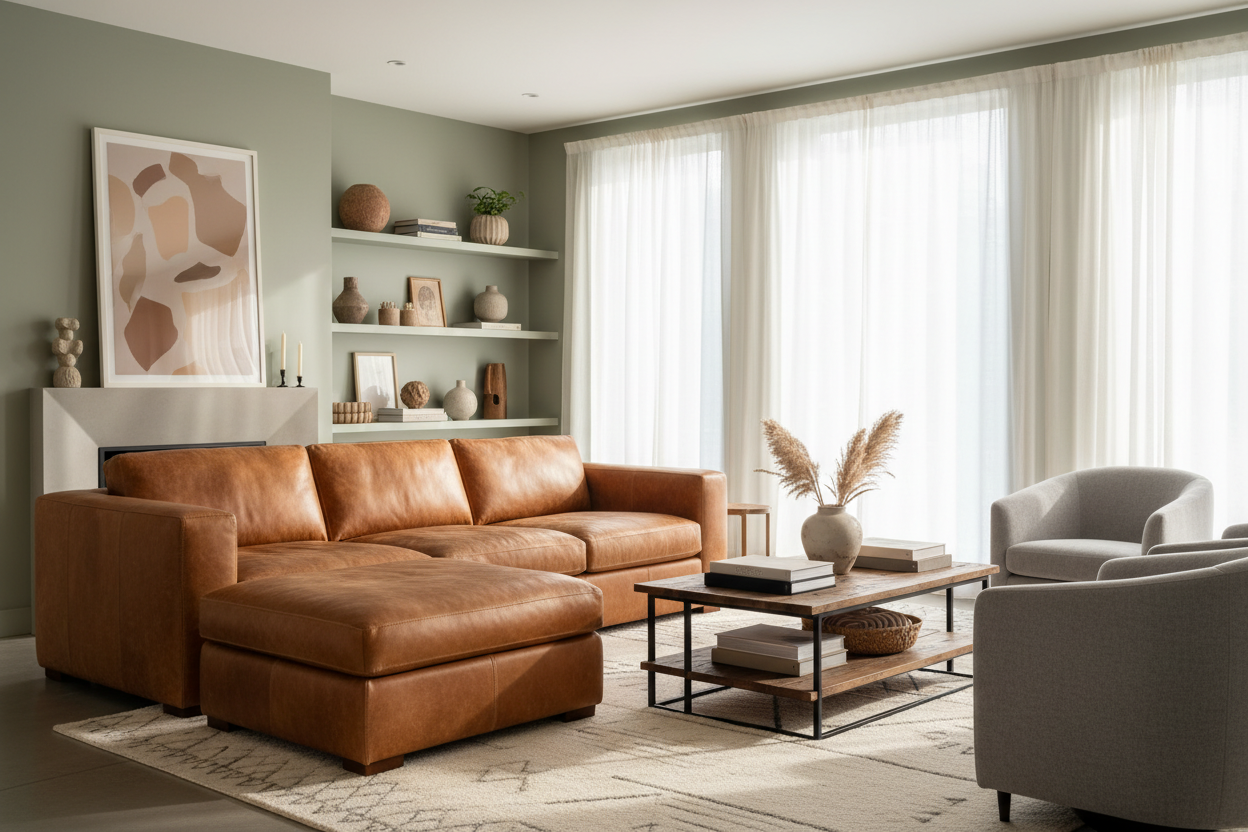
There is a distinct gravitation in interior design right now toward substantial, grounding furniture pieces. When clients approach me looking for a centerpiece that anchors a room, the conversation almost always turns to leather. However, not all hides are created equal. A thick leather couch represents a specific tier of furniture design—one that prioritizes longevity and tactile presence over fleeting trends.
But here is the dilemma I often see: homeowners confuse visual bulk with material quality. They buy a sofa that looks substantial but is upholstered in bonded leather that peels within two years. In this guide, we will dissect what true thick leather furniture entails, how to verify the quality, and whether this heavy-duty aesthetic is the right ergonomic fit for your living space.
Key Features to Look For
If you are scanning specifications online or browsing a showroom, use this checklist to immediately determine if a piece is worth your time:
- Hide Thickness: Look for leather thickness between 1.4mm and 2.0mm (standard commercial leather is often 0.9mm).
- Grain Quality: Prioritize Full-Grain or Top-Grain; avoid "Genuine Leather" or Bonded Leather.
- Suspension System: Heavy leather requires 8-way hand-tied springs or high-gauge sinuous springs to support the weight.
- Frame Construction: Kiln-dried hardwood is non-negotiable to prevent warping under the heavy upholstery.
- Dye Method: Aniline or Semi-Aniline dyes ensure the color penetrates the thick hide rather than sitting on top.
Understanding Leather Grades and "Hand"
In the trade, we refer to the feel of the leather as the "hand." A thick leather couch should have a stiff, robust hand initially, which softens over time. This thickness usually indicates that the hide has not been excessively sanded down or stretched thin to maximize yield.
Full-Grain vs. Top-Grain
For a truly thick leather sofa, you are generally looking at Full-Grain leather. This utilizes the entire top layer of the hide, retaining all the natural markings and the tightest fiber strength. It is breathable and develops a patina. Top-grain is slightly thinner because the very top layer is sanded off to remove imperfections, making it more pliable but slightly less durable over decades.
The Durability Factor
Thick leather is inherently more resistant to punctures and tearing. For households with dogs or active children, a thick, semi-aniline leather is often the most pragmatic choice. Unlike fabric, which frays, thick leather tends to absorb scratches into its patina, eventually blending them into the character of the piece.
Space Planning and Visual Weight
Integrating a heavy leather sofa requires careful spatial planning. Because the material absorbs light rather than reflecting it, these pieces possess immense "visual weight."
Balancing the Silhouette
If you place a blocky, thick leather sofa in a small room, it can feel like a black hole swallowing the space. To counter this, I advise clients to pair these sofas with lighter elements. Think glass coffee tables, linen drapery, or armchairs with exposed legs. This creates a necessary contrast between the heavy anchor piece and the surrounding airiness.
Color Coordination
Thick hides take dye differently. Cognac, saddle, and chocolate tones highlight the natural grain best. If you opt for a black or dark grey thick leather, ensure you have ample ambient lighting or a light-colored rug underneath to separate the furniture from the floor visually.
Ergonomics: The Break-In Period
This is the most overlooked aspect of buying high-quality leather. A thick leather couch will not feel like a cloud on day one. It functions much like a high-quality pair of boots; it is stiff and rigid initially.
The comfort comes from the leather warming to your body temperature and the fibers loosening to mold to your seating habits. If you prefer a sink-in, plush feel immediately, you may want to look for a thinner, heavily milled leather or a fabric option. However, for long-term support and shape retention, thick leather is superior.
Lessons from My Own Projects
I want to share a specific experience that highlights the reality of living with this material. A few years ago, I specified a custom, uncorrected full-grain leather sectional for a client in a loft conversion. The leather was nearly 2mm thick—saddle quality.
Three days after delivery, the client called me in a mild panic. They felt the sofa was "slippery" and uncomfortably stiff. They were sliding off the cushions, and the leather made a creaking sound when they sat down. I had to reassure them that this was actually a sign of superior quality, not a defect.
I gave them a tip I’ll give you: Walk on the cushions. I told them to take their shoes off and gently walk across the sofa seats for a few minutes every evening. This accelerates the fiber breakdown process much faster than just sitting. Six months later, I returned to photograph the space. The leather had softened into a buttery, matte texture that gripped the sitter perfectly, and the "creak" was gone. It was the most comfortable seat in the house. Patience is the hidden cost of thick leather.
Conclusion
A thick leather couch is rarely an impulse buy; it is an investment in your home's future narrative. It requires a higher upfront cost and a period of patience while it breaks in. However, if you respect the material and balance the visual weight within your room, it will outlast almost every other piece of furniture you own, aging gracefully alongside your home.
Frequently Asked Questions
How long does it take to break in a thick leather couch?
Depending on the usage, it typically takes 3 to 6 months for thick, full-grain leather to fully soften and mold to your body. Regular use and conditioning can speed up this process.
Is thick leather better for pets?
Generally, yes. Thick leather (especially full-grain) is very difficult for claws to puncture. While surface scratches will happen, they usually blend into the patina or can be buffed out with a conditioner, unlike fabric which can snag and unravel.
How do I maintain the leather's thickness and prevents cracking?
Hydration is key. Because the hide is thick, it holds a lot of moisture but can also dry out if neglected. Dust it weekly with a microfiber cloth and apply a high-quality leather conditioner every 6 to 12 months to keep the fibers flexible and prevent cracking.


Leave a comment
This site is protected by hCaptcha and the hCaptcha Privacy Policy and Terms of Service apply.