










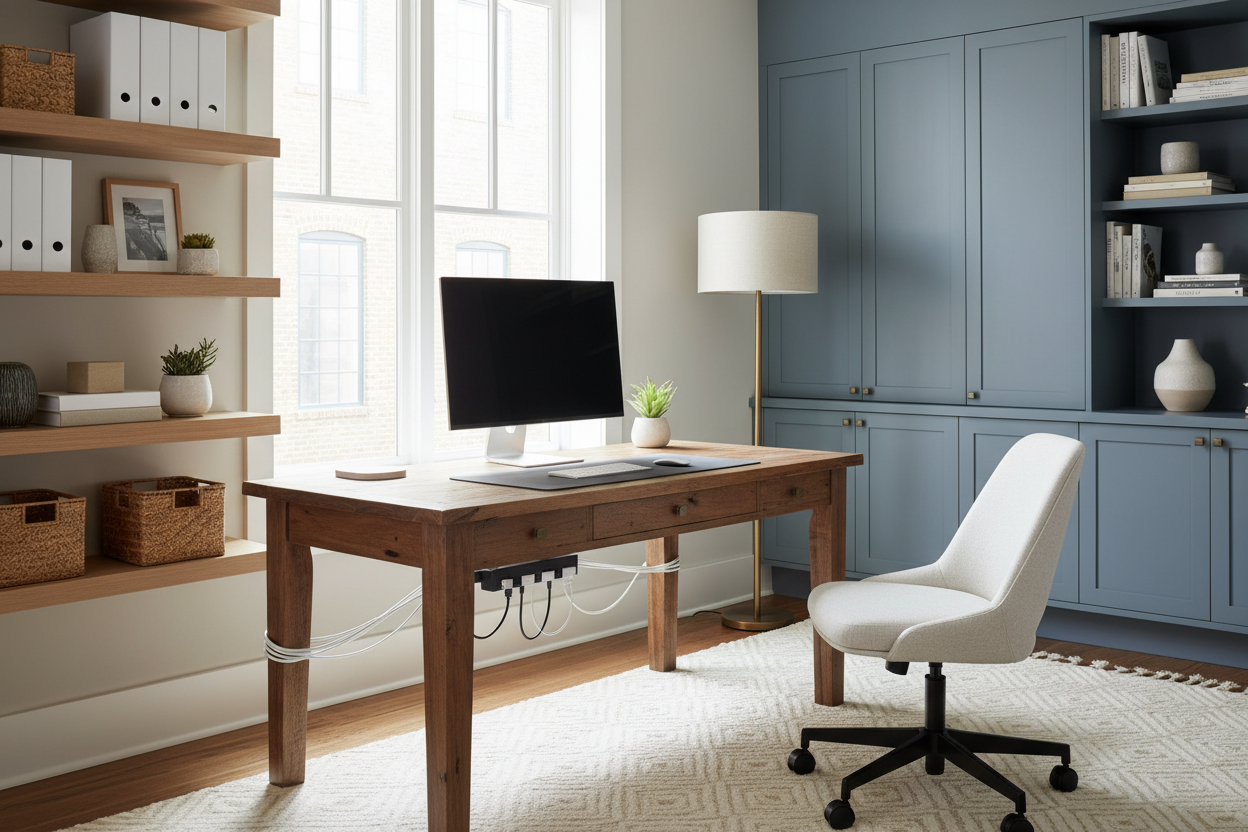
There is a distinct difference between a desk that has merely been tidied and a space that has been designed for cognitive flow. As a designer, I often see clients attempt to fix clutter with cheap plastic bins, overlooking the fundamental role that furniture selection and layout play in maintaining order. A truly organized workspace creates a sense of calm the moment you enter the room, blending ergonomic necessity with a sophisticated aesthetic.
Key Elements of a Functional Office Design
- Visual Weight: Balancing heavy pieces (like solid wood credenzas) with lighter elements (glass tops or open shelving) to prevent the room from feeling cramped.
- Integrated Cable Management: Prioritizing desks with built-in grommets or hidden channels to eliminate visual noise.
- Tactile Materiality: Choosing finishes like matte veneers or leather desk pads that resist fingerprints and maintain a clean look.
- Vertical Utilization: Using floor-to-ceiling shelving to maximize an organized work area without sacrificing floor space.
Zoning and Spatial Planning
When I plan a home office, I don't just look at the desk; I look at the negative space. The most common error is pushing the desk directly against a wall in a 'timeout' position. Instead, anchor the room by positioning your desk perpendicular to a window or facing the door—often called the 'command position.' This layout allows you to organize your workspace into distinct zones: a primary active zone for computer work and a secondary passive zone (perhaps a lounge chair or reference table) for reading and creative thinking.
Selecting Furniture for Hidden Storage
To maintain a pristine aesthetic, storage must be intentional, not an afterthought. When advising clients on how to organize your workspace through furniture, I lean towards pieces that offer 'concealed complexity.'
The Credenza vs. The Filing Cabinet
Avoid industrial metal filing cabinets unless you are going for a very specific brutalist look. Instead, invest in a low-profile credenza with solid doors. Look for pieces with adjustable internal shelving. This allows you to hide printers, routers, and unsightly paperwork behind a beautiful walnut or oak veneer facade. The goal is to reduce visual clutter so the eye rests easily on the focal points of the room.
Material Choices and Maintenance
The finish of your furniture dictates how organized the space feels over time. High-gloss lacquer looks stunning in a showroom, but in a daily work environment, it highlights dust and fingerprints, making the space feel messy even when it isn't. I recommend textured laminates, matte wood grains, or Fenix NTM surfaces. These materials are forgiving and maintain a crisp, professional appearance with minimal maintenance.
Ergonomics Meets Aesthetics
An organized space is useless if it is uncomfortable. The visual rhythm of the room is often disrupted by a bulky, overly technical ergonomic chair. Look for high-performance seating that disguises its mechanisms. Brands are now producing chairs with internal lumbar support wrapped in high-quality textiles or leather, ensuring the silhouette remains sleek without compromising your posture during long work sessions.
My Personal Take on Organized Workspace Design
I learned a hard lesson about 'minimalism' in my own home office renovation a few years ago. I fell in love with a stunning, architectural floating desk—basically a slab of raw edge teak anchored to the wall. It looked incredible in the photos. However, I completely underestimated the cable situation.
Without legs to run wires down or drawers to stash a hard drive, my 'minimalist' desk quickly became a nest of black cables and dongles. It drove me crazy. I eventually had to install a false wall panel underneath just to hide the surge protector. Now, when I specify desks for clients, I actually crawl under them in the showroom to check the underside. If there isn't a dedicated channel or lip to tuck a power strip, I usually walk away. True luxury is not seeing the wires.
Conclusion
Creating a sanctuary for productivity requires looking beyond the surface. By selecting furniture that offers concealed storage, durable materials, and a commanding layout, you invest in your own peace of mind. A well-designed office doesn't just hold your computer; it holds your focus.
Frequently Asked Questions
How do I organize a workspace in a small apartment?
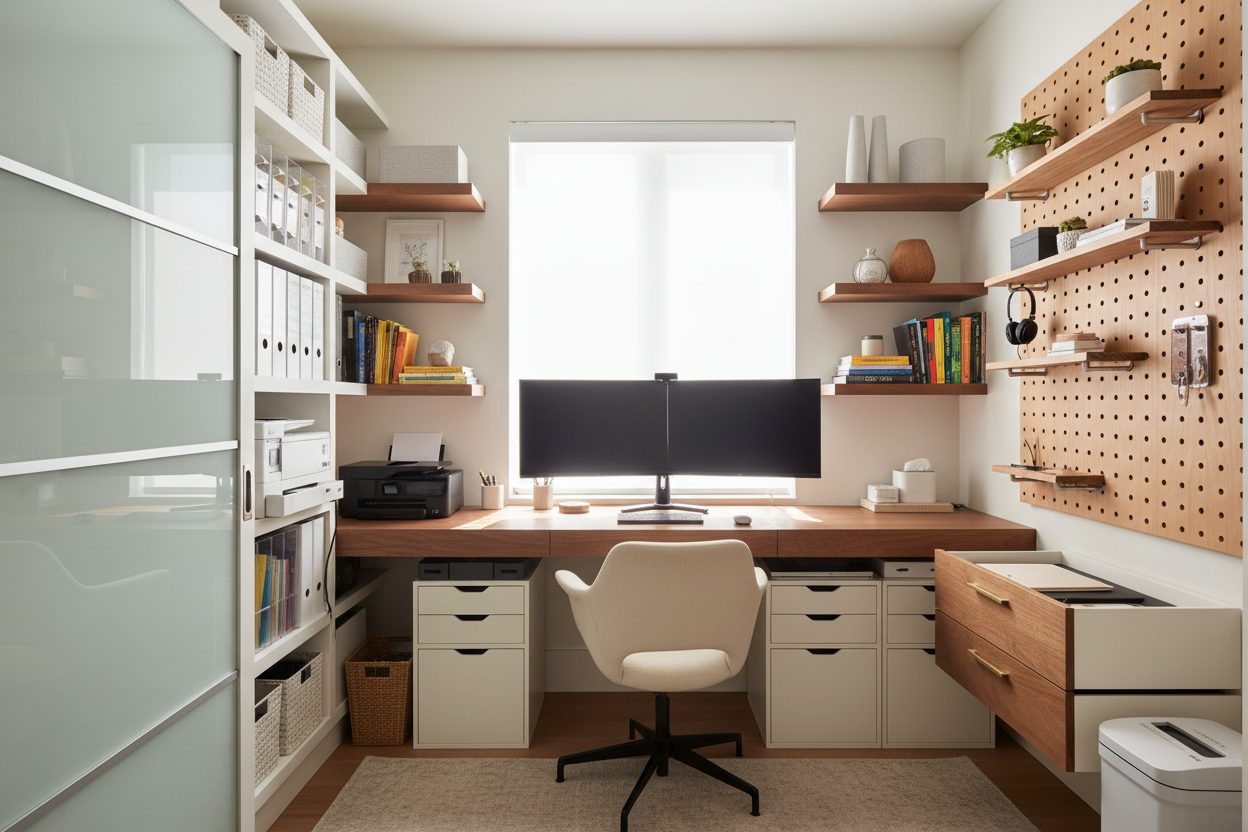
In compact spaces, verticality is your best friend. Use wall-mounted shelving or a secretary desk that can close up to hide the clutter when the workday is done. This creates a psychological separation between work and life.
Is solid wood better for a desk top?
Solid wood offers longevity and can be refinished, but high-quality veneers are often more stable regarding humidity changes. For an organized work area, prioritize a surface hardness that resists writing indentations.
How important is lighting in organization?
Crucial. Poor lighting creates shadows that make a room feel cluttered. Layer your lighting with ambient ceiling fixtures and a dedicated, articulated task lamp to highlight your work surface and reduce eye strain.

Leave a comment
This site is protected by hCaptcha and the hCaptcha Privacy Policy and Terms of Service apply.