










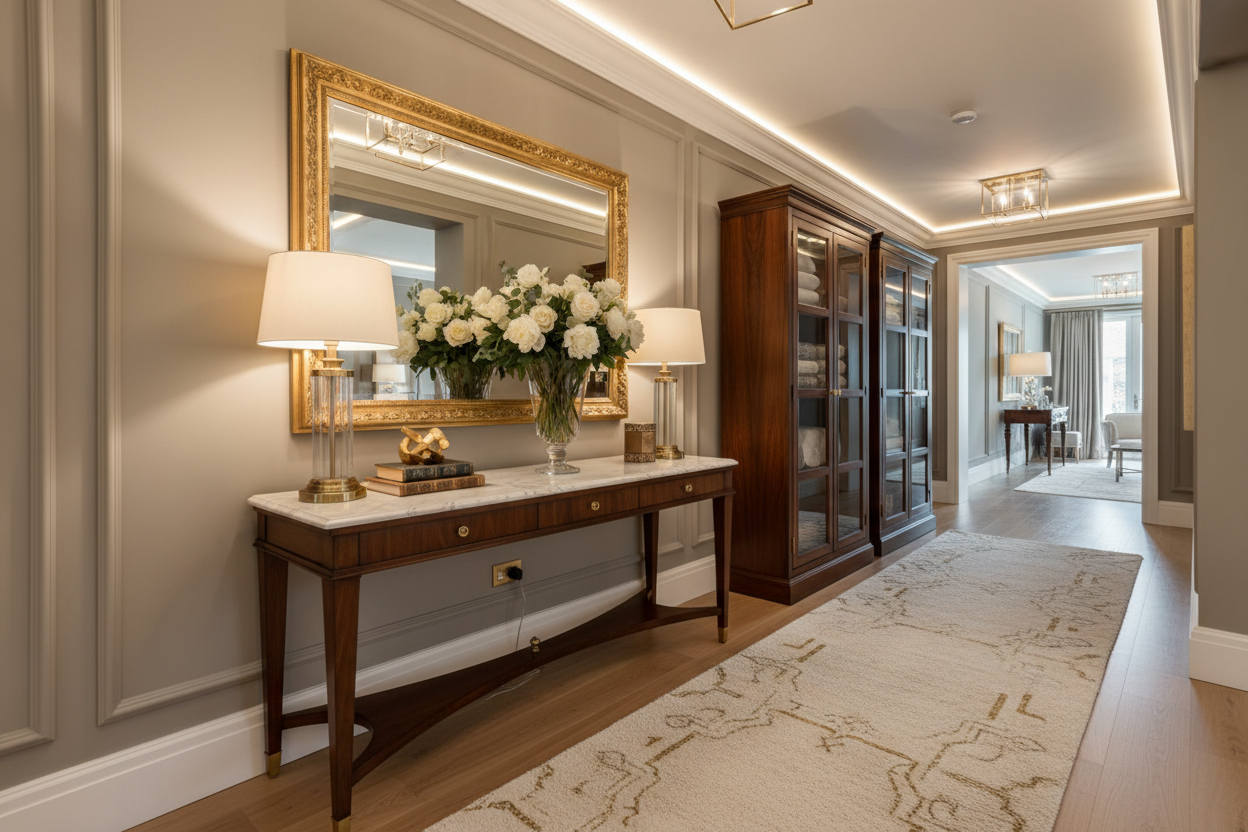
The entryway is the handshake of your home; it sets the tone before a guest even steps into the living room. Yet, too often, this transitional space becomes a chaotic drop zone for keys, mail, and muddy shoes. As a designer, I see clients struggle to balance the need for utility with the desire for aesthetics. The solution lies in curating the right furniture hall storage—pieces that anchor the space without overcrowding it, blending seamless functionality with architectural beauty.
Key Features to Look For
- Slim Profile Depth: Prioritize pieces under 15 inches in depth to maintain a 36-inch clearance for walkways.
- Closed vs. Open Ratio: Look for a 70/30 split—70% closed storage for clutter (shoes, bags) and 30% open surface for decor.
- Material Durability: Opt for hardwoods or high-pressure laminates that withstand impact and moisture from wet coats.
- Elevated Silhouettes: Furniture with legs (rather than plinth bases) creates a sense of airiness, making narrow halls feel wider.
Mastering Spatial Flow and Layout
When selecting entry hallway storage, the primary constraint is almost always circulation. A common error is choosing a console or cabinet that projects too far into the walking path. In design terms, visual weight is just as important as physical dimensions. A floating console, anchored to the wall, provides necessary drawer space while leaving the floor visible, which tricks the eye into perceiving a larger area.
For wider foyers, a substantial credenza can serve as a focal point. However, ensure the piece doesn't obstruct the swing of the front door. The goal is a frictionless entry—where you can walk in, drop your items, and move forward without maneuvering around obstacles.
Materiality: Durability Meets Design
Your hall entryway storage faces more abuse than almost any other furniture in the house. It encounters wet umbrellas, abrasive denim, and heavy grocery bags. While a lacquered finish might look stunning in a showroom, it is prone to micro-scratches in high-traffic zones.
I often steer clients toward textured wood grains like white oak or walnut. These materials hide dust and fingerprints forgivingly. If you prefer a painted look, ensure the piece is finished with a catalytic conversion varnish or a high-grade polyurethane for longevity. Additionally, consider the hardware; solid brass or matte black pulls not only elevate the look but withstand the repetitive stress of daily opening and closing.
Integrating Multi-Functional Pieces
In compact urban homes, hallway furniture with storage must multitask. A bench with a flip-top lid or lower cubbies offers a place to sit while putting on shoes and a place to hide them. When selecting a bench, pay attention to the upholstery. Performance fabrics or top-grain leathers are essential here—they need to be wipeable and resistant to staining.
Lessons from My Own Projects
I want to share a specific realization I had while redesigning a narrow Victorian terrace hallway last year. We ordered a stunning, custom-made console table that looked perfect on the floor plan. However, once installed, I noticed something the drawings didn't show: the acoustics.
The hallway had high ceilings and hardwood floors. Every time the client dropped their keys on the timber top of the console, it created a sharp, echoing clatter that disrupted the peace of the home. It was a sensory detail I hadn't anticipated. To fix it, we added a custom-cut piece of honed leather to the top surface. It dampened the sound instantly and added a rich tactile element. Now, I always advise clients to consider how their storage furniture sounds—soft-close hinges and lined drawers are non-negotiable in echo-prone hallways.
Conclusion
Transforming your hall requires looking past the clutter and seeing the potential for elegance. By selecting storage that respects the scale of your architecture and the reality of your daily routine, you create an entry that welcomes you home with composure rather than chaos. Invest in quality materials and thoughtful silhouettes, and your hallway will become a destination in itself.
Frequently Asked Questions
What is the ideal depth for hallway storage furniture?
For narrow corridors, aim for a depth between 10 to 14 inches. If you have a grand foyer, you can go up to 18 or 20 inches, but always ensure you maintain at least 36 inches of walking clearance.
How do I style a storage console without it looking cluttered?
Use the rule of three. Group items in odd numbers—for example, a lamp (height), a tray for keys (function), and a sculptural object (texture). Leave negative space so the surface breathes.
Is open or closed storage better for entryways?
Closed storage is superior for maintaining a luxury aesthetic because it hides visual noise like colorful sneakers and mail piles. Use open storage sparingly, strictly for decorative items or neatly organized baskets.

Leave a comment
This site is protected by hCaptcha and the hCaptcha Privacy Policy and Terms of Service apply.