










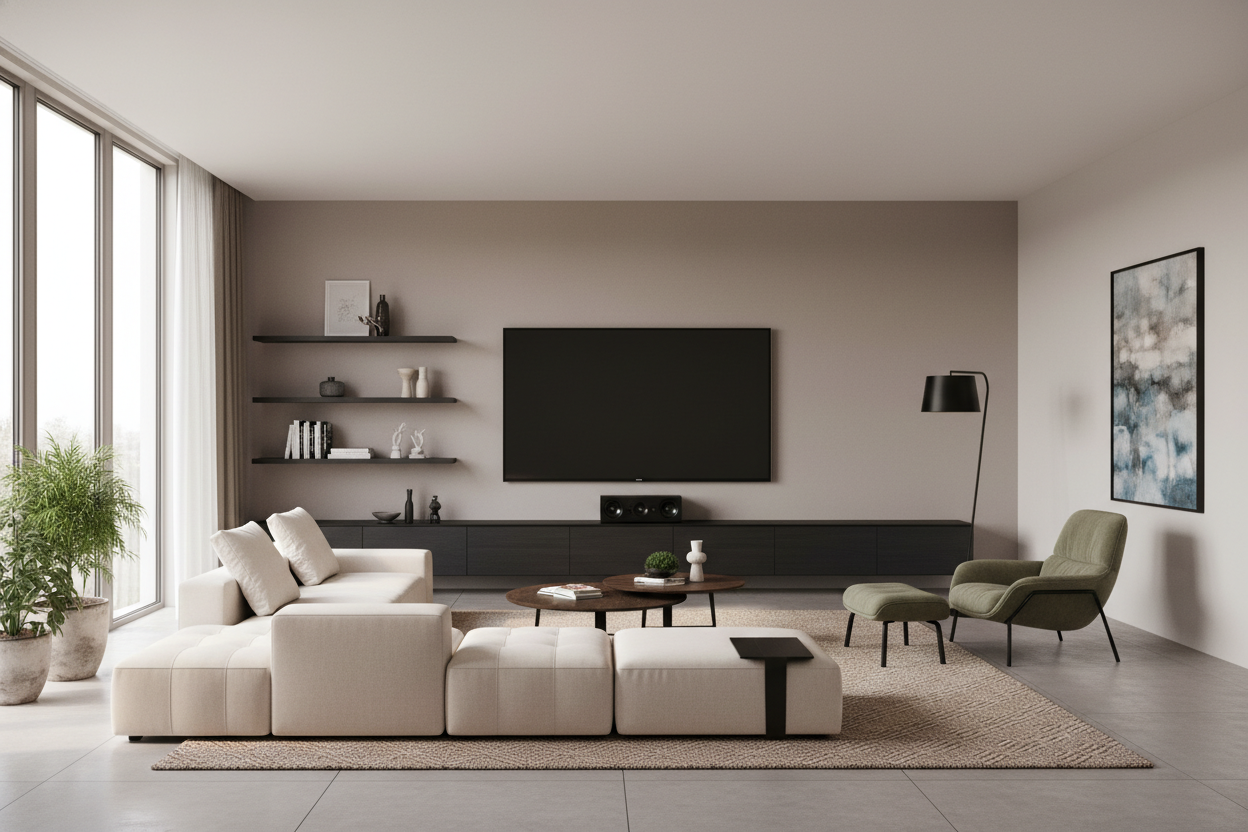
I have spent years staring at living rooms that feel 'off' without the owners being able to pin down why. Usually, it is because they bought a 75-inch TV and paired it with a stand that is barely 60 inches wide. It looks like a bodybuilder standing on a toothpick. Staring at 47 browser tabs of media consoles at 1 AM is exhausting, but I am here to tell you that buying a tv stand up to 88 inches is actually the secret to making a standard-sized room feel high-end rather than cramped.
- Visual Balance: A wider base grounds the TV and prevents the 'top-heavy' look.
- Storage Wins: 88 inches of length usually means four to five cabinets for hiding cables and consoles.
- Room Scale: Long, low furniture draws the eye horizontally, making narrow rooms feel wider.
- Decor Space: You finally have room for a lamp or a plant next to the screen.
The Intimidation Factor of a 7-Foot Console
When I suggest a 7.3-foot piece of furniture, clients usually gasp. They think it will swallow the room. Most people default to standard living room TV stands that are 55 or 60 inches because they feel 'safe.' But safe is often synonymous with 'undersized.'
A massive console acts as an anchor. Instead of having five small pieces of furniture cluttering a wall, one long unit creates a clean, architectural line. It is the difference between a cluttered apartment and a curated home. Our instincts about scale are usually wrong because we focus on the floor space lost rather than the visual clutter saved.
Why Your Current Setup Feels So Cluttered
If your TV screen is wider than—or even the same width as—your console, you have created visual tension. Every time you look at the screen, your brain registers that the proportions are unstable. This is why 88 tv console setups are becoming the gold standard for anyone with a 65-inch screen or larger.
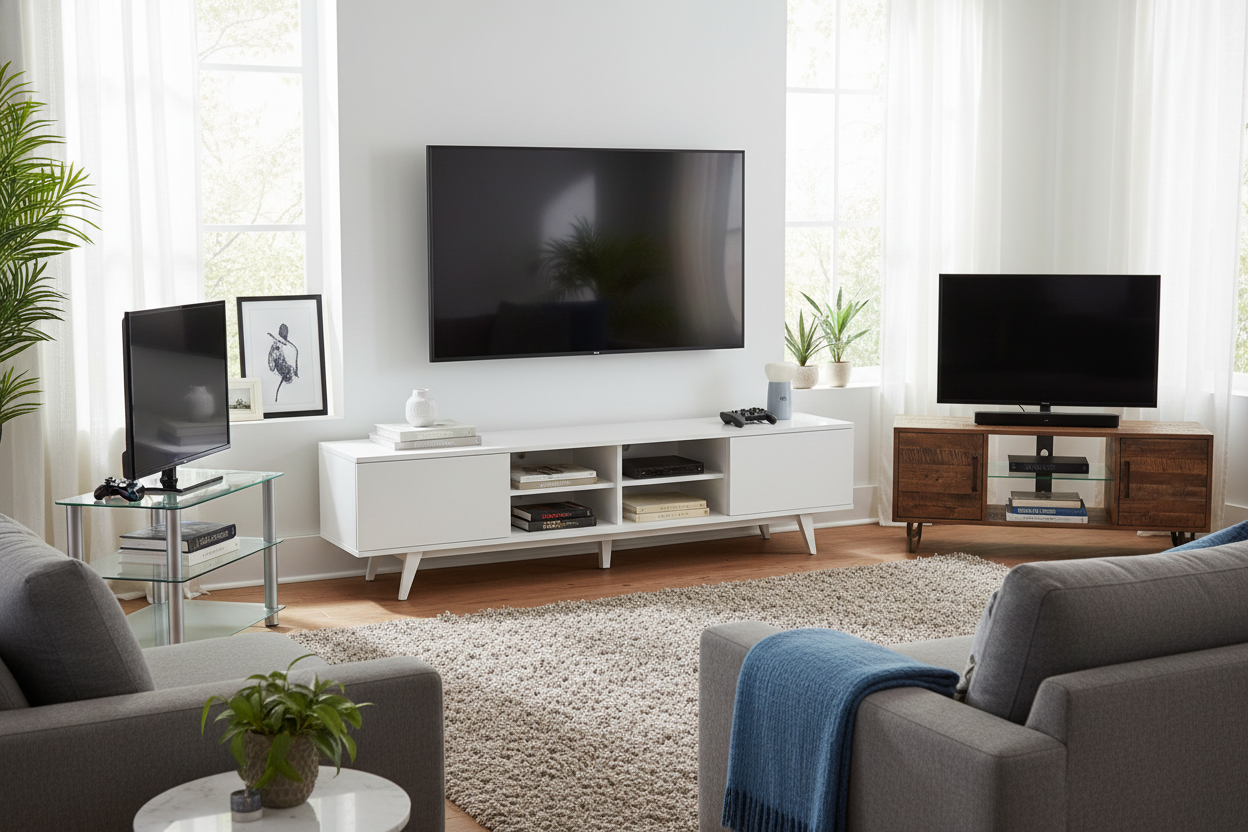
When the stand is too short, you have no room for anything else. Your soundbar hangs off the edge, your router is shoved behind the legs, and there is zero room for a drink or a candle. An 88 inch entertainment center gives all that tech a place to live while leaving the top surface looking intentional, not desperate.
The 'Negative Space' Rule for Big Screens
The math is simple: you want at least 6 to 10 inches of console extending past the edge of your TV on both sides. If you have a 75-inch TV (which is roughly 65 inches wide), a tv stand for tvs up to 88 inches provides that perfect buffer. This 'negative space' allows the eye to rest.
Without this buffer, the wall looks like a giant black rectangle is just floating there. When you master the layout proportions, you realize that the furniture should always be the 'frame' for the technology. A tv stand 88 inches wide ensures the frame is big enough to actually do its job.
How to Style 88 Inches of Surface Area
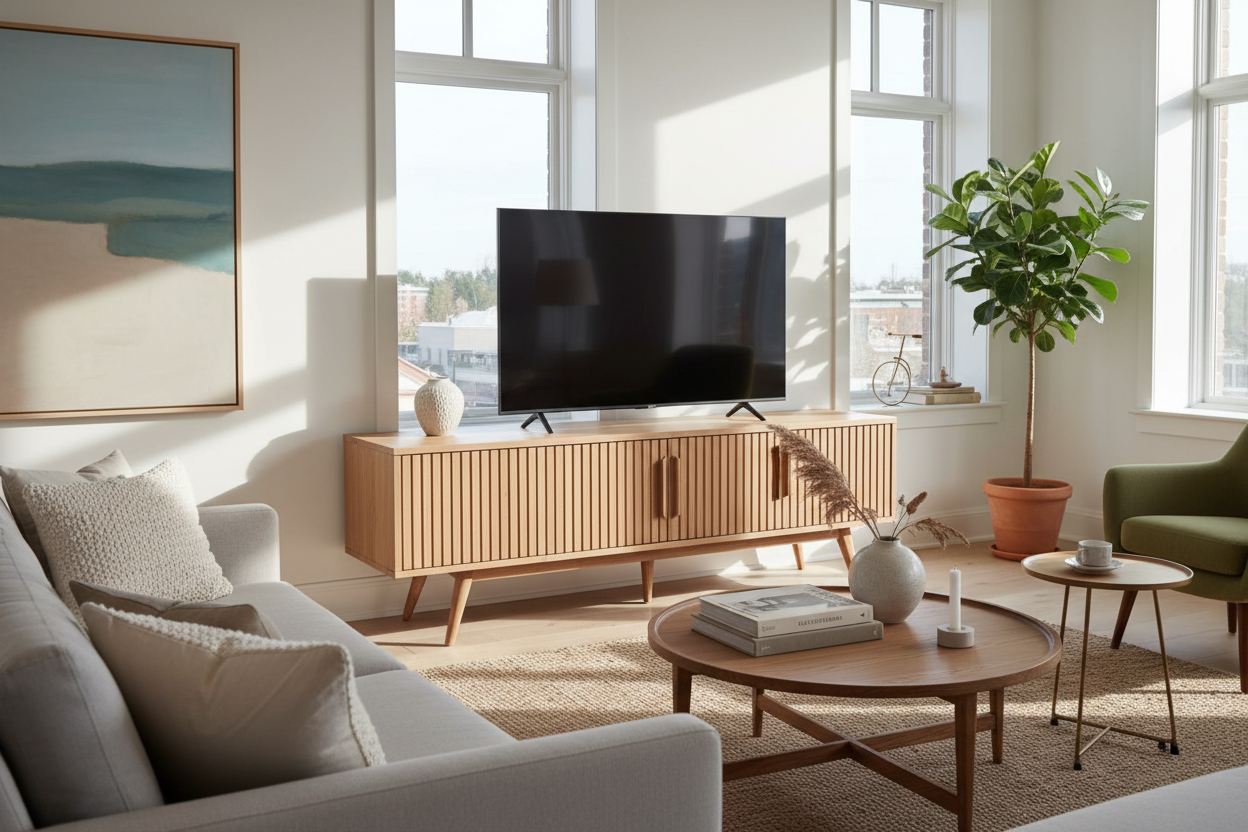
The biggest mistake people make with a modern tv stand 88 inch is leaving the ends completely empty or, conversely, covering the whole thing in tiny knick-knacks. Think in 'zones.' One side gets a tall element, like a sculptural vase or a table lamp. The other side gets a horizontal element, like a stack of three oversized coffee table books.
Keep the center clear for your soundbar or the TV itself. If you are mounting the TV on the wall above the stand, you have even more room to play. Just remember: three large items look better than fifteen small ones. You want this to look like a gallery plinth, not a shelf at a thrift store.
Will a Modern TV Stand 88 Inch Actually Fit?
Before you pull the trigger, grab some blue painter's tape. Tape out 88 inches on your floor. You need at least 30 inches of clearance between the console and your coffee table to walk comfortably. If you are in a tight apartment, look for adjustable minimalist entertainment centers that let you slide the units to fit your specific wall length.
Most 88-inch units come in two or three sections that bolt together, which is a lifesaver for apartment dwellers with narrow hallways. I once tried to move a solid 90-inch oak sideboard up a 1920s staircase and nearly lost a toe. Now, I only buy modular or multi-piece long units. Trust me on this one.
Personal Experience: The 60-Inch Mistake
I once bought a beautiful, high-end 60-inch walnut stand for my 65-inch TV because it was on sale. I hated it for two years. Every time I sat on my sofa, the TV looked like it was suffocating the furniture. I finally sold it on Marketplace and bought an 85-inch unit. The room instantly felt twice as big. It makes no sense on paper, but in person, that long horizontal line changed the entire energy of my living room.
FAQ
Can I use an 88-inch stand for a 55-inch TV?
Absolutely. It actually looks incredibly chic and 'high-design' to have a smaller TV centered on a very long console. It gives you more room for styling and prevents the TV from dominating the room.
How many people does it take to assemble?
For a unit this size, you definitely want two people. Not because it is complex, but because flipping a 7-foot top panel alone is a great way to snap a cam lock or scratch your floors.
Will it look too low?
Most 88-inch stands are low-profile (around 15-20 inches high). This is intentional. It keeps the TV at eye level and prevents the massive piece of furniture from feeling like a wall. Low and long is the goal.

Leave a comment
This site is protected by hCaptcha and the hCaptcha Privacy Policy and Terms of Service apply.