










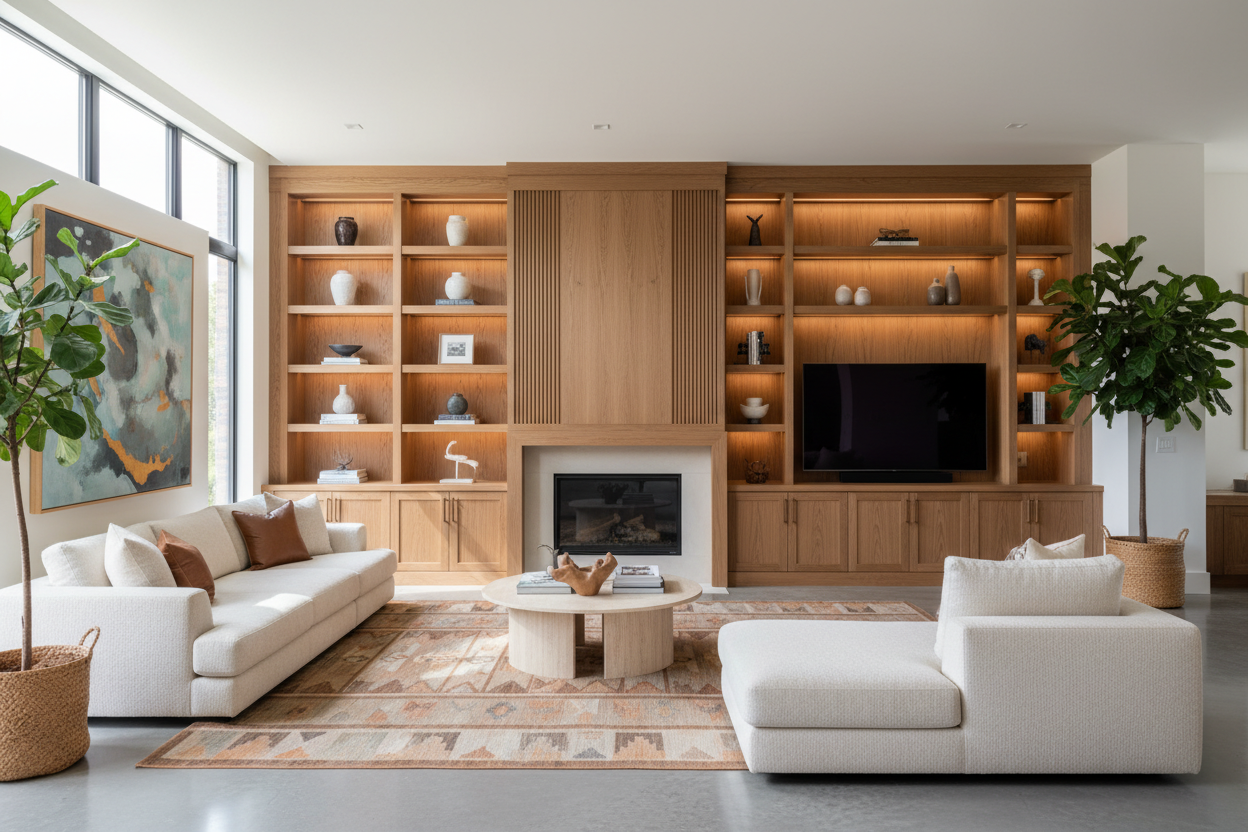
I spent most of my childhood staring at a massive, orange-tinted monolith that housed a 20-inch tube TV and approximately four hundred VHS tapes. For years, that image was burned into my brain as the definition of 'dated.' So, when I started seeing the oak entertainment center wall unit making a comeback in high-end design portfolios, I had a bit of a localized panic attack. Was I really ready to invite that much wood back into my life?
The short answer is yes, but only because the 'new oak' looks nothing like the marmalade-stained cabinets of my youth. Today’s oak is about texture, matte finishes, and clean lines that actually make a room feel anchored rather than suffocated. If you are staring at a blank 14-foot wall and wondering how to fill it without it looking like a suburban basement from 1994, you are in the right place.
Quick Takeaways
- Modern oak favors matte, 'raw' finishes over high-gloss orange stains.
- White oak is your best friend for Scandi or Coastal vibes; red oak fits more traditional or rustic spaces.
- Scale matters: ensure the TV cavity is built for at least a 65-inch screen, or choose a modular system.
- Contrast is key—pair oak with black metal hardware or dark stone to keep it feeling current.
Why We Are Officially Over the Honey Oak Panic
The 90s gave oak a bad reputation because everything was drenched in a thick, amber-colored polyurethane. It was heavy, it was shiny, and it was everywhere. But oak itself is a phenomenal hardwood—it's incredibly durable and has a gorgeous, open grain that takes stain beautifully when done right. Modern oak wall units and entertainment centers have ditched the gloss for wire-brushed textures and clear coats that let the natural, pale-wheat color of the wood shine through.
Interior designers have realized that in an era of white-box apartments and minimalist drywall, we need the soul that wood provides. It’s a timeless choice designers still love because it brings an organic element to a room full of glass screens and plastic tech. When you go with a matte finish, the wood feels like a piece of architecture rather than just a heavy box pushed against the wall.
White Oak vs. Red Oak: Nailing the Modern Aesthetic
If you want that 'Pinterest-perfect' look, you need to know your species. White oak is the gold standard for contemporary homes. It has cooler undertones—think beige and tan rather than pink or orange. It’s what gives those high-end California cool or Scandinavian living rooms their airy feel. Red oak is more traditional, with warmer, pinkish undertones that can feel a bit more formal or 'country' depending on the stain.
To make an oak wall unit entertainment center feel like it belongs in 2024, I always look for contrast. A piece with a natural wood and black finish instantly breaks up the visual weight. The black accents (like slim metal legs or hardware) act like eyeliner for the furniture—it defines the shape and keeps the wood from looking like a giant beige blob against your wall.
How to Mix Floors With an Oak Wall Unit Entertainment Center
The number one question I get is: 'Can I put an oak unit on my oak floors?' The answer is yes, but don't try to match them perfectly. If you try to match the stain exactly and miss by 5%, it looks like an accident. If you miss by 20%, it looks like a choice. That is what we want.
Follow the 'two-shade rule.' If your floors are light natural oak, go for an oak wall unit entertainment center that is either two shades darker or has a distinct grain pattern like rift-sawn oak. If you have dark walnut or espresso floors, a light white oak unit will pop beautifully. Also, throw a rug between them. A jute or wool rug acts as a visual 'palate cleanser' between the floor and the furniture, so the wood tones don't have to fight each other for attention.
New vs. Vintage: Finding an Oak Entertainment Center for Sale
You can find a vintage oak entertainment center for sale on Marketplace for fifty bucks almost any day of the week. The problem? They were built for 'the cube.' Unless you plan on doing some serious power-tool surgery to remove the middle shelves, your 75-inch OLED isn't going to fit. I’ve tried the DIY route, and honestly, by the time you strip the old 'honey' finish and rebuild the frame, you’ve spent forty hours and a hundred dollars on sandpaper.
Buying new is usually the smarter play for tech integration. Modern units are shallower (around 16-18 inches instead of the beastly 24-inch depth of the 90s) and feature cord management that doesn't involve a drill and a prayer. If you want a layout that actually works with modern soundbars and consoles, you should browse a modern entertainment center that offers modularity. You get the look of a built-in without the $8,000 contractor bill.
Styling Oak Wall Units and Entertainment Centers Without the Clutter
The biggest mistake people make with oak wall units and entertainment centers is feeling the need to fill every single square inch of shelving. This is how you end up back in 1994. To keep it modern, embrace negative space. If a shelf is 24 inches wide, maybe only put a single, oversized matte ceramic vase on one side and leave the rest empty.
I like to mix textures: something smooth (glass or ceramic), something organic (a trailing pothos plant), and something personal (a small stack of books). Avoid the 'knick-knack' trap. If it’s smaller than a grapefruit, it probably shouldn't be on your wall unit. Large-scale items make the unit look like a curated architectural feature; small items make it look like a storage closet.
My Personal Take: The Mistake I Made
I once bought a massive red oak unit because the price was too good to pass up. I thought I could 'modernize' it with just some black handles. I was wrong. The red undertones in the wood clashed horribly with my grey-toned LVP flooring, and the unit was so deep it ate up three feet of my living room. I eventually sold it and switched to a slim, white oak modular system. The difference in 'visual breathing room' was night and day. Don't just buy for the price—buy for the depth and the undertone.
FAQ
Is oak furniture coming back in style?
It’s already back, but the 'style' has changed. We are seeing a huge shift toward white oak with matte, water-based finishes rather than the shiny, orange-tinted oil finishes of the past.
How do I make my old oak entertainment center look modern?
Sand it down to the raw wood and apply a clear matte sealer or a 'pickled' white wash. Replacing chunky brass hardware with slim black or bronze pulls also makes a massive difference.
Will a wall unit make my room look smaller?
Not if you choose one with legs. Being able to see the floor continue underneath the furniture tricks the brain into thinking the room is larger. Avoid 'to-the-floor' plinth bases in small rooms.


Leave a comment
This site is protected by hCaptcha and the hCaptcha Privacy Policy and Terms of Service apply.