










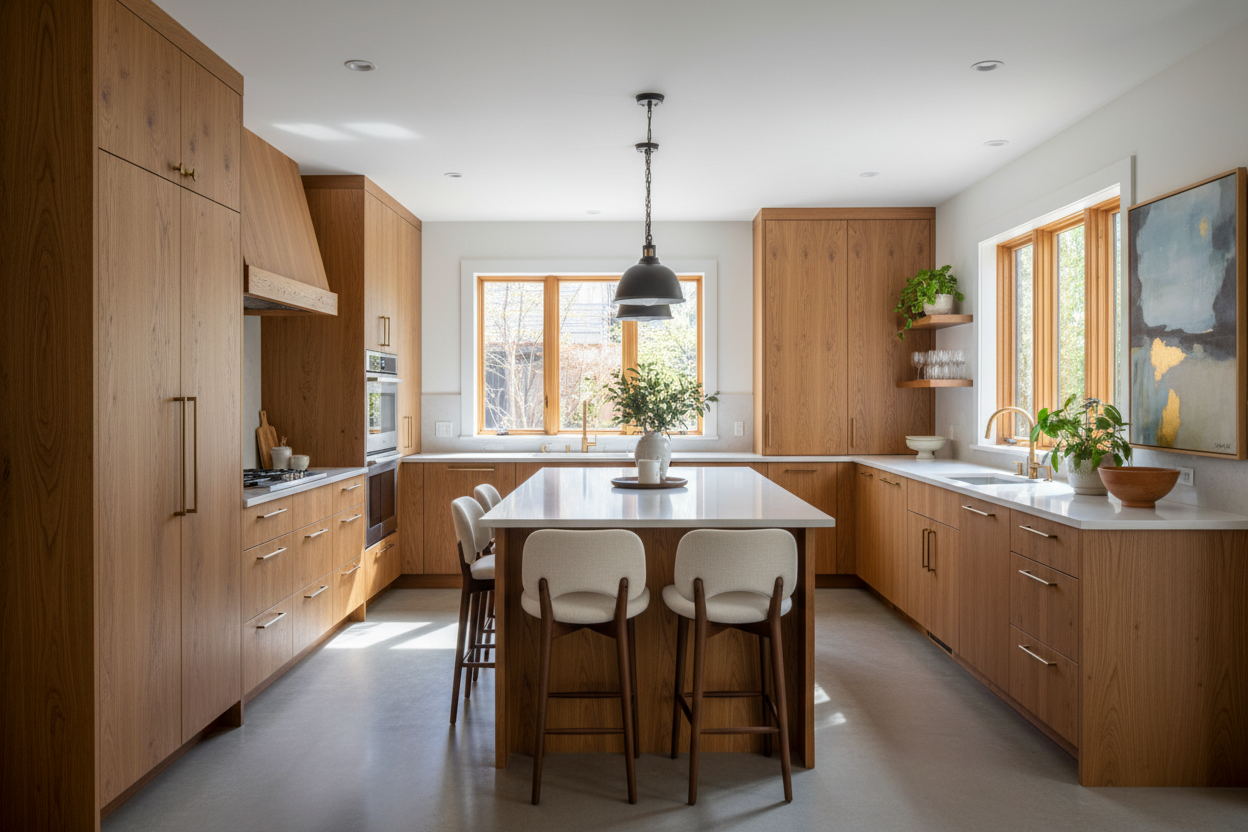
I remember walking into a client's kitchen last year—they'd just installed big-box cabinets that looked great online. But the doors were already sagging on their 1/2-inch plywood boxes, and the drawer glides felt flimsy. They asked me, 'Is this normal?' That moment is why I'm writing this. If you're considering kitchen cabinets local options but worry about cost versus quality, let's talk about what actually matters.
Quick Takeaways
- Local cabinet boxes typically use 3/4-inch plywood or solid wood—not 1/2-inch particleboard—for lasting durability.
- Custom sizing solves awkward layouts: think 15-inch deep upper cabinets for shallow walls, or 42-inch tall bases for standard 36-inch countertops with 6-inch toe kicks.
- Expect 2.0 lb/ft³ high-resilience foam in drawer fronts and doors for that solid feel, not hollow-core construction.
- Maintain 42-48 inches of clearance between island and cabinets for comfortable movement.
Why Local Kitchen Cabinets Aren't Just About Proximity
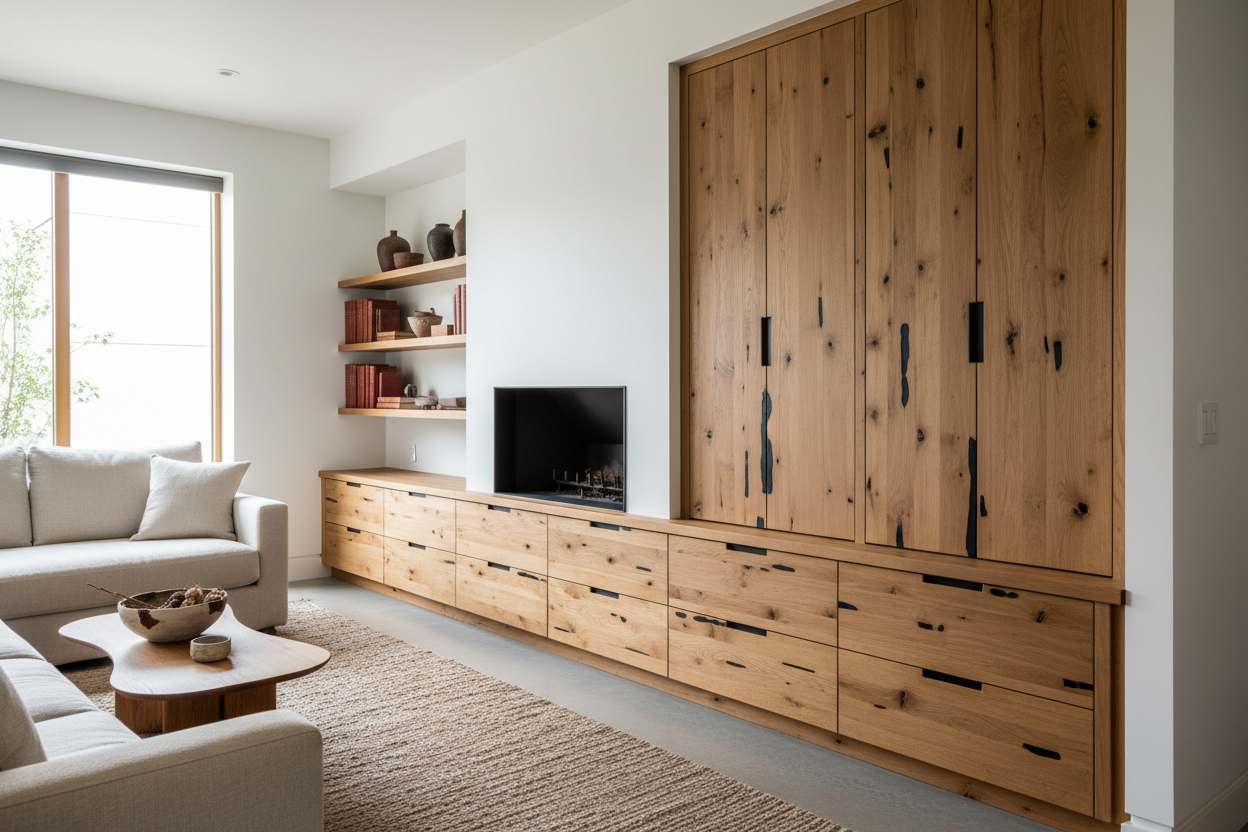
When you walk into a local shop, you're not just buying cabinets—you're investing in craftsmanship. I recently worked with a maker who uses dovetail joints on all drawers, not just staples and glue. That drawer will hold 75 pounds of pots without sagging. The difference starts with materials: kiln-dried maple frames versus finger-jointed pine that can warp. One client's local cabinets used 3/4-inch Baltic birch plywood boxes—ten years later, they're still square. When you're evaluating quality, I always recommend looking at what designers actually look for in local showrooms—it's about construction details, not just finish samples.
The Real Cost Breakdown: Local vs. Mass-Produced
Let's talk numbers. Yes, local cabinetry often costs 20-40% more upfront. But consider this: mass-produced cabinets might need replacement in 10-15 years. Local solid wood cabinets? I've seen them last 30+ years with proper care. One client saved $2,000 in repairs over eight years because their custom drawers had metal glides rated for 100 pounds, not plastic ones failing at 50. Resale value matters too—in my experience, homes with quality local cabinets sell 7-10% faster because buyers recognize craftsmanship. The initial investment spreads over decades, not years.
How Local Craftsmanship Solves Common Kitchen Problems
Every kitchen has quirks. I worked on a 1920s home with walls that weren't square—off by 2 inches over 10 feet. Mass-produced cabinets would have left gaps. Our local maker built boxes that followed the wall's contour, creating a seamless look. Another client had a useless corner; instead of standard lazy Susans, we installed a corner kitchen pantry cabinet set with pull-out shelves that actually reached the back. Local craftsmen measure your space three times: before design, during fabrication, and during installation. That precision solves problems you didn't know you had.
Customization That Actually Works in Real Kitchens
Custom doesn't mean extravagant—it means functional. One family needed lower cabinets at 30 inches high for their wheelchair-accessible kitchen, with drawers that opened with touch latches. Their local maker built them for the same cost as modified stock cabinets. Another client wanted to integrate a kitchen island with glass top into their existing layout; the cabinet maker created base cabinets with reinforced tops to support the glass's weight. Practical customization: think spice pull-outs exactly 3 inches wide for your collection, or utensil drawers with dividers sized for your longest cooking tools.
Finding Your Local Cabinet Partner: What to Actually Look For
Visit workshops—don't just look at showrooms. Ask to see a cabinet in progress. Check the joinery: are corners mitered and glued, or just stapled? Ask about finish options: water-based lacquers versus oil-based paints affect durability and dry time. I always recommend asking for references from projects completed 5+ years ago—that's when quality shows. In local craftsmanship in Lexington KY, one maker showed me cabinets from 1998 that still operated smoothly. Also discuss how they handle kitchen islands collection integration—coordination matters.
Personal Experience: The Honest Downside
I won't sugarcoat it—local takes time. One project took 14 weeks from measurement to installation, versus 6 weeks for stock cabinets. There were delays when the wood moisture content wasn't right (good makers check this). Communication is crucial: you need to be available for multiple site visits. But here's what made it worth it: when those cabinets arrived, every piece fit perfectly. No shimming, no cutting filler strips. The finish was consistent because it was applied in a controlled environment, not on-site. That patience paid off in daily use.
FAQ
How much should I budget for local kitchen cabinets? For a standard 10x12 kitchen, expect $15,000-$25,000 installed, including countertops. Compare to $8,000-$15,000 for semi-custom big-box options.
What questions should I ask about materials? Ask: 'What's the drawer box material?' (1/2-inch plywood minimum), 'What's the hinge rating?' (100,000 cycles is good), 'Is the finish catalyzed varnish or conversion varnish?' (latter is more durable).
How do I maintain local wood cabinets? Use mild soap and water—no abrasive cleaners. Re-oil hardware annually. Check door alignment every 2-3 years; local makers often include one adjustment visit in their warranty.
Can local cabinets match my existing elements? Yes—bring samples of flooring, countertops, or hardware. Good makers can stain to match within 5% variance, which is virtually indistinguishable.

Leave a comment
This site is protected by hCaptcha and the hCaptcha Privacy Policy and Terms of Service apply.