










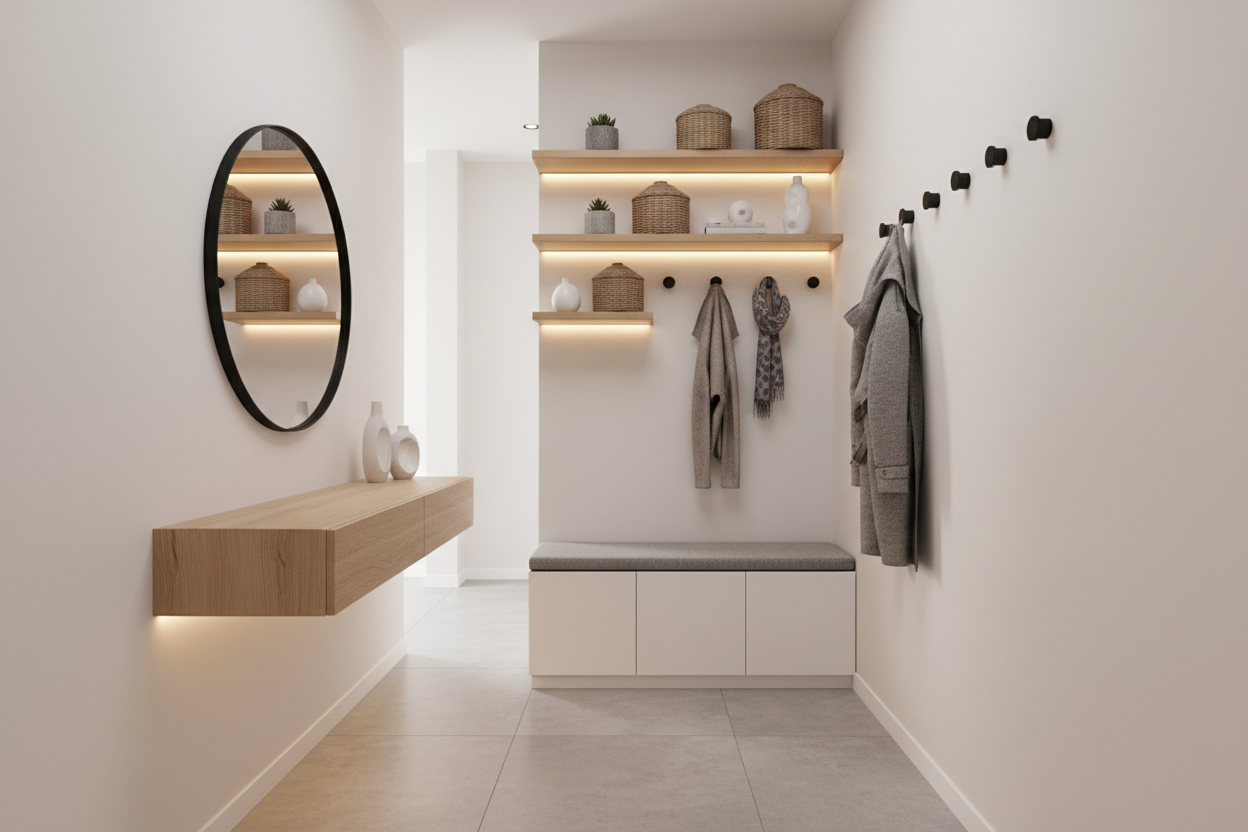
The hallway is often the most neglected area of a home, treated merely as a thoroughfare to get from the front door to the living room. However, this transitional space sets the psychological tone for the entire house. Successful hall furniture design isn't just about filling a void; it is about merging specific utility with an aesthetic welcome. To answer the core challenge immediately: the secret to designing for hallways lies in verticality and shallow depth. You need pieces that hug the wall—typically no deeper than 35 to 40 centimeters—while utilizing the full height of the room to draw the eye upward and maximize storage.
Many homeowners make the mistake of trying to force standard-sized furniture into a corridor, resulting in a cramped "obstacle course" feel. Instead, the goal is to maintain a clear line of sight and a wide enough path for two people to pass comfortably, or at least for one person to carry groceries without hip-checking a table. This requires a shift in thinking from buying furniture off the floor to curating pieces specifically engineered for slim spaces.
The Reality of Narrow Living
I learned the hard way that standard furniture rules do not apply to entryways. A few years ago, I was tasked with updating a Victorian terrace hallway that measured barely a meter wide. The owners had placed a standard depth chest of drawers near the door to hold keys and mail. While it offered great storage, it created a bottleneck that made entering the house feel stressful. Every time the door opened, you had to shuffle sideways.
The solution wasn't to remove the storage, but to change its geometry. We ripped out the bulky chest and installed a floating console that was only 25 centimeters deep but spanned nearly two meters in length. We paired this with wall-mounted shoe cabinets that tilted out rather than opening out. The difference was immediate. The physical footprint changed by only a few square feet, but the psychological feeling of space doubled. This experience cemented my belief that in the design of hall furniture, the profile of the piece is far more critical than its volume.
Anchoring the Space: The Console Table
The console table is usually the hero of the hallway. It provides a surface for the "drop zone"—keys, sunglasses, and mail—without demanding much floor space. When selecting or designing this piece, look for legs that are visually light. Heavy, blocky bases can make a narrow hall feel claustrophobic. Hairpin legs, open metal frames, or floating wall-mounted shelves allow the floor to be seen underneath, which tricks the brain into perceiving the room as larger.
If you are dealing with a long, dark corridor, a console table can also serve as a visual break. It stops the hallway from feeling like a runway. Styling this surface is just as important as the structure. A mirror placed directly above the console reflects light and adds depth, while a pair of tall, slender lamps can add height and warmth without taking up horizontal real estate.
Hidden Storage Solutions
Clutter is the enemy of a calm entry. Shoes, specifically, are the biggest offender. A pile of footwear near the door instantly ruins the look of even the most expensive renovation. Modern hall furniture design often incorporates tilt-out shoe cabinets. These are brilliant because they store shoes vertically rather than horizontally, drastically reducing the depth required for the cabinet. From the outside, they look like sleek paneling or a slim sideboard, but they can swallow a dozen pairs of sneakers easily.
For coats and bags, avoid bulky coat stands if space is tight. They tend to become top-heavy and encroach on head height. Wall-mounted hooks or a peg rail running the length of the hall are superior options. They offer infinite flexibility and, when empty, look like architectural molding rather than an empty piece of furniture.
Material Selection and Durability
The hallway is a high-traffic zone. It sees wet umbrellas, muddy boots, and the constant brushing of bags against surfaces. The materials you choose need to be more robust than what you might use in a bedroom. Fragile lacquers or soft woods can scratch easily in this environment. Hardwoods like oak or walnut are excellent choices because they age well and can take a knock.
Metal and stone are also fantastic for the design of hall furniture because they are impervious to moisture. A console table with a marble top might cost more initially, but it won't warp if someone sets down a wet package or a dripping coffee cup. If you prefer painted furniture, ensure it is finished with a high-quality, wipeable paint. Matte finishes are trendy, but in a hallway, a satin or semi-gloss finish will be much easier to clean when the inevitable scuff marks appear.
Lighting as a Design Element
Furniture does not exist in a vacuum; it interacts with light. In hallways, which often lack natural windows, the furniture must work harder to brighten the space. High-gloss finishes on consoles or cabinets can bounce artificial light around the room. Similarly, incorporating LED strip lighting underneath a floating cabinet can create a soft glow that illuminates the floor, making the walkway feel safer and more inviting at night.
Do not rely solely on overhead pot lights. They cast harsh shadows and can make a narrow hall feel like an interrogation room. By placing table lamps on your furniture or installing sconces that flank a mirror, you create layers of light that highlight the texture and design of your pieces.
The Bench: A luxury or Necessity?
If space permits, a bench is a transformative addition. It invites people to sit down to take off or put on shoes, signaling that the transition from "outside" to "inside" is complete. In tighter spaces, look for a bench with an open bottom to store baskets, or a box-bench with a hinged lid for internal storage. However, be ruthless with measurements. If a bench impedes the door swing or forces you to walk around it, it is not worth the utility. Flow must always come first.
Ultimately, the hallway is an introduction to your personal style. Whether you choose a minimalist metal rack or an antique wooden settle, the pieces should speak to the rest of the home while standing up to the rigors of daily use. By prioritizing slim dimensions and smart storage, you turn a corridor into a destination.
Frequently Asked Questions
What is the minimum width required for a hallway to accommodate furniture?
Ideally, you should maintain a walkway of at least 90 to 100 centimeters (36-40 inches) for comfortable movement. If your hallway is narrower than this, stick to wall-mounted features or furniture with a depth of 20 centimeters or less to avoid blocking the path.
How do I stop my hallway furniture from looking cluttered?
Adopt the "closed storage" rule for 80% of your items. Use baskets, drawers, or cabinets to hide shoes, mail, and dog leashes, leaving surface areas clear for only one or two decorative items like a vase or a tray. Visual silence is key in small spaces.
Can I mix different wood tones in a small hallway?
Yes, mixing wood tones can add warmth and character, preventing the space from looking flat. Try to keep the undertones (warm vs. cool) consistent, or use a neutral material like metal or painted wood to break up the different timber finishes.


Leave a comment
This site is protected by hCaptcha and the hCaptcha Privacy Policy and Terms of Service apply.