










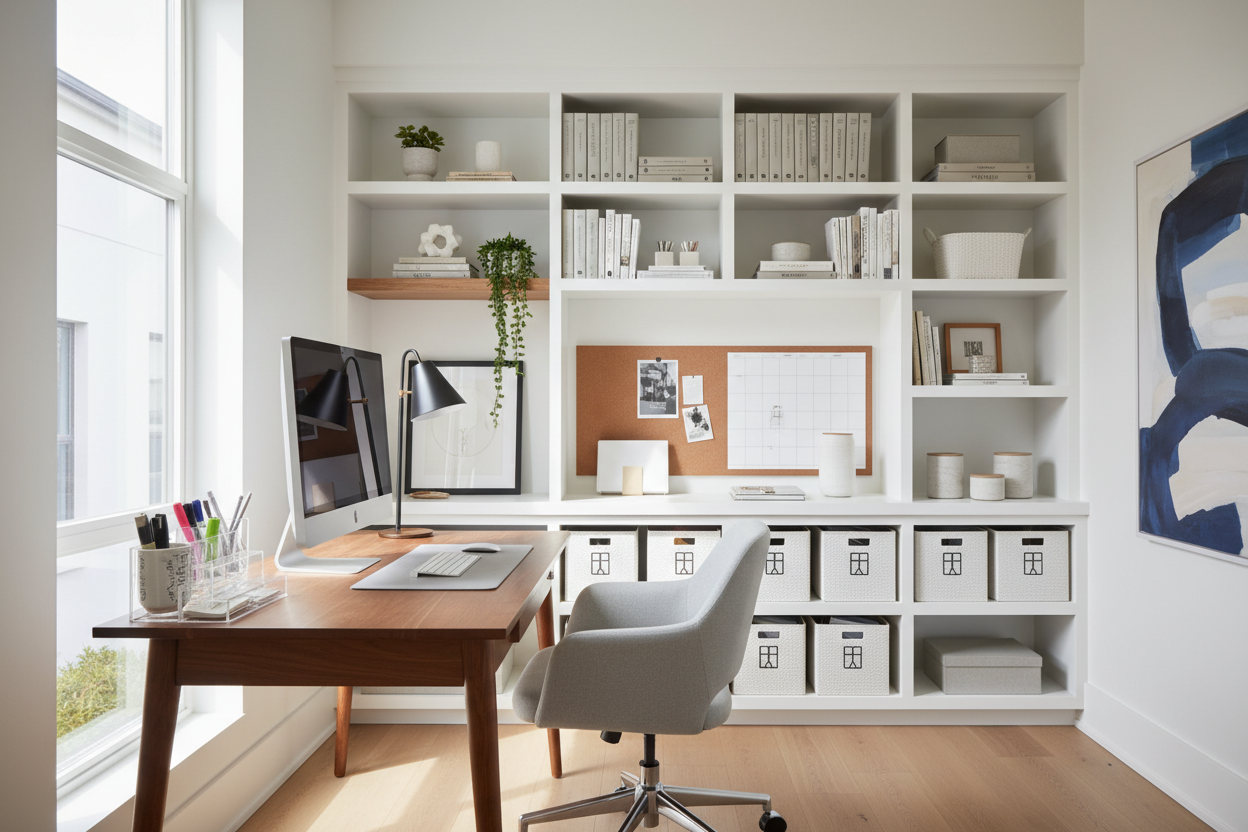
There is a distinct difference between a workspace that is merely tidy and one that is truly designed. As a designer, I often walk into offices where the clutter is gone, but the soul is missing—replaced by sterile plastic bins and utilitarian trays. The goal of sophisticated office decor organization is not just to hide the mess, but to elevate the daily workflow through intentional materiality and visual balance. This article explores how to curate a space where storage solutions double as sculptural elements.
Key Features to Look For
Before investing in new pieces, consider these four pillars of design to ensure your workspace remains functional yet visually grounded:
- Material Integrity: Opt for natural materials like solid walnut, saddle leather, or unlacquered brass over synthetic plastics, which tend to yellow and crack over time.
- Visual Weight: Ensure your organizers balance the desk's silhouette. Heavy, dark wood trays ground a glass desk, while acrylic or wire pieces keep a heavy oak desk from feeling imposing.
- Ergonomic "Reach Zones": Prioritize placing decorative office organizers within a 14-inch radius of your seated position for high-frequency items.
- Cohesive Finishes: Match the hardware on your organizers (like drawer pulls or rims) to the existing metals in your lighting or furniture legs for a unified look.
Merging Aesthetics with Utility
The most common error I see in residential office design is treating office decor and organization as two separate purchasing decisions. You buy art for the walls, and then you buy bins for the paper. To achieve a luxury look, these must be integrated. Your storage is your decor.
Selecting Decorative Office Organizers
When sourcing decorative office organizers, think about texture. A desk is a high-touch environment. If you are typing and writing all day, the tactile experience matters. I often recommend leather-wrapped document trays or felt-lined drawer inserts. These materials absorb sound—reducing the clamor of dropping a pen or keys—and add a layer of warmth that rigid plastics cannot replicate. Look for organizers with hand-stitched detailing or beveled edges, which catch the light and add depth to your desktop vignette.
Space Planning and Visual Flow
Effective decorative office organization relies heavily on the concept of negative space. Crowding a desktop with beautiful organizers still results in a cluttered look.
The Rule of Three
Arrange your desktop accessories in odd numbers to maintain visual interest. For example, group a vertical file holder, a low decorative bowl for clips, and a table lamp. This creates a triangular composition that guides the eye naturally across the surface rather than overwhelming it. Ensure that taller items are placed in the back corners to avoid obstructing your line of sight or your reach.
Lessons from My Own Projects
I want to share a specific realization from a project I completed last year for a client in the publishing industry. We initially styled her massive mahogany desk with high-gloss, clear acrylic organizers, thinking the transparency would make the desk look less heavy. It was a mistake.
Within two weeks, she called me to say the setup felt "cheap." The issue wasn't the quality of the acrylic; it was the maintenance and the acoustics. Every fingerprint showed up under her task lighting, and the sound of her metal fountain pen hitting the hard plastic tray was jarring. We swapped them out for cognac leather trays with suede bottoms. Not only did the leather develop a beautiful patina over the following months, but the silence of placing items down added a subconscious layer of calm to her frantic workday. It taught me that in office decor organization, how a product ages and sounds is just as critical as how it looks on day one.
Conclusion
Your workspace should be a reflection of your professional identity and personal taste. By selecting high-quality materials and arranging them with an eye for composition, you transform necessary storage into design assets. Stop settling for utility; demand beauty in your organization.
Frequently Asked Questions
How do I handle cord management with decorative organizers?
Look for organizers specifically designed with "pass-through" grommets or hidden rear compartments. Alternatively, use a decorative box with a lid to house a power strip, cutting a small slot in the back for cables to exit discreetly.
Can I mix metal finishes in my office decor?
Yes, but with restraint. A good rule of thumb is to choose a dominant metal (e.g., matte black) for 70% of the finishes and an accent metal (e.g., antique brass) for the remaining 30%. This prevents the space from looking accidental.
Is solid wood always better than veneer for desk organizers?
Not necessarily. While solid wood is durable, high-quality veneer over MDF is actually more stable in environments with fluctuating humidity, preventing warping. However, ensure the veneer is thick enough to withstand daily wear without chipping at the corners.

Leave a comment
This site is protected by hCaptcha and the hCaptcha Privacy Policy and Terms of Service apply.