










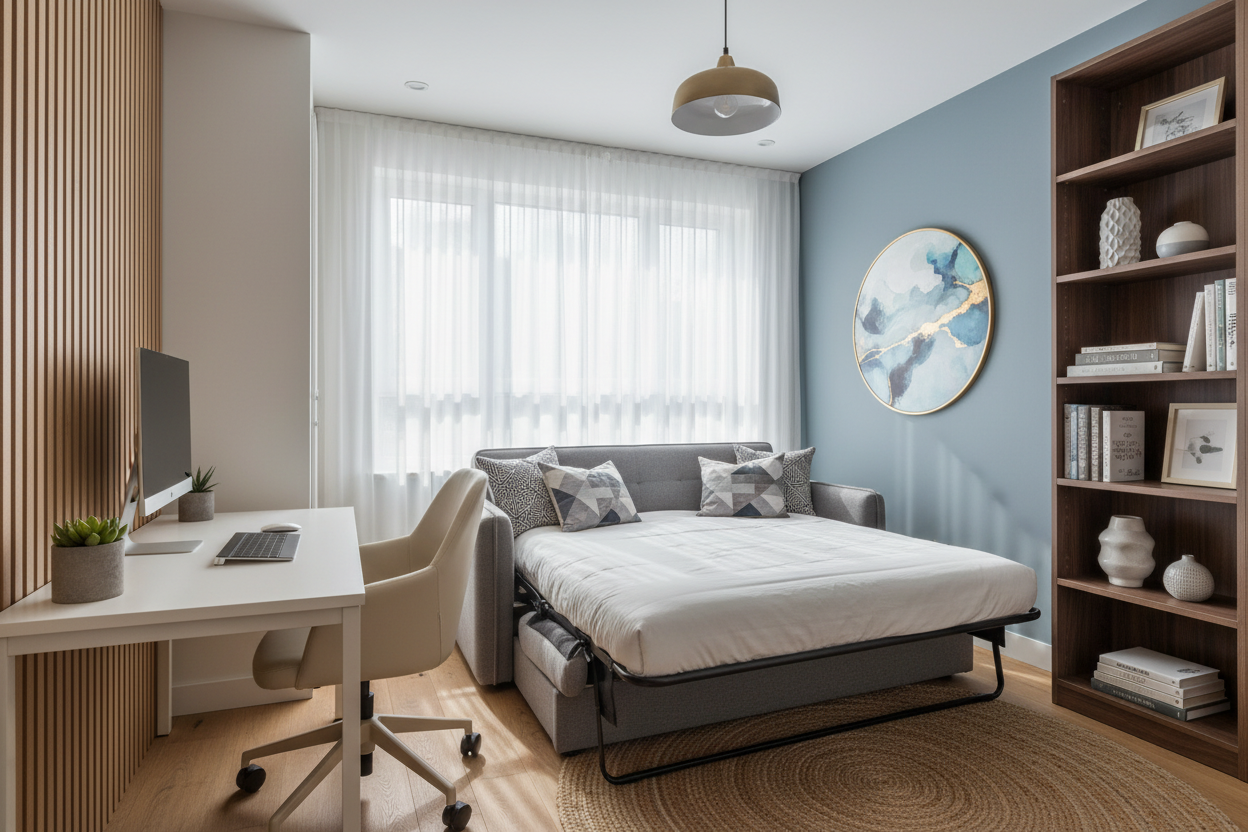
We often treat the guest room-slash-office as the "junk drawer" of interior design—a space where mismatched furniture goes to die. The challenge lies in creating a room that functions efficiently as a workspace from nine to five, yet feels welcoming and luxurious when guests arrive for the weekend. The secret isn't just buying furniture; it is about strategic spatial planning. When executing home office ideas with sofa bed integration, the goal is to banish the dormitory aesthetic in favor of a cohesive, intentional design.
Key Features to Look For
- Mechanism Clearance: Always measure the "open" footprint. You need at least 18-24 inches of walking space around the bed when fully extended.
- Upholstery Performance: Opt for high-rub count fabrics (like Crypton or performance velvet) to withstand daily office wear and occasional sleeping.
- Visual Weight: Choose a sofa with legs rather than a skirted base to maintain a sense of openness in smaller rooms.
- Mattress Quality: Memory foam or gel-infused mattresses generally offer better support than traditional coil springs for guest comfort.
Zoning and Spatial Planning
The most common error I see in sofa bed office ideas is placing the desk and the sofa in direct conflict. In a well-designed dual-purpose room, zoning is paramount. If space permits, float the sofa bed in the center of the room facing a focal point (like a built-in bookshelf or a window), placing the desk behind the sofa back. This creates a distinct "living" zone separate from the "work" zone.
For tighter quarters, place the sofa bed along the longest wall and the desk on the adjacent wall. Avoid placing the desk chair in the direct trajectory of the fold-out mechanism. You never want to be in a position where you must move heavy office furniture just to open the bed for a tired guest.
Choosing the Right Silhouette and Material
Because this piece of furniture will likely serve as your breakout area for reading briefs or taking calls, ergonomics are just as vital as aesthetics. A low-slung, deep-seated modular piece might look contemporary, but it offers poor lumbar support for a midday sit. Look for a mid-century silhouette with structured arms and a firmer seat cushion; this encourages better posture during work hours.
Textural Balance
To prevent the room from feeling sterile or overly "corporate," introduce texture. If your desk is glass or lacquer, choose a sofa bed in a tactile bouclé or a rich, matte leather. This contrast softens the hard lines of monitors and filing cabinets, bridging the gap between residential comfort and commercial utility.
Lighting the Dual-Purpose Space
Lighting can make or break the transition from office to guest suite. Relying solely on overhead recessed lighting is a mistake. Layer your lighting scheme. Use task lighting at the desk, but ensure you have ambient floor lamps or sconces near the sofa bed. Dimmable smart bulbs are excellent here; they allow you to shift the room from 'cool white' concentration mode to 'warm white' relaxation mode instantly.
My Personal Take on Home Office Ideas with Sofa Bed
I learned a hard lesson early in my career while designing a brownstone study in Boston. We selected a stunning, Italian-made sofa bed that looked incredible in the showroom. However, I failed to account for the "heaviness" of the mechanism relative to the rug underneath.
Every time the client tried to pull the bed out, the metal frame would snag on the high-pile wool rug, bunching it up and requiring two people to smooth it out. It was a functional nightmare. Now, I always advise clients to use a low-pile or flatweave rug in these rooms, or ensure the front legs of the sofa sit off the rug entirely. Also, never underestimate the "shin factor"—many sleeper mechanisms have sharp metal corners hidden under soft cushions. I always test the mechanism personally to ensure the hardware is encased or rounded to prevent injuries during late-night setups.
Conclusion
Integrating a sleeper sofa into your workspace doesn't require sacrificing professional polish. by focusing on traffic flow, selecting performance materials, and layering your lighting, you can curate a space that is as productive as it is restful. It is about making the room work harder for you, so you don't have to.
Frequently Asked Questions
How much space do I need for a sofa bed in an office?
Standard queen sleeper sofas extend out about 85 to 90 inches from the back wall. You should allow for an additional 24 inches of clearance at the foot of the bed for guests to walk past without hitting the wall or your desk.
Can a sofa bed be comfortable enough for daily sitting?
Yes, but you must be selective. Avoid traditional bi-fold mechanisms where the bar cuts into your back. Look for "platform" sleepers or solid foam constructions where the seat cushion itself becomes part of the mattress, offering consistent density for both sitting and sleeping.
Where is the best place to put the desk in relation to the sofa bed?
Ideally, place the desk on the opposite wall or perpendicular to the sofa. Avoid placing the desk immediately in front of the sofa unless you have a very deep room, as this usually requires moving the desk every time the bed is used.

Leave a comment
This site is protected by hCaptcha and the hCaptcha Privacy Policy and Terms of Service apply.