

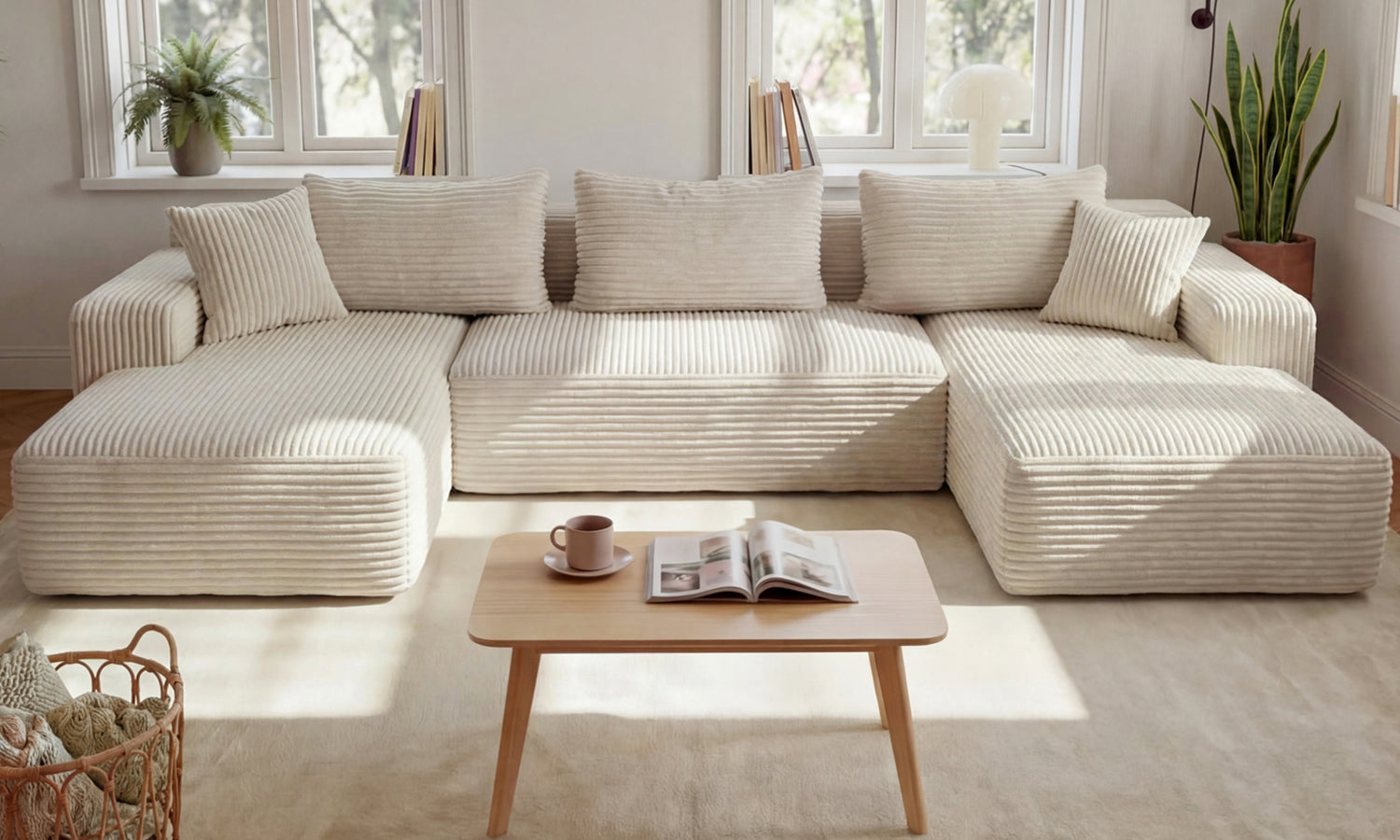









Finding the intersection between high-end aesthetics and genuine, sink-in comfort is one of the most common challenges my clients face. You want the durability to handle pets and movie nights, but you don't want your living room to look like a college dormitory. This is where the microfiber reclining sectional often enters the conversation as a robust solution. It bridges the gap between the velvet-like softness we crave and the heavy-duty performance a busy household demands. However, not all microfiber is created equal, and selecting the wrong configuration can overwhelm your room's spatial flow.
Key Features to Look For
Before committing to a purchase, review this checklist to ensure you are investing in quality furniture that suits your lifestyle:
- Performance Rating: Look for a high "double-rub" count (over 15,000) to ensure the fabric withstands daily abrasion.
- Mechanism Warranty: For a microfiber power reclining sectional, ensure the motor has at least a 3-5 year warranty.
- Wall Clearance: Check if it is a "wall-hugger" design; standard recliners need 12+ inches of rear clearance, while wall-huggers need only 2-4 inches.
- Cushion Core: Opt for high-density foam (1.8 lbs or higher) wrapped in Dacron to prevent the seat from looking deflated after a year.
- Modularity: Ensure the pieces lock together securely but can be separated for moving through tight hallways.
Decoding the Material: Why Microfiber?
In the design world, we often refer to microfiber as the "workhorse" of fabrics. It is composed of synthetic fibers thinner than a strand of silk, tightly woven to create a barrier against moisture and dust. When shopping for a microfiber sectional with recliner, you might encounter terms like "microsuede." A microsuede sectional with recliners mimics the nap and texture of genuine suede leather but without the high maintenance or susceptibility to water stains.
The tight weave is what makes a microfiber reclining sectional couch naturally water-repellant. Liquids tend to bead on the surface rather than soaking in immediately, giving you a crucial window of time to blot spills.
Configuration and Space Planning
The footprint of reclining furniture is dynamic—it changes when in use. A common error is measuring for the sofa in its upright position but failing to account for the full extension.
The Chaise vs. The Recliner
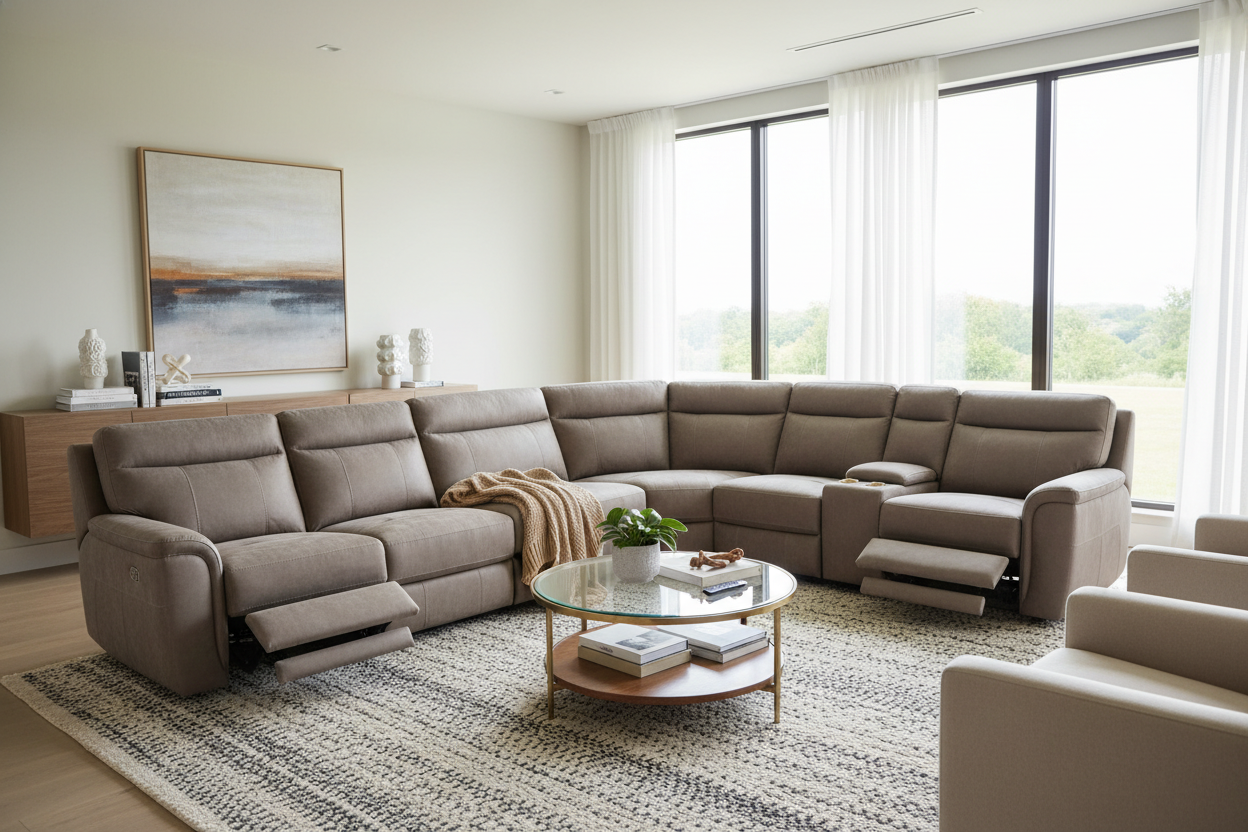
A microfiber sectional sofa with recliner and chaise offers a hybrid solution. The chaise provides a static lounging area, usually housing storage underneath, while the recliner offers adjustable comfort. If your room is narrow, a microfiber reclining sectional with chaise is often visually lighter than a double-recliner setup because the chaise has no moving footrest to break up the visual line of the furniture.
The Power Advantage
I almost exclusively recommend a microfiber power reclining sectional over manual options for modern homes. Manual levers limit you to two positions: upright or fully back. Power motors allow for infinite micro-adjustments, which is essential for ergonomics. Furthermore, many modern power options include USB charging ports, eliminating the need for side tables cluttered with cords.
Styling Your Sectional for a Refined Look
Microfiber absorbs light rather than reflecting it, which can make a large microfiber sectional couch with recliner feel heavy or dark. To counter this, you need to introduce contrasting textures.
If you have a slate grey or chocolate brown microfiber reclining sectional sofa, avoid matching matte throw pillows. Instead, style it with high-sheen materials like silk, faux fur, or chunky knit wool. This textural interplay breaks up the visual mass of the sofa. Additionally, ensure your coffee table is roughly two-thirds the length of the main sofa section to maintain proper scale.
Lessons from My Own Projects
I want to share a specific experience from a project I did for a family in Chicago that highlights a detail rarely mentioned in product descriptions. We installed a beautiful, charcoal microfiber sectional with recliner and chaise. It looked stunning upon installation.
However, two weeks later, the client called me about the "shading" or "tracking" marks. Because microfiber has a nap (direction of the fiber), simply sitting on it or brushing your hand against it changes the color tone, leaving butt prints and hand marks. It looked messy to her perfectionist eye.
We solved this by switching to a textured microfiber—one with an embossed pattern—rather than a flat velvet finish. If you are someone who needs your home to look "magazine ready" 24/7, be aware that flat microfiber requires constant smoothing to look pristine. Also, a practical tip on delivery: microfiber reclining sectionals are incredibly heavy due to the metal mechanisms. Always verify that the backs are removable; otherwise, getting a curved corner piece through a standard 30-inch doorframe is nearly impossible.
Conclusion
A microfiber sectional sofa with recliner is an investment in long-term comfort. By prioritizing high-density foam, understanding the specific cleaning codes of the fabric, and planning for the reclining radius, you can secure a piece that anchors your living room for years. It is possible to have the recliner comfort without sacrificing the designer aesthetic—it just requires a discerning eye for the right silhouette.
Frequently Asked Questions
How do I clean a microfiber reclining sectional?
Check the manufacturer's tag for a cleaning code. "W" means water-based solutions, "S" means solvent-based (dry clean only), and "W-S" means you can use either. For most microfiber, a drop of dish soap in distilled water works well, but always use a soft bristle brush to fluff the fibers back up as it dries to prevent a hard spot from forming.
Do reclining sectionals come apart for moving?
Yes, almost all microfiber reclining sectionals are modular. Each seat usually hooks into the next via metal brackets. Furthermore, on most reclining units, the backrest can be unclipped and removed from the base, making it much easier to maneuver through tight doorways.
Is microfiber durable enough for large dogs?
Microfiber is arguably the best fabric for pets. Because the weave is so tight, claws have a difficult time snagging the material. It is also resistant to odors and easy to wipe down, making it superior to woven linens or tweeds for pet owners.


Leave a comment
This site is protected by hCaptcha and the hCaptcha Privacy Policy and Terms of Service apply.