










I remember walking into a client's new home last year—a beautiful open-concept space with soaring ceilings. They'd just moved from a cozy apartment and brought their grandmother's antique china cabinet with them. In their old dining nook, it felt substantial. In this new great room, it looked like a dollhouse accessory. That moment is why I'm writing this: to help you avoid that 'too small' feeling and instead embrace the power of a properly scaled china cabinet large enough to hold its own.
Here's what we'll cover to make your big piece a success:
- Why a big china cabinet can solve more problems than it creates.
- How to measure your space accurately—it's more than just wall length.
- Unexpected rooms where an oversized china cabinet can shine.
- Styling techniques that prevent a large display from looking like a warehouse.
- Key features to look for when shopping for quality and scale.
Why Go Big? The Unexpected Benefits of an Oversized China Cabinet
When most people think 'big furniture,' they think 'bulky.' But an extra large china cabinet is often the opposite. In a North American home with standard 8-foot ceilings, a cabinet that stands 78 to 84 inches tall actually uses vertical space efficiently, leaving more floor area clear. The primary benefit is, of course, storage. A cabinet with a 60-inch width and 18-inch depth can easily house a full 12-person formal dinnerware set, plus serving platters, glassware, and linens, all behind closed doors.
Beyond storage, a large piece creates an instant focal point. In a dining room without architectural details, a substantial cabinet provides the visual weight and interest that a gallery wall or sideboard often can't. It gives you a dedicated canvas for display. You can curate collections—whether it's heirloom china, vintage glass, or modern ceramics—with room to breathe between items. For foundational advice that applies to pieces of any size, I always recommend starting with a complete guide to choosing and styling a china cabinet.
Finding the Right Fit: Measuring and Planning for an Extra Large Cabinet
This is the non-negotiable step. I've seen too many 'it won't fit through the door' dramas. First, measure the footprint. Let's say you're looking at a cabinet that's 72 inches wide, 18 inches deep, and 84 inches tall. You need to measure the wall space, but also the room's traffic flow. A good rule is to maintain at least 36 inches of clearance between the front of the cabinet and the dining table or opposite wall for comfortable movement.
Next, measure the path of delivery. Check doorways (height and width), stairwells, and hallways. Note any tight corners. For an 84-inch tall piece, you'll likely need to measure from the floor to the bottom of any light fixtures or ceiling fans in its path. Don't forget to check the load-bearing capacity of your floors, especially in older homes. A solid wood big china cabinet can easily weigh over 400 pounds when fully loaded.
Beyond the Dining Room: Creative Placements for a Big Statement Piece
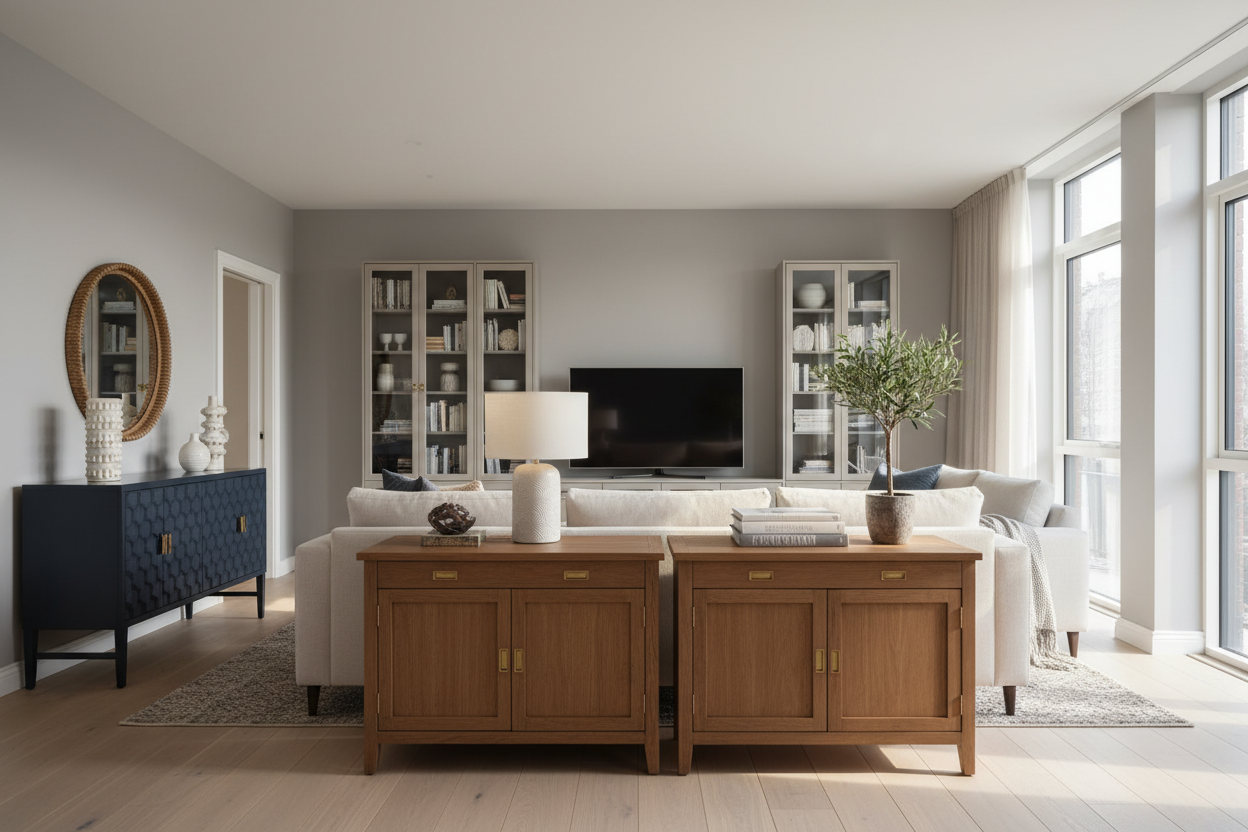
The dining room is the classic spot, but it's not the only one. In many modern North American floor plans, a large china cabinet can anchor a living room. Place it against a long wall to balance a large sectional sofa. Use it to store board games, books, and decorative objects, turning it into a stylish hybrid piece.
In an open-concept home, an oversized china cabinet makes a fantastic room divider. Position it perpendicular to a wall to subtly define the dining area from the living space without closing things off. I've also used them in generous entryways or at the end of a hallway. In these spots, they become a welcoming display for art objects or a collection of vases, setting the tone for the entire home.
Styling Your Oversized China Cabinet: From Minimalist to Maximalist
The shelves of a large cabinet can intimidate. The key is to think in layers and groups. Start by varying heights. Place taller items like candlesticks or a stack of books at the back of a shelf, with medium and shorter items in front. This creates depth. For a minimalist look, use the 'rule of three.' Group three related items (like three white pitchers of different sizes) together on one shelf, and leave the next shelf mostly empty with just one statement bowl.
For a more collected, maximalist feel, color grouping is your friend. Dedicate one shelf to all blue-and-white ceramics, another to amber glassware. Remember to incorporate negative space—it's what keeps a full cabinet from feeling chaotic. For specific inspiration on arranging your prized possessions, check out these elegant ideas for showcasing treasures. The cabinet's finish also sets the stage. A black cabinets with glass doors can ground a room and make your displays pop.
Product Spotlight: Large Cabinets That Command Attention
When shopping for a quality oversized china cabinet, look for solid construction. A kiln-dried hardwood frame (like oak or maple) will resist warping better than particleboard or MDF, especially important for a wide piece. Check the door hinges—soft-close, full-overlay hinges are a sign of better craftsmanship. Glass doors should be tempered for safety.
For a truly statement-making height, a piece like the 74-inch tall china cabinet uses its scale to create grandeur without overwhelming a standard ceiling. If your goal is to keep a space feeling light and airy, a large cabinet in a pale finish can do the trick. The white tall china curio cabinet is a great example, offering substantial storage while reflecting light.
Personal Experience: The Honest Downside
I once specified a magnificent, 80-inch wide antique reproduction china cabinet for a client's formal dining room. It was stunning. The downside we didn't fully anticipate? It became a permanent fixture. Rearranging that room in the future would require a full moving crew, not just sliding furniture around. A large cabinet commits you to a layout. My advice: be very sure of its placement. It's also a significant dusting project—all that glass and shelving requires regular maintenance.
FAQ
How much space should I leave around a large china cabinet?
At least 36 inches of clearance in front for walking. On the sides, 3-6 inches from the wall or adjacent furniture is ideal for access and to prevent a cramped look.
Can a large china cabinet make a small room look bigger?
It can, if done right. A tall, slender cabinet that draws the eye upward can emphasize ceiling height. Choose one with glass doors and a light finish to maintain a sense of openness.
What's the best lighting for an oversized display cabinet?
Integrated LED strip lighting mounted at the top of each shelf is the most effective. It washes light down over your displays without creating glare on the glass. Avoid relying solely on overhead room lighting, which can cast shadows.
How do I secure a tall, heavy china cabinet?
This is critical, especially in homes with children or in earthquake-prone areas. Use furniture wall straps or an anti-tip bracket to anchor the top rear of the cabinet securely to a wall stud. Most quality cabinets will have a pre-drilled hole for this purpose.


Leave a comment
This site is protected by hCaptcha and the hCaptcha Privacy Policy and Terms of Service apply.