










It usually starts with a pile of stray papers, a tangled mess of monitor cords, and a lingering sense of distraction. You sit down to work, but the physical environment actively fights your focus. I see this constantly in residential projects where a spare bedroom or an alcove is hastily converted into a workspace. The truth is, building the most efficient desk is not about buying the most expensive piece of furniture on the showroom floor; it is about intentional proportions, smart routing, and spatial flow.
A poorly planned workspace drains your energy. In this guide, I will walk you through exactly how to structure your work environment for better workflow, physical comfort, and visual appeal, ensuring your home office actually supports your daily routines.
Quick Decision Guide
- Prioritize Depth Over Width: A desk needs to be at least 24 inches deep (ideally 30 inches) to comfortably accommodate a monitor, keyboard, and resting forearms without causing eye strain.
- Command Position is Key: Whenever possible, face the door rather than staring blankly at a wall. This simple shift drastically improves the psychological comfort of your workspace.
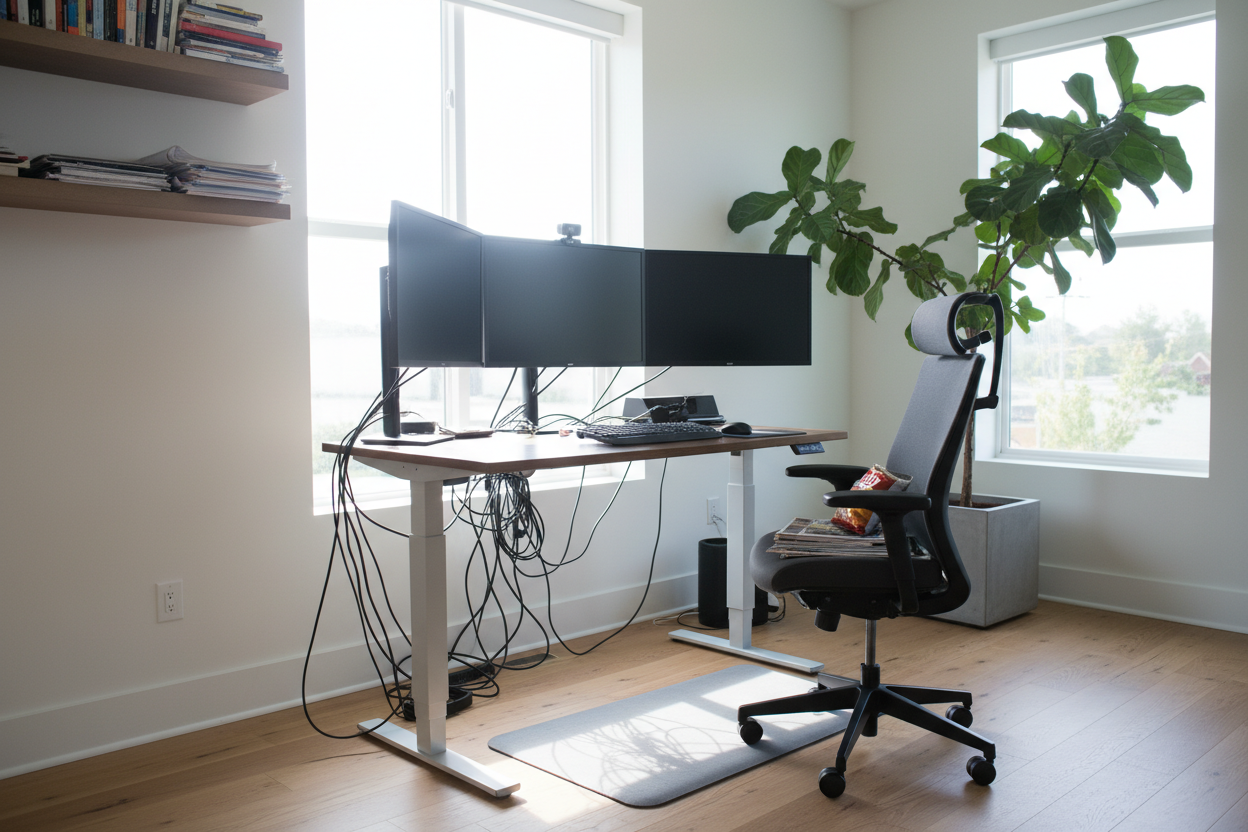
- Demand Integrated Cable Management: An open-base desk looks incredibly sleek, but without built-in wire routing, it quickly becomes a visual nightmare of tangled cords.
- Match the Silhouette to the Room: Heavy, solid wood executive desks belong in massive rooms. For standard 10x10 North American spare bedrooms, opt for visually lighter frames with tapered legs or open shelving.
Space Planning & Layout
Finding the Most Efficient Desk Layout
The standard North American spare bedroom is roughly 10x10 or 12x12 feet. In these spaces, pushing a desk flat against the wall is the default instinct, but it rarely results in the best desk layout for productivity. Instead, consider floating the desk in the room or anchoring it perpendicular to a window. This allows natural light to hit your workspace without causing harsh monitor glare. If you are working in an open-concept living room, a slim console-style desk placed behind a sofa acts as a brilliant room divider while creating a highly efficient desk setup.
Clearances and Visual Weight
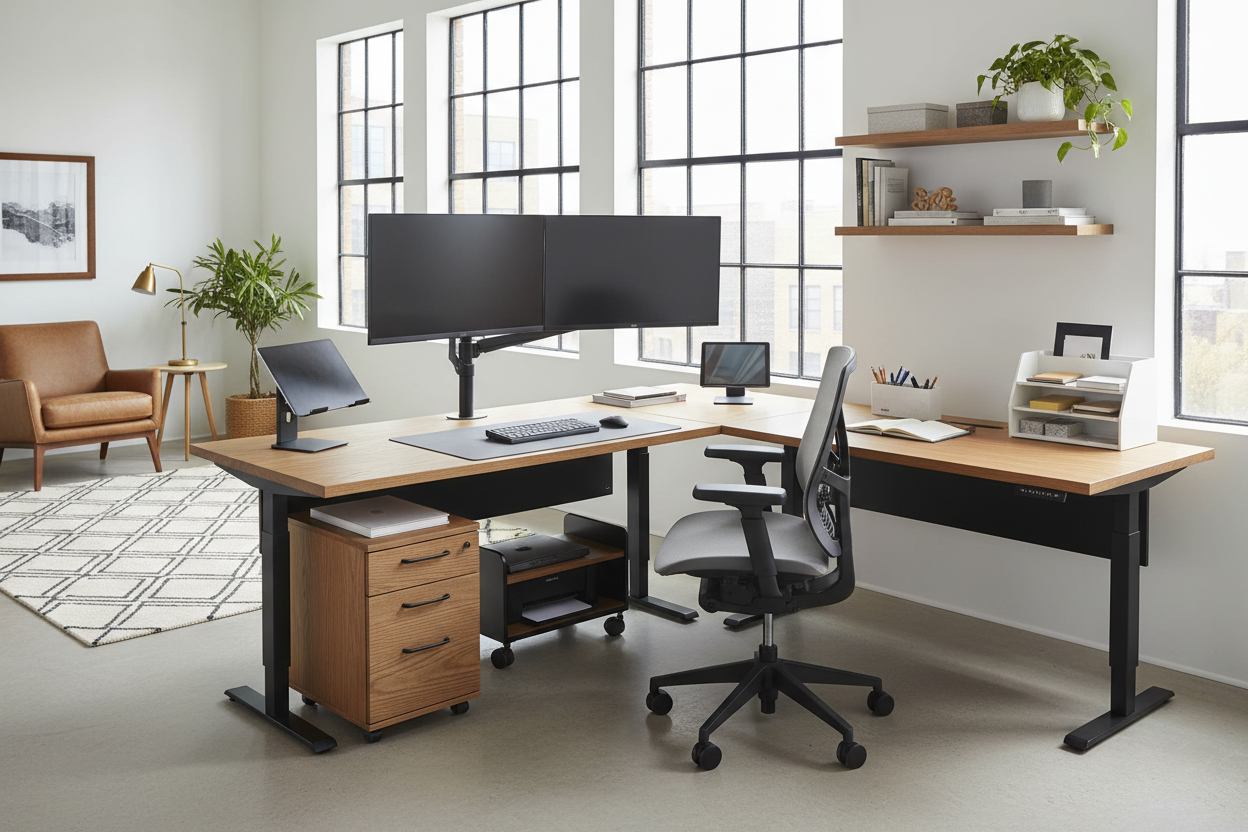
Never underestimate the physical footprint of your chair. You need an absolute minimum of 36 inches of clearance behind your desk to push back and stand up comfortably. When determining the best desk configuration for your specific floor plan, pay attention to visual weight. A chunky, L-shaped desk with floor-to-desktop storage panels will anchor a large room beautifully, but it will completely suffocate a small apartment den.
Comfort & Ergonomics
Engineering a Productive Desk Setup
A productive desk is one you do not physically notice while you are working. The moment your shoulders hunch or your wrists ache, your focus breaks. Standard desk height is between 29 and 30 inches, which is actually too high for many people unless paired with an adjustable, ergonomic chair. If you are investing in a standing desk to build the best home office setup for productivity, pay close attention to the motor quality and frame weight. Cheaper, lightweight frames wobble noticeably when raised to standing height, turning typing into a frustrating, shaky experience.
Style & Coordination
Building the Best Office Setup for Productivity
Your workspace should feel like a natural extension of your home's architecture, not a sterile corporate cubicle. If your home leans mid-century modern, look for warm walnut veneers and angled legs. For a transitional space, a painted wood desk with subtle brass hardware bridges the gap between traditional and contemporary. However, do not sacrifice function for aesthetics. I often see clients drawn to beautiful reclaimed wood tables to use as desks. While stunning, the uneven, rustic surface makes writing on a single sheet of paper impossible and can cause mice to track poorly. For a truly productive office setup, you need a smooth, durable work surface.
Designer's Honest Take
I learned the hard way that a minimalist glass desk might look incredible in an architectural digest spread, but it is entirely unforgiving in a real home. A few years ago, I specified a gorgeous, open-frame glass desk for my own workspace. It forced me to keep the surface completely clear, which I initially loved. However, the lack of modesty panels and cable routing turned the floor underneath into a chaotic web of power strips and monitor wires.
I spent more time staring at the messy cords than I did actually working. I quickly realized that the most efficient desk requires hidden utility. I ended up swapping it for a solid oak desk with a built-in wire trough and a drop-down keyboard tray. It felt slightly heavier in the room, but the immediate reduction in visual clutter completely changed my daily workflow. If you buy a desk with a completely open base, be prepared to invest heavily in aftermarket cord organizers, or accept the mess.
Frequently Asked Questions
What is the best desk configuration for a small room?
In tight spaces, an L-shaped desk tucked into a corner is often the most efficient desk layout. It maximizes dead corner space and gives you distinct zones—one side for your computer, and the other side for reviewing physical documents or writing.
How do I manage cords on a desk with open legs?
If your desk lacks built-in management, attach a metal cable raceway to the underside of the desktop using heavy-duty adhesive strips or wood screws. Route all monitor and power cables through this tray, running a single cleanly wrapped bundle down one of the desk legs to the wall outlet.
What materials make for the best productivity setups?
High-pressure laminate (HPL) or engineered wood with a thick, high-quality veneer offers the best balance of durability and style. They resist coffee rings and scratches far better than soft solid woods like pine, ensuring your workspace remains pristine over years of heavy daily use.

Leave a comment
This site is protected by hCaptcha and the hCaptcha Privacy Policy and Terms of Service apply.