










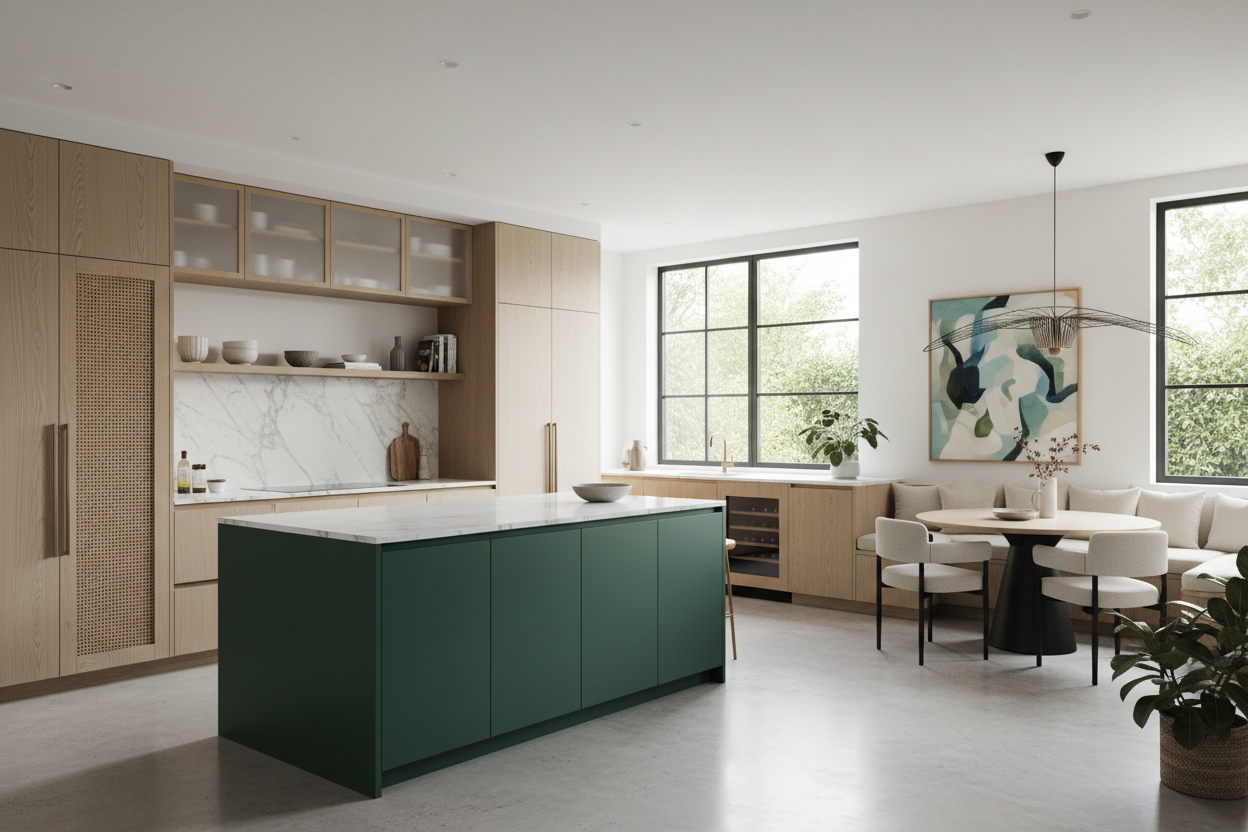
I've walked into hundreds of kitchens with homeowners just like you, standing in front of their old cabinets, wondering where to start. You want something that looks current, but you're worried about choosing a style that will feel dated in five years. I get it—I've seen clients fall in love with a trendy cabinet online, only to realize it doesn't work with their 10-foot ceiling height or their family's daily pancake-making routine. Let's talk about what makes new kitchen cabinet styles actually work in real homes.
Quick Takeaways
- Popular cabinets succeed when they balance visual appeal with practical durability—think full-overlay doors that hide wear better than inset styles.
- The most popular kitchen cabinet style categories right now emphasize clean lines and versatile finishes that adapt to different lighting conditions.
- Workflow optimization matters more than pure aesthetics; I measure for 42-48 inches of clearance between countertops and islands.
- Choose cabinet boxes made with ¾-inch plywood or better—avoid particleboard in wet areas near sinks.
- Timeless elements like shaker profiles or flat-panel doors provide a foundation you can update with hardware and color.
Why Popular Kitchen Cabinet Styles Aren't Just About Looks
When clients ask me about popular kitchen cabinets, they're usually picturing magazine photos. But in my 200+ projects, I've learned that what makes a cabinet style truly popular is how it holds up. Take shaker-style cabinets—they're everywhere because their simple frame-and-panel construction is durable. The recessed center panel doesn't show fingerprints like a flat slab door, and the squared edges are easier to clean than intricate carvings.
I always check the box construction first. Are the shelves adjustable? Is there a ¼-inch back panel or something sturdier? These details matter more than the door style when you're loading heavy dinnerware. For finding quality kitchen cabinets, look for dovetail drawer joints and soft-close mechanisms as standard—not upgrades.
Space efficiency is another hidden factor. In smaller kitchens, I specify cabinets that reach within 18 inches of the ceiling (leaving room for crown molding) to maximize storage. The most popular styles work because they solve problems, not just because they photograph well.
The Most Popular Kitchen Cabinet Style Categories Right Now
Right now, I'm seeing three categories dominate my projects. Modern minimalism uses flat-panel doors, often in matte finishes, with integrated handles or simple pulls. The key is proportion—I keep upper cabinets at 12-15 inches deep (versus standard 24-inch bases) to maintain sightlines in open-concept spaces.
Transitional designs blend traditional and contemporary elements. Think shaker doors with slimmer rails and stiles, or painted cabinets paired with natural wood accents. I often use this approach when clients want warmth without ornate details. Updated traditional options include inset cabinets (where the door sits flush with the frame) but with simpler profiles that are easier to maintain than Victorian-era styles.
For display cabinet styling techniques, I recommend glass-front uppers with interior lighting. Use LED strips with 2700K temperature for warmth, and keep the shelves 10-12 inches apart to display standard dinnerware without crowding.
What Actually Makes These Styles Work in Real Kitchens
Implementing popular cabinet styles requires thinking about daily use. For workflow, I design the 'kitchen triangle' (sink, stove, refrigerator) with 4-9 feet between points. Cabinet placement should support this—store pots near the stove, plates near the dishwasher.
Storage solutions need to be specific. Instead of just adding more cabinets, I incorporate pull-out trays in base cabinets (at least 18 inches wide for sheet pans) and vertical dividers for cutting boards. In corners, corner pantry cabinet solutions with rotating shelves or magic corners make previously wasted space accessible.
Material choices affect both function and longevity. I specify plywood boxes over particleboard, especially in humid climates. For painted finishes, catalyzed lacquer holds up better than standard latex against moisture and cleaning products.
How to Choose Popular Cabinets That Won't Date Your Kitchen
The fear of dating your kitchen is real—I've seen clients regret overly trendy choices. My strategy is to invest in timeless foundations, then add trend elements through easily changed components. Choose a classic door style like shaker or slab, then experiment with color. Navy blue might be popular now, but if you use it on the island only (leaving perimeter cabinets neutral), you can repaint just one element later.
Hardware is another update point. I recommend drilling standard 3-inch pull holes so you can swap hardware without refinishing doors. For a flexible approach, consider kitchen sideboard storage options that can move to another room if your needs change.
Finish durability matters for longevity. I steer clients toward satin or matte finishes over high-gloss for painted cabinets—they show fewer scratches over time. For wood tones, medium stains (like walnut or light oak) tend to age better than extremely light or dark extremes.
Where Popular Kitchen Cabinet Styles Actually Add Value
Not all popular features increase home value equally. In my experience, quality construction adds more value than specific styles. Solid wood doors (not MDF) and soft-close hinges signal quality to potential buyers. Functional upgrades like pull-out trash bins or spice drawer inserts also resonate because they solve everyday problems.
Integrated appliances behind cabinet panels maintain popularity because they create clean sightlines. I specify panels that match surrounding cabinets exactly—even a slight sheen difference will be noticeable. When planning kitchen island collections, include at least one electrical outlet (18 inches above counter height) and consider a different counter material to define the space.
Purely aesthetic trends—like open shelving everywhere or ultra-dark cabinets—can polarize buyers. I balance these with permanent elements that have broad appeal, ensuring the kitchen works for the next family too.
Personal Experience: When Popular Styles Miss the Mark
Early in my career, I specified floating shelves for an entire kitchen wall because they were trending. The client loved the look initially, but within months, the dust accumulation and lack of enclosed storage became frustrating. We ended up adding glass-front cabinets above some shelves—a compromise that taught me to balance trends with practicality. Now, I limit open shelving to specific zones (like near coffee stations) where items are used daily and don't collect grease.
Another lesson came from a client who insisted on ultra-matte black cabinets. In their north-facing kitchen with limited natural light, the cabinets absorbed all light and made the space feel cave-like. We solved it by adding under-cabinet lighting (3000K temperature) and a reflective backsplash, but I now always consider how cabinet colors interact with room orientation and artificial lighting.
Frequently Asked Questions
How much should I budget for popular kitchen cabinets?
For semi-custom cabinets (the sweet spot for most renovations), expect $300-650 per linear foot installed. This includes boxes, doors, drawers, and standard hardware. Custom work runs $500-1200 per linear foot. I always allocate 20% of the budget for unexpected issues behind old walls.
Are white cabinets still popular, or are they dated?
White remains popular because it's versatile, but the trend has shifted from pure bright white to warmer tones like Swiss Coffee or Alabaster. I specify white cabinets in satin finishes (not glossy) and often pair them with wood accents or colored islands to avoid a sterile look.
What's the biggest mistake people make with popular cabinet styles?
Choosing based on photos without considering their specific space. I've seen clients order cabinets that looked perfect online but overwhelmed their 8-foot ceilings. Always mock up your layout with painter's tape on the floor and walls to visualize proportions before ordering.
How long do popular cabinet styles typically last before feeling dated?
Well-executed popular styles with quality materials should feel current for 10-15 years. The key is avoiding extremes—ultra-trendy colors or overly ornate details date fastest. Stick with classic proportions and update through accessories like hardware and lighting.


Leave a comment
This site is protected by hCaptcha and the hCaptcha Privacy Policy and Terms of Service apply.