










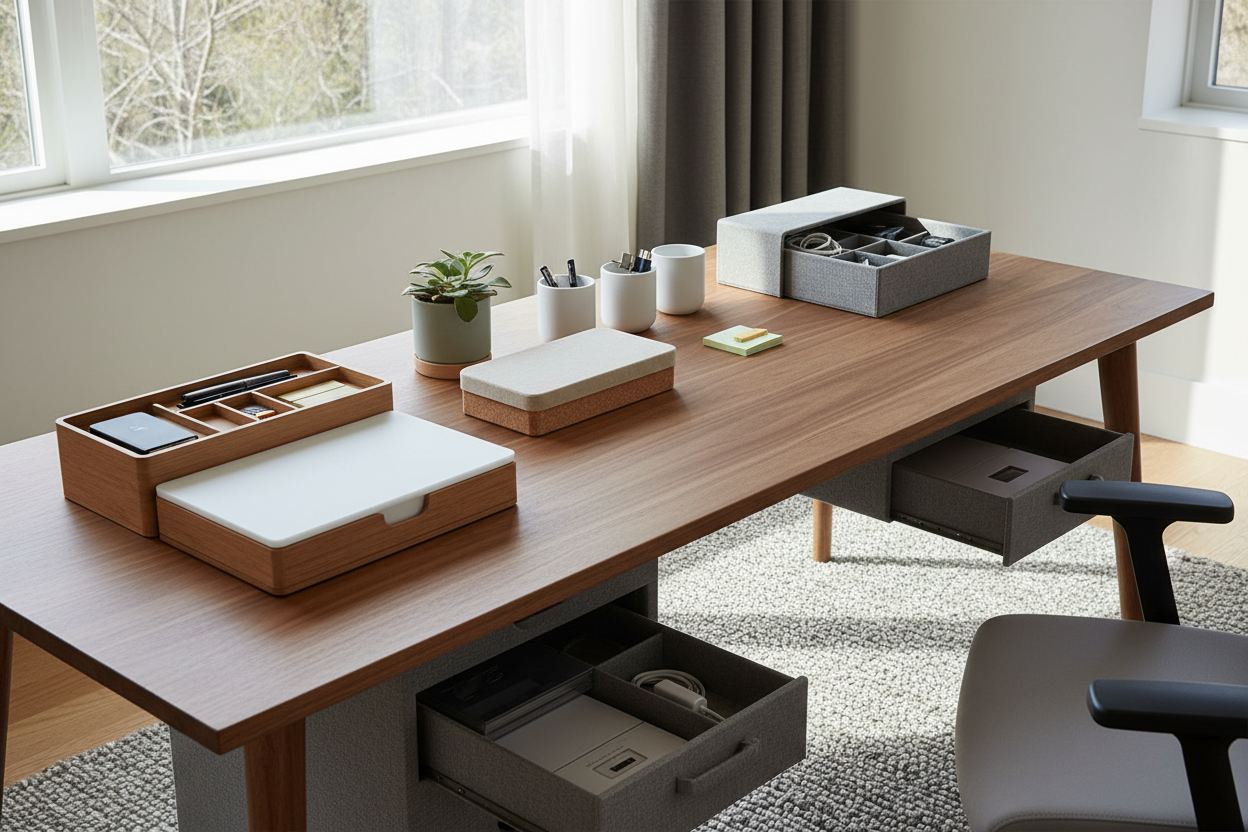
We have all been there: you sit down to tackle a major project, but your eyes keep darting to the towering stack of mail, tangled charger cords, and scattered pens. A chaotic desk creates a chaotic mind. The knee-jerk reaction is usually to rush out and buy a bunch of random office organisation supplies, hoping a few new bins will magically solve the problem. But without a proper strategy, those bins just become new places to hoard clutter.
As an interior designer who has planned hundreds of North American home offices, I can tell you that an effective workspace requires more than just pretty containers. Today, we are going to break down how to choose the right pieces that fit your workflow, complement your room's aesthetic, and genuinely keep your desk clear.
Quick Decision Guide
- Establish zones first: Keep daily essentials within an arm's reach and push archival paperwork to secondary storage.
- Invest in a cohesive desk organization system: Mismatched containers add visual noise. Stick to one or two materials.
- Go vertical: If you have a small desk footprint, utilize wall-mounted files or monitor stands with built-in drawers.
- Hide the ugly stuff: Use opaque storage for cables and miscellaneous tech, reserving open trays only for neat, frequently used items.
Space Planning: Designing Your Workflow
The Ergonomics of Reach
Before you purchase any workplace organizer, you need to map out your desk's real estate. I like to divide the desk into primary and secondary zones. The primary zone is the semi-circle your arms can comfortably sweep across without leaning forward. This area should remain largely empty, save for your keyboard, mouse, and perhaps a low-profile pen cup. Everything else needs to be pushed to the perimeter.
For the secondary zone, consider the physical dimensions of your desk. A standard North American desk is about 24 to 30 inches deep. If you have a shallower desk, bulky desktop trays will crowd your monitor. Instead, opt for a monitor riser that doubles as a storage shelf, or utilize the negative space under the desk with rolling drawer units.
Material Selection and Visual Weight
Matching Storage to Your Decor Style
The materials you choose for your office organizers and storage dictate the visual weight of the room. A heavy, dark mahogany file cabinet might look beautiful in a traditional, wood-paneled study, but it will completely overpower a small apartment nook. If you are working with a tight space or a minimalist aesthetic, powder-coated metal or light ash wood offers a much lighter silhouette.
When sourcing office organization products, pay attention to texture. If your desk is a sleek white laminate, bringing in warm walnut trays or textured linen boxes adds necessary contrast and warmth. Avoid the temptation to buy cheap plastic sets; they often crack under the weight of heavy files and instantly cheapen the look of your room.
Lessons from My Own Projects
Early in my career, I was obsessed with clear acrylic office organization items. They looked incredibly chic and modern in showroom photos. I outfitted my entire home studio with them. The reality? Within a week, I realized acrylic is completely unforgiving. Every single paperclip, tangled cord, and slightly crumpled receipt was on full display. Worse, the acrylic scratched easily and attracted dust like a magnet.
I learned the hard way that transparency is only good for things that are inherently beautiful. Now, when I specify home office organization supplies for clients, I always mix open and closed storage. I use opaque leather or wood boxes for the messy reality of daily work, and reserve open trays strictly for neatly stacked, current-action items.
Frequently Asked Questions
What are the essential organizers for work?
A functional setup requires three core pieces: a paper management system (like a tiered tray or wall file), a catch-all for small tools (pens, scissors), and a concealed cable management box. These office organizer products tackle the most common sources of desk clutter.
How do I choose office organizer supplies for a tiny desk?
When square footage is limited, look up. Wall-mounted pegboards, floating shelves, and tall, narrow desktop drawers maximize vertical space without eating into your work surface. Always measure your available footprint before buying.
Are expensive office supplies for organization worth the cost?
It depends on the item. I recommend spending more on structural pieces like heavy-duty file cabinets or solid wood monitor stands that bear weight. You can save money on smaller accessories like pen cups or drawer inserts, as long as they coordinate visually with your main pieces.


Leave a comment
This site is protected by hCaptcha and the hCaptcha Privacy Policy and Terms of Service apply.