










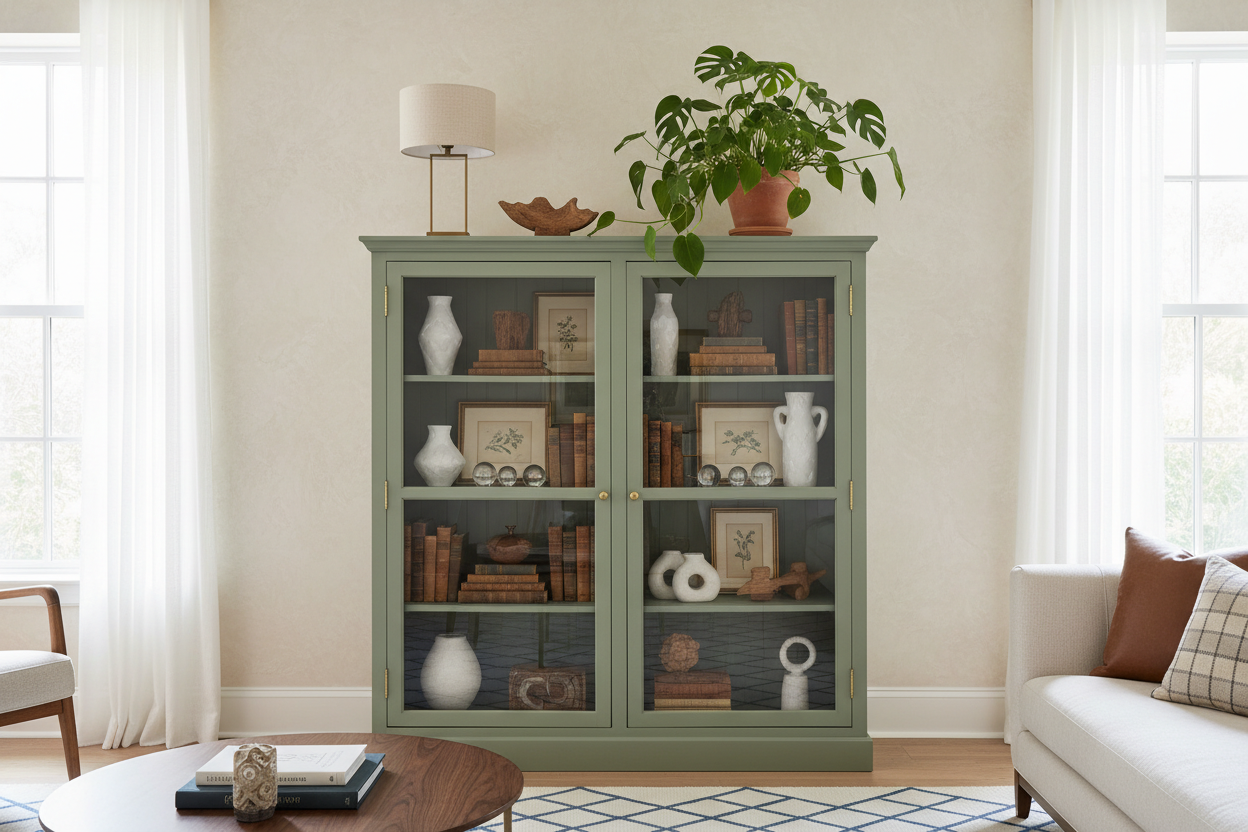
We've all seen it: a beautiful room anchored by a stunning piece of furniture that somehow ends up looking like a chaotic storage bin. Styling a painted display cabinet is one of the most common hurdles my clients face. They buy a gorgeous piece with glass doors, intending to showcase heirlooms and art, but quickly realize that putting everything on display requires a deliberate strategy.
If your current setup feels heavy, cluttered, or disconnected from the rest of your room, you are not alone. In this guide, we will break down exactly how to choose, place, and curate these cabinets so they add architectural interest rather than visual noise.
Quick Decision Guide
- Respect negative space: Leave at least 30 to 40 percent of your shelf space empty to let your objects breathe.
- Consider the interior color: A contrasting interior color draws the eye inward and highlights your decor.
- Mind the scale: Ensure your cabinet is proportionate to the wall; leave at least 12 inches of clearance between the top of the piece and the ceiling.
- Vary object heights: Group items in odd numbers and mix tall, medium, and short pieces to create a natural visual triangle.
Color and Finish Selection
Choosing the Right Sheen
The finish you choose drastically alters how a piece feels in a room. A matte or chalk-finish cabinet leans traditional or farmhouse, offering a soft, muted presence. Conversely, a high-gloss finish reflects light, making a bulky piece feel slightly less imposing while adding a modern, glamorous edge. For most North American family homes, I recommend a satin or eggshell finish. It provides a subtle sheen that is easy to wipe down without highlighting every single fingerprint.
Contrasting Interiors
One of my favorite design tricks is creating depth through color. If you have a neutral exterior, introducing a bold hue inside the cabinet can completely change its dynamic. If you plan to DIY and paint display cabinet interiors yourself, opt for a shade that pulls from your room's existing accent colors, like a deep muted green or a warm terracotta. This creates a framed backdrop that makes white ceramics or metallic accents pop beautifully.
Space Planning and Visual Weight
Finding the Right Placement
A tall, solid piece of furniture carries immense visual weight. If you place a large cabinet right next to a heavy fireplace or a bulky sectional, that side of the room will feel visually tipped over. Instead, balance the room by placing your cabinet on an opposing wall. If you are working with a standard 8-foot ceiling, look for a cabinet that is no taller than 80 inches. This leaves enough breathing room at the top so the piece does not feel wedged into the space.
Lessons from My Own Projects
Early in my career, I sourced a breathtaking, custom-built cabinet for a client's dining room. We decided on a striking, high-gloss navy blue for the exterior and interior. It looked incredible on installation day. However, I learned a hard lesson about dark, glossy finishes in high-traffic, sunlit rooms.
Within a week, the client sent me a photo showing how the dark gloss highlighted every speck of dust and every fingerprint from her two young kids. The glass doors only amplified the reflections. We eventually had the piece professionally sanded and repainted in a satin finish. It still had that moody, dramatic impact, but it was actually livable. Now, I always warn clients: dark gloss is stunning, but it is essentially a part-time job to keep clean.
Frequently Asked Questions
How do I clean a painted display cabinet?
Use a slightly damp microfiber cloth to gently wipe away dust. Avoid harsh chemical cleaners or abrasive sponges, which can dull the paint or strip the clear coat over time. Dry the surface immediately to prevent moisture damage.
What size cabinet do I need for my living room?
Measure your available wall space and ensure you have at least 18 inches of clearance on either side of the cabinet to prevent crowding. Depth is also crucial; for narrow living rooms, look for a cabinet no deeper than 16 inches so it doesn't encroach on your walkways.
How do I arrange items inside without it looking messy?
Stick to a tight color palette for the items you display. Group objects in clusters of three or five, and mix textures—pair a smooth ceramic vase with a stack of vintage books and a textured woven basket. Always leave intentional blank gaps between your groupings.


Leave a comment
This site is protected by hCaptcha and the hCaptcha Privacy Policy and Terms of Service apply.