










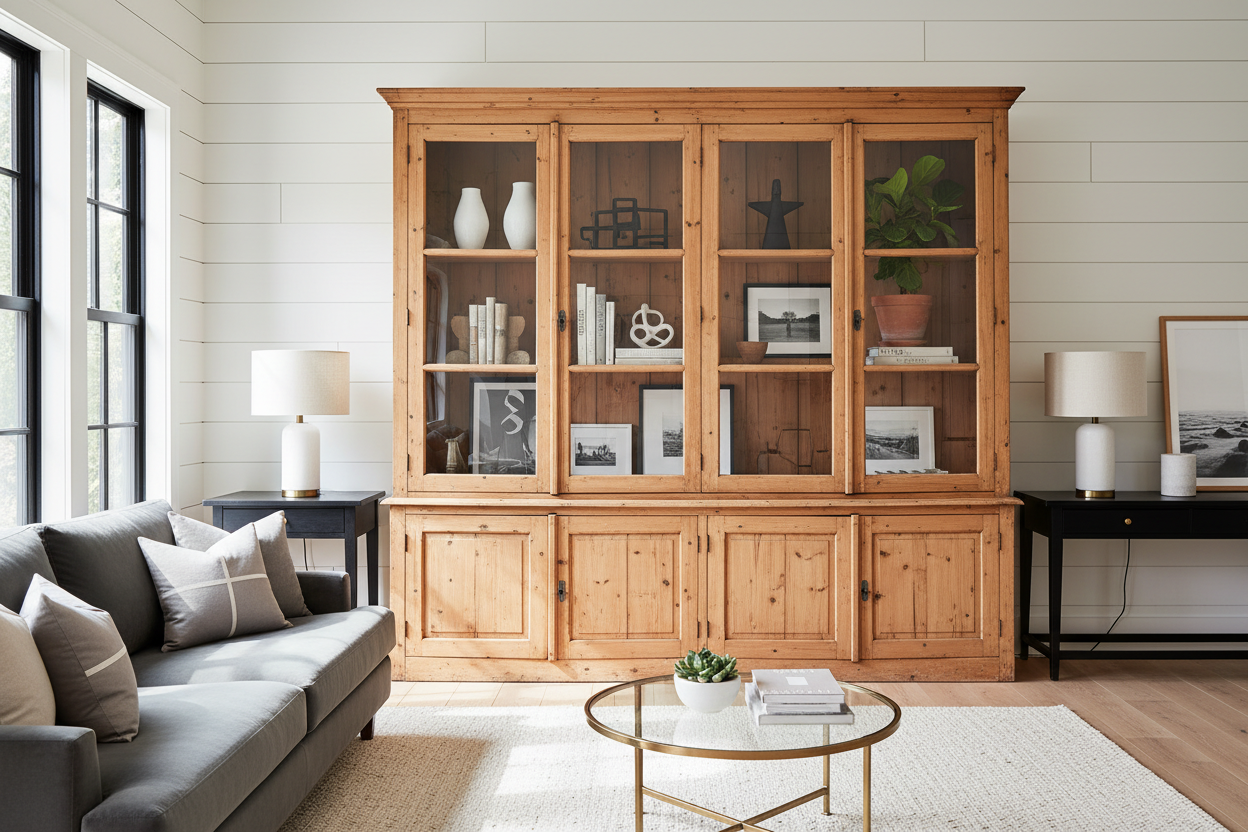
We have all seen it: the chunky, orange-toned wooden behemoth dominating a dining room corner. For years, the pine display cabinet carried the heavy baggage of 1990s country-kitsch decor. But recently, clients are asking me how to integrate these solid wood pieces into modern, transitional, and even minimalist homes.
Whether you inherited a family heirloom or scored a deal at an estate sale, you might be wondering how to make it work without making your living room look like a rustic cabin. In this guide, I will show you how to neutralize pine's tricky undertones, balance its visual weight, and turn a dated storage unit into a striking focal point.
Quick Decision Guide
- Mind the undertones: Pine naturally yellows over time. Pair it with cool blues, deep greens, or stark blacks to neutralize the warmth.
- Update the hardware: Swapping out dated wooden knobs for matte black or unlacquered brass instantly modernizes the piece.
- Lighting matters: A pine display cabinet with glass doors needs internal lighting to keep it from looking like a dark, heavy box.
- Embrace the dents: Pine is a softwood. Accept that it will scratch and dent, adding to its patina rather than ruining its value.
Making Pine Work in Modern Spaces
Balancing the Yellow Undertones
Pine is notorious for its warm, honey-to-orange hue. If you place it in a room full of warm reds or yellows, the space will feel overwhelming. Instead, use the color wheel to your advantage. Dark, moody wall colors like charcoal, navy, or forest green create a stunning backdrop that makes the wood look intentional and rich rather than dated.
The Power of Contrast
A glass pine display cabinet can easily look cluttered if filled with small, mismatched trinkets. Treat the interior like a gallery. Use negative space generously. Stack large, neutral-colored ceramics, a few hardback books, and trailing greenery. If the back panel is also raw pine, consider lining it with a textured grasscloth wallpaper or painting it black to make your displayed items pop.
Where to Place Your Cabinet
Dining Rooms vs. Living Areas
In a dining room, a pine display case serves as a traditional china hutch. However, I love moving these pieces into unexpected spaces. In an open-concept living area, a tall cabinet draws the eye upward, emphasizing ceiling height. Just ensure you leave at least 36 inches of clearance if it sits near a high-traffic walkway or a dining table.
New vs. Vintage Pine
When shopping, you will generally choose between newly manufactured pieces and vintage finds. An antique pine display cabinet often features tighter wood grains and true mortise-and-tenon joinery. Older pieces have usually settled into their final color, meaning you will not get any surprise yellowing down the road. New pine is more affordable but often relies on stains to mimic that aged look, which can sometimes appear blotchy due to the wood's uneven absorption.
Lessons from My Own Projects
A few years ago, a client insisted on keeping her grandmother's massive, honey-toned pine cabinet in her newly renovated, crisp white living room. Initially, it stuck out like a sore thumb. The piece felt incredibly heavy and completely out of sync with her sleek, mid-century sofas.
Instead of painting the exterior—which would ruin the sentimental value—we painted the inside shelves a deep, matte iron-black and installed warm LED puck lights at the top. We swapped the chunky wooden pulls for slim, dark bronze handles. Suddenly, the piece looked like a high-end boutique fixture.
But here is my honest caveat: pine is incredibly soft. During that same install, a contractor accidentally bumped the baseboard of the cabinet with a vacuum, leaving a noticeable dent. If you are expecting the bulletproof durability of white oak or maple, pine will disappoint you. You have to be willing to live with a piece that physically records its history.
Frequently Asked Questions
How do I clean an antique pine display cabinet?
Avoid harsh chemical sprays or abrasive sponges. Dust regularly with a microfiber cloth. For deeper cleaning, use a damp cloth with a tiny drop of mild dish soap, wiping in the direction of the grain, and dry it immediately. Apply a high-quality furniture wax once or twice a year to maintain the finish.
Can I mix a pine cabinet with walnut or oak furniture?
Yes, mixing wood tones creates a collected, designer look. The secret is ensuring the woods share a similar finish level (e.g., all matte or all satin) and grounding the room with a rug that pulls the different tones together. Avoid matching your woods perfectly.
Is a pine display case good for small spaces?
It depends on the silhouette. A narrow, tall cabinet draws the eye up and takes up minimal floor space, making it great for apartments. However, avoid deep, heavy bases in tight rooms, as they carry too much visual weight and can make the room feel cramped.

Leave a comment
This site is protected by hCaptcha and the hCaptcha Privacy Policy and Terms of Service apply.