










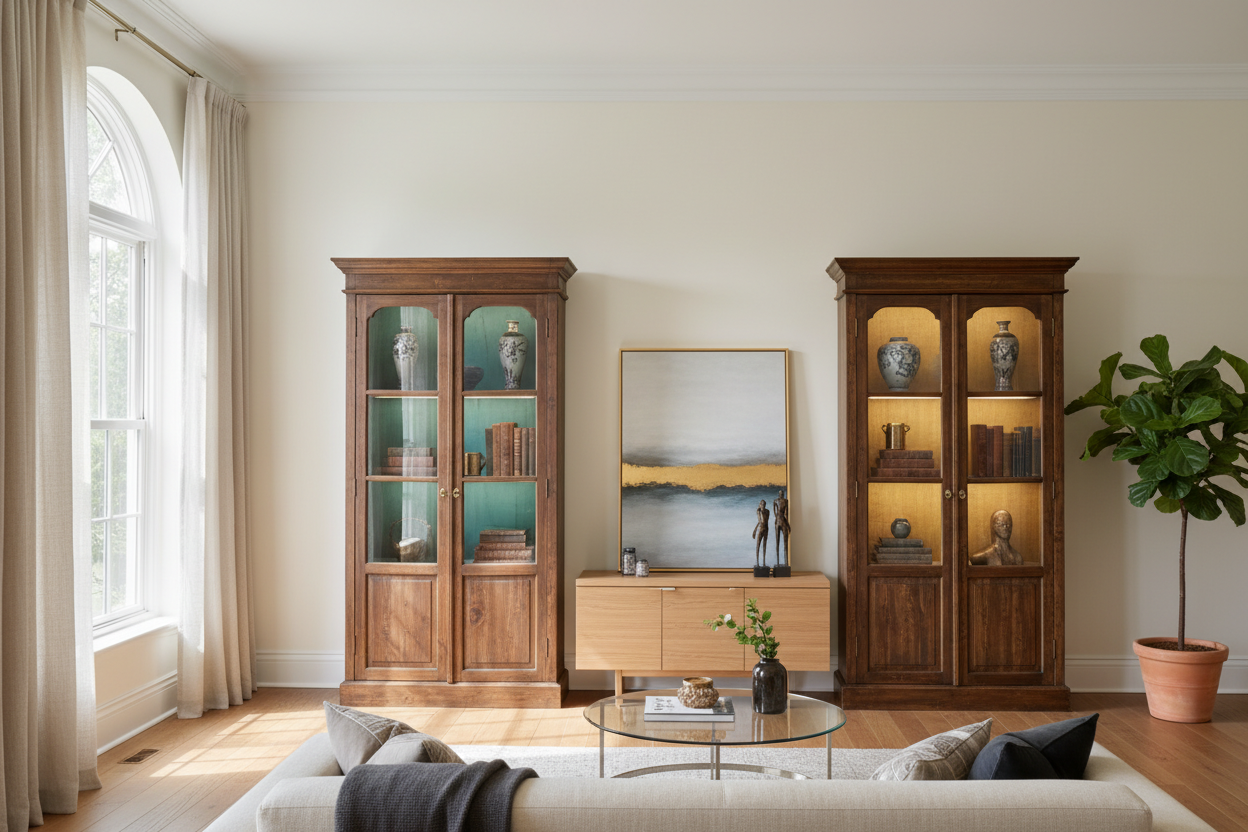
You finally nailed the seating arrangement, but that one long dining room wall still feels incredibly flat. Buying mass-produced shelving often looks flimsy, while custom built-ins cost a small fortune. This is exactly where refurbished display cabinets shine.
A thoughtfully restored piece solves your storage dilemmas while injecting instant history and soul into a room. Whether you are hunting for a mid-century teak unit or a painted farmhouse hutch, you need to know what separates a quality restoration from a quick flip. By the end of this guide, you will know exactly how to select, place, and style a refurbished display cabinet so it looks intentional and high-end.
Quick Decision Guide
- Check the joinery: Look for dovetail joints on drawers rather than staples or glue. This indicates a piece worth saving.
- Measure the depth: Standard cabinets range from 14 to 20 inches deep. Ensure you have at least 36 inches of clearance for walking paths.
- Inspect the glass: Original wavy glass adds immense character but is fragile. Make sure the panes are secure in their framing.
- Mix eras confidently: A vintage cabinet often looks best when contrasted with modern art or contemporary lighting.
Evaluating Material and Build Quality
Wood Types That Last
When shopping for refurbished furniture, the underlying material dictates its lifespan. Solid hardwoods like oak, walnut, and mahogany are ideal because they can be sanded and refinished multiple times. Engineered woods from the mid-20th century, often covered in high-quality veneers, are also excellent, provided the veneer is intact.
Be cautious of pieces that have been painted over just to hide severe water damage or cheap particle board. A reputable restorer will usually leave some of the natural wood grain exposed or be transparent about the base materials.
Hardware and Hinge Integrity
The charm of an older cabinet often lies in its original brass or iron hardware. However, hinges bear the brunt of daily use. Open the doors fully—if they sag or require force to close, the piece may need structural repair, not just a cosmetic refresh. Upgraded magnetic catches or soft-close hinges hidden inside can be a huge bonus in a restored piece.
Space Planning and Placement Rules
Managing Visual Weight
A tall, solid wood cabinet carries significant visual weight. If you place it next to a bulky fireplace or a heavy sectional, that side of the room will feel lopsided. Balance it by placing it opposite another substantial element, like a large window or a heavy credenza.
Clearances for Traffic Flow
Scale matters immensely in North American homes. If you are placing your cabinet in a dining room, leave a minimum of 36 inches between the cabinet doors and the back of your dining chairs. For narrow hallways or small apartments, look for a shallow profile—around 12 to 14 inches deep—so it does not encroach on your negative space.
Styling Your Pieces
Layering Textures and Objects
The biggest mistake people make is treating their cabinet like a retail store shelf. Instead of lining up identical glasses in rows, create groupings. Mix stacks of design books with organic shapes like ceramic vases or trailing plants. Leave about 30 percent of the shelf space empty to let your objects breathe.
Lessons from My Own Projects
A few years ago, I sourced a stunning 1920s arched-top walnut cabinet for a client's Chicago home. The restoration team did a beautiful job with the finish, and it looked incredible in the dining room. But I learned a hard lesson about vintage wood that summer.
When the July humidity hit, the old wood swelled significantly. The beautifully fitted doors completely jammed. We had to call the restorer back to shave down the edges and reseal them. Now, whenever I spec a vintage or restored piece with inset doors, I always ensure there is a tiny bit of seasonal breathing room in the gaps, especially in climates with extreme humidity swings.
Frequently Asked Questions
How do I clean a refurbished display cabinet?
Avoid harsh chemical sprays. Use a slightly damp microfiber cloth for the wood, followed immediately by a dry cloth. For the glass, spray glass cleaner directly onto your towel, not the panes, to prevent liquid from seeping into the old wood framing.
Are refurbished display cabinets good for small spaces?
Yes, especially tall, narrow units. They draw the eye upward, making ceilings feel higher, and utilize vertical wall space for storage without eating up precious square footage on the floor.
How long do these pieces typically last?
If the restoration was done properly on a solid wood frame, a refurbished cabinet can easily last another lifetime. Keep it out of direct, harsh sunlight to prevent the finish from fading or the wood from cracking over time.

Leave a comment
This site is protected by hCaptcha and the hCaptcha Privacy Policy and Terms of Service apply.