










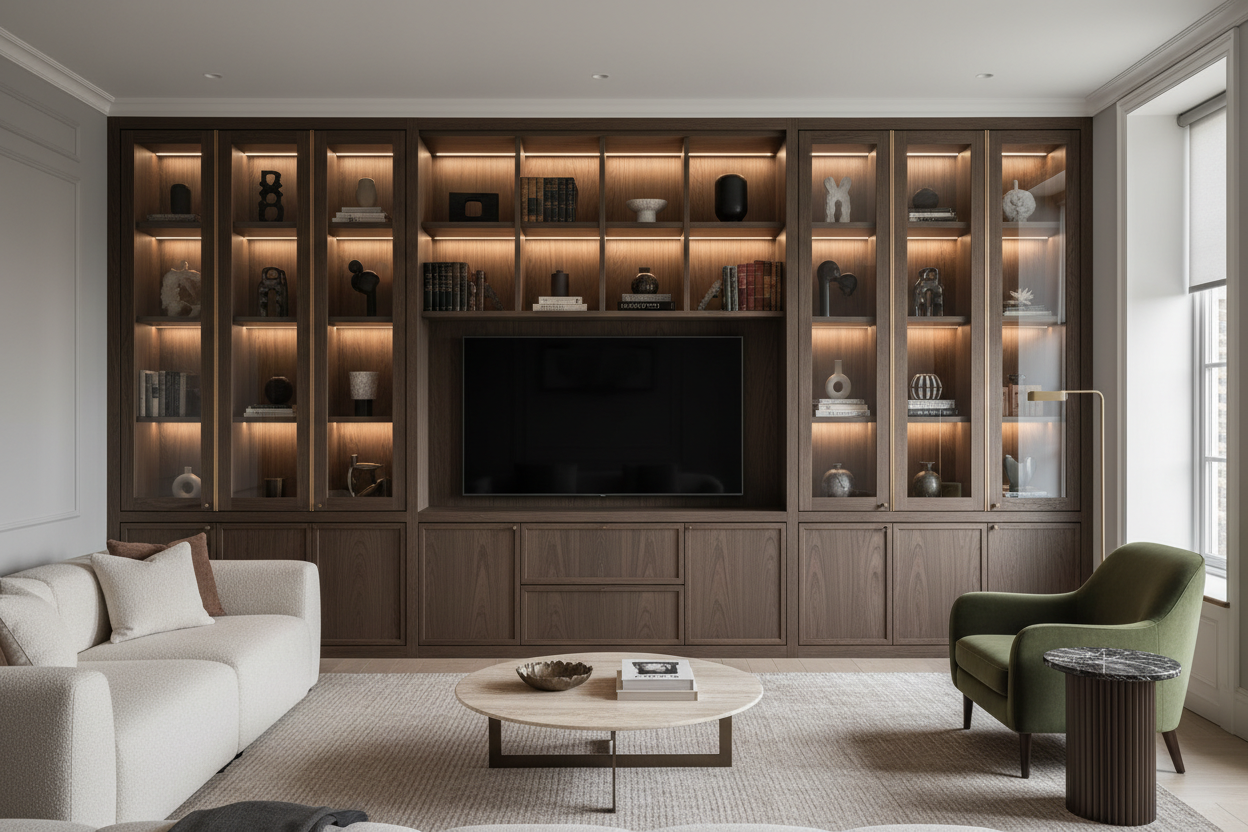
We've all stared at it: that massive, blank expanse of drywall in the living room or dining area that makes the whole space feel unfinished. You might try hanging a gallery wall, but it often ends up looking cluttered. You might push a small console table against it, but the scale feels entirely wrong. This is where a well-proportioned showcase wall cabinet steps in. It provides architectural interest, frames your favorite objects, and anchors the room without requiring a custom build.
In my 15 years of designing North American homes, I've found that the right display piece does more than hold books and vases. It dictates the room's entire focal point. Here is what you need to know before bringing one into your home.
Quick Decision Guide
- Scale is everything: A cabinet should fill at least two-thirds of your empty wall space to avoid looking like a lost postage stamp.
- Mix open and closed storage: Look for units with solid doors on the bottom to hide clutter and glass on top for display.
- Lighting matters: Dark shelves swallow your decor. Integrated LED lighting is essential for a high-end look.
- Mind the visual weight: Dark, solid wood feels heavy and traditional, while metal and glass feel lighter and more contemporary.
Space Planning and Layout
Avoiding the Floating Box Effect
The most common mistake I see in suburban family rooms is buying a cabinet that is too small for the wall. If you have a 12-foot wall and place a 4-foot cabinet in the center, it floats awkwardly. Aim for a piece that spans at least 70 to 80 percent of the wall's width, or flank a smaller cabinet with substantial artwork or accent chairs to build out the visual footprint.
Clearance and Depth Rules
Standard display cabinets run between 15 and 18 inches deep. If you are placing this in a dining room or a narrow hallway, you must leave a minimum of 36 inches of walkway clearance. If the cabinet has swinging glass doors, factor in the door swing radius so you aren't knocking into your dining chairs every time you reach for a wine glass.
Materials and Visual Weight
Wood Tones vs. Painted Finishes
Solid oak or walnut cabinets bring incredible warmth and longevity, but they carry massive visual weight. If your room is small or lacks natural light, a dark wood piece can feel oppressive. Painted finishes—especially whites, warm grays, or even a bold navy—can blend seamlessly with your baseboards and trim, giving you that coveted built-in look for a fraction of the cost.
The Magic of Glass and Metal
If you are working with an open-concept apartment where space is at a premium, consider an iron and glass cabinet. The negative space allows your eye to travel through the piece, making the room feel larger while still providing a dedicated zone for your decor.
Designer's Honest Take
A few years ago, I helped a client who had purchased a stunning, massive matte-black wall unit before consulting me. It looked incredible in the brightly lit showroom. In her north-facing living room? It looked like a black hole. We ended up having to wallpaper the back panels of the cabinet with a light, textured grasscloth and retrofit puck lighting just to make her objects visible.
I also have to be honest about glass doors: they are a commitment. If you have a shedding dog or live in a dusty climate, you will be wiping down those panes weekly. Dust settles visibly on glass shelves, and nose smudges from curious pets are a daily reality. If you hate cleaning, opt for wood shelves and seeded or fluted glass doors that obscure smudges.
Frequently Asked Questions
How tall should a wall cabinet be relative to the ceiling?
Leave at least 12 to 18 inches of breathing room between the top of the cabinet and your ceiling. If you have standard 8-foot ceilings, a 78-inch cabinet is usually the sweet spot. Pushing it too close to the ceiling without crown molding makes the room feel cramped.
Can I put a TV inside a showcase cabinet?
Yes, but you need an entertainment-specific unit with a reinforced center console and wire management cutouts. Standard display shelves are rarely deep or strong enough to safely house modern televisions.
How do I light my display cabinet without hardwiring?
Rechargeable LED puck lights and motion-sensor strip lights are fantastic solutions. You can mount them under the shelves using adhesive tape, completely bypassing the need for an electrician or ugly power cords running down your wall.

Leave a comment
This site is protected by hCaptcha and the hCaptcha Privacy Policy and Terms of Service apply.