










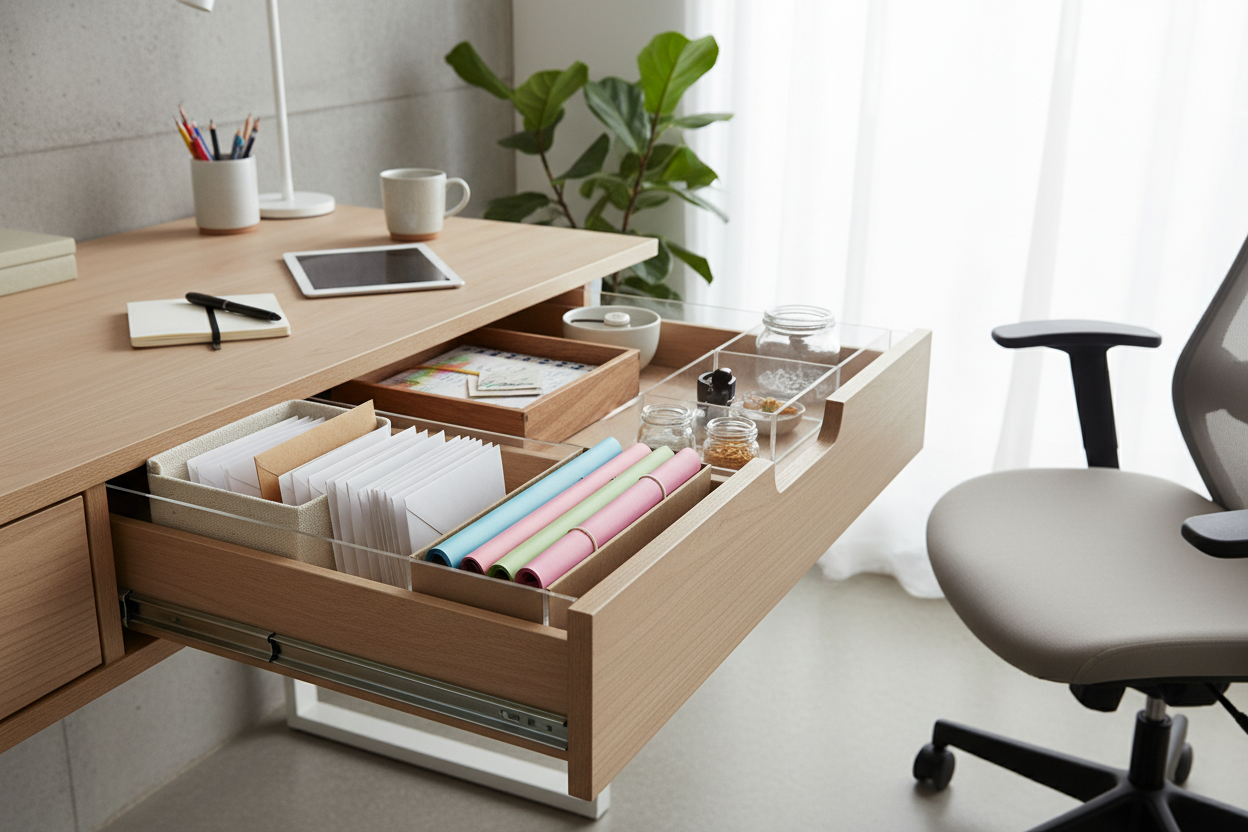
We all have that one drawer. It starts with good intentions—a place for stationery and bills—but inevitably devolves into a chaotic abyss of paperclips, bent corners, and lost receipts. As a designer, I see this space not just as storage, but as the command center of your home office. The solution isn't just tossing in a plastic bin; it is selecting the correct envelope organizer for drawer configurations to maintain visual calm and workflow efficiency.
Key Features to Look For
- Material Density: Opt for solid wood (bamboo/oak) or high-grade acrylic over thin plastic to prevent cracking under weight.
- Compartment Depth: Ensure the slots are at least 2 inches deep to hold standard #10 envelopes without them spilling over.
- Non-Slip Base: Look for rubberized feet or weight; lightweight organizers slide every time you open the drawer.
- Modular vs. Fixed: Modular units allow for custom layouts, while fixed trays offer structural rigidity.
Selecting the Right Material for Your Aesthetic
When curating a desk setup, the material of your organizer dictates the tone of the workspace. It is not merely about holding paper; it is about the tactile experience of reaching for it.
The Warmth of Wood and Bamboo
For traditional or Scandinavian-inspired offices, I almost always recommend bamboo or solid wood. An envelope drawer organizer made from natural materials absorbs sound, reducing that harsh clattering noise when you drop a stapler or a stack of mail into the tray. It adds a layer of organic texture that softens the often sterile look of modern technology.
The Clarity of Acrylic
If you are working with a dark-lined drawer or a modern lacquer desk, high-quality acrylic is superior. It disappears visually, allowing the contents to be the focal point. However, be wary of low-grade polystyrene, which tends to yellow over time. Look for cast acrylic with polished edges for that glass-like, luxury finish.
The Art of the Fit: Sizing and Layout
The most common error homeowners make is ignoring the "negative space" in a drawer. You do not want an organizer that fits too snugly side-to-side, as it becomes impossible to remove for cleaning. Conversely, an organizer that is too small will slide aggressively.
Pro Design Tip: If your organizer leaves a 2-inch gap, do not leave it empty. Use that channel to store long rulers or rolled blueprints. If the gap is unsightly, I recommend lining the bottom of the drawer with a felt or velvet liner before placing the organizer on top. This creates friction to hold the piece in place and adds a bespoke, jewelry-box quality to your stationery storage.
Ergonomics and Accessibility
Consider the angle of the dividers. A tiered or slanted design is infinitely better than flat compartments for envelopes. The slant allows you to flip through categories (bills, personal, business) without removing the entire stack. This mimics the functionality of a filing cabinet but on a micro-scale, keeping your workflow fluid and uninterrupted.
My Personal Take on Envelope Organizer for Drawer
I learned a hard lesson about drawer organizers during a project for a client in a high-rise downtown. We ordered beautiful, custom mahogany inserts for her desk. They looked stunning, but I failed to account for the specific height of the drawer runners.
Every time she closed the drawer, the top of the envelopes would snag on the desk frame because the organizer floor was too thick, elevating the contents just a millimeter too high. It ruined the tops of her stationery. Since then, I always carry a "mock-up" envelope with me to measure vertical clearance, not just the empty drawer height. Also, a detail often overlooked: standard organizers slide. I now apply a small dab of museum wax (or museum gel) to the corners of every organizer I install. It keeps them rock-solid in place without damaging the drawer finish—a small trick that makes the furniture feel significantly more high-end.
Conclusion
Transforming your workspace requires looking at the small details. A well-chosen envelope organizer for drawer interiors does more than sort mail; it sets a standard of order for your entire day. By focusing on material quality and precise fit, you turn a junk drawer into a functional asset.
Frequently Asked Questions
How do I prevent my envelope organizer from sliding around?
If the organizer doesn't fit flush, use museum gel or adhesive rubber bumpers on the bottom corners. Alternatively, using a non-slip drawer liner underneath provides grip and protects the drawer interior.
What is the best material for durability?
Bamboo is generally the most durable option for the price; it resists moisture and doesn't scratch easily. Metal mesh is durable but can look industrial, while acrylic is beautiful but prone to visible scratches if you store metal tools alongside paper.
Can I fit standard A4 or Letter paper in these organizers?
Most envelope organizers are segmented specifically for #10 envelopes (4.125 x 9.5 inches) and smaller notes. If you need to store full sheets of paper, look for a "combo" organizer that includes a designated flat tray alongside the vertical envelope slots.


Leave a comment
This site is protected by hCaptcha and the hCaptcha Privacy Policy and Terms of Service apply.