










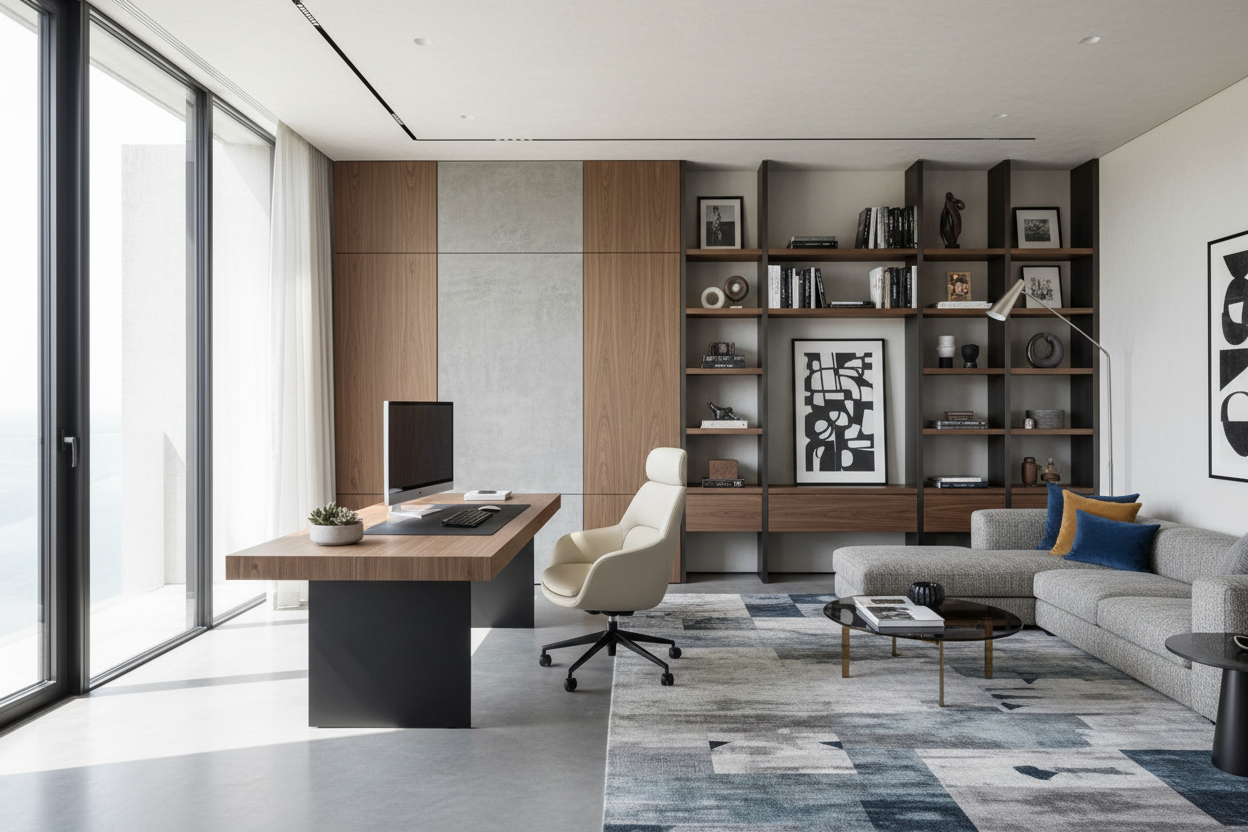
Most professionals start their remote work journey at the dining room table. Eventually, the clutter takes over, and the search for a single, cohesive modern home office idea begins. But translating those pristine, minimalist photos into a functional North American home is harder than it looks. Furniture that appeared sleek online often feels cold in person, or worse, completely ignores your physical comfort during an eight-hour workday.
A successful workspace requires more than just buying a trendy desk. It demands a careful balance of visual weight, proper ergonomics, and strategic storage. By the end of this guide, you will know exactly how to filter out the noise and design a workspace that promotes deep focus, whether you are outfitting a dedicated room or carving out a corner in a one-bedroom apartment.
Quick Decision Guide
- Prioritize ergonomics over aesthetics: A sculptural chair looks incredible, but if it lacks lumbar support, your posture will suffer within a week.
- Control your cable clutter: Modern design relies on negative space. Visible cords instantly ruin a minimalist aesthetic.
- Anchor the room with storage: Floating shelves are great for display, but you need closed cabinetry to hide daily paperwork and office supplies.
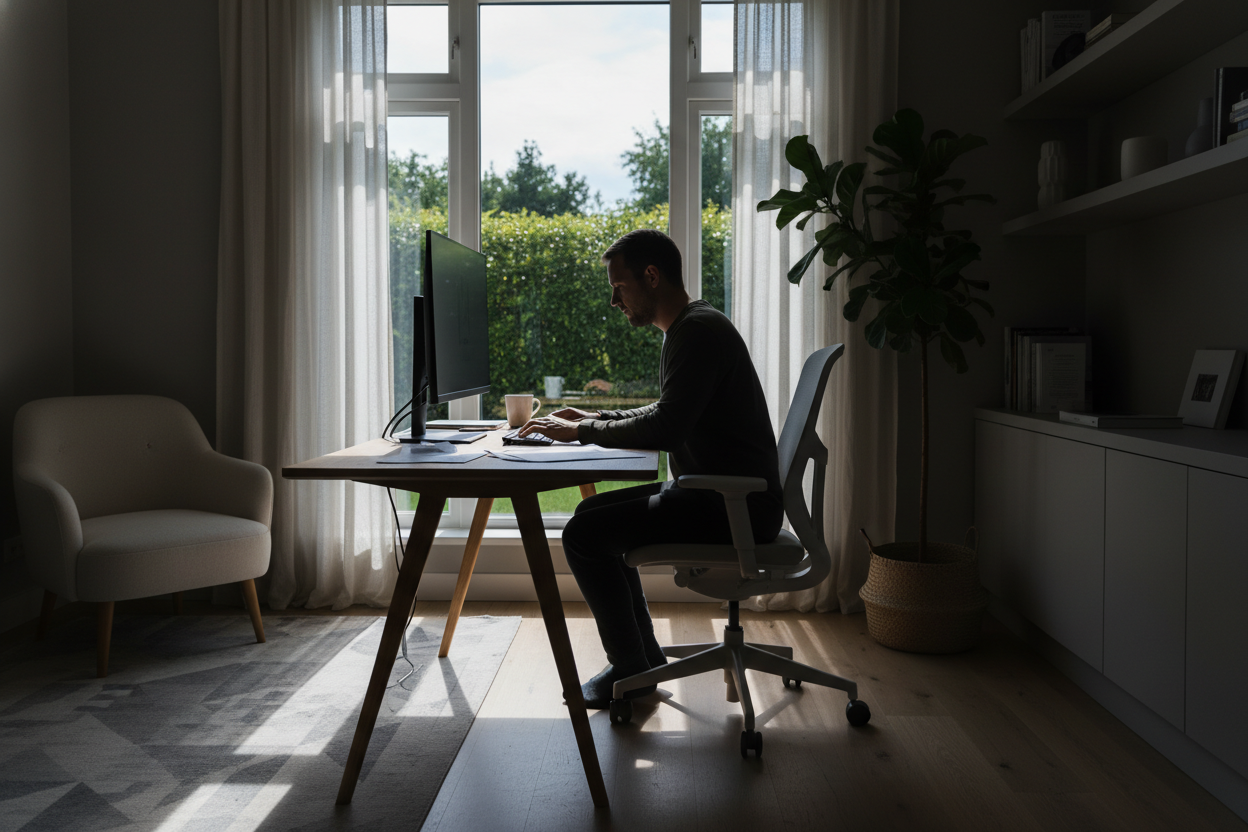
- Mind the light sources: Position your desk perpendicular to windows to avoid harsh screen glare while still enjoying natural light.
Strategic Space Planning
Adapting to Your Square Footage
When reviewing modern home office layout ideas, the first constraint is always your available footprint. If you are designing a small home office modern setup, you need to maximize vertical real estate. Pushing a desk against the wall opens up the center of the room, creating a feeling of spaciousness. However, if you have the luxury of a dedicated modern home office room, floating the desk in the center of the space facing the door commands authority and provides a better background for video calls.
For those integrating a modern work from home office into an open-concept living area, visual boundaries are essential. Use a textured area rug to define the workspace zone, and ensure your desk finish coordinates with your existing living room furniture so the transition feels intentional rather than accidental.
Defining the Visual Identity
Color Palettes and Textures
A contemporary style office thrives on a disciplined color palette. The classic modern home office white aesthetic remains popular because it reflects light and makes tight spaces feel expansive. However, an all-white room can quickly feel clinical. To prevent this, layer in warmth through materials. Think matte black hardware, warm walnut wood tones, or a textured linen accent chair.
Your vertical space is also prime real estate for design. A modern home office wall can feature geometric acoustic paneling, dark moody paint, or oversized abstract art. This creates a strong focal point without consuming any floor space, keeping the room grounded and visually engaging.
Selecting Pieces That Work as Hard as You Do
Desks and Closed Storage
Browsing modern home desk ideas can be overwhelming, but the choice usually comes down to material and functionality. Solid wood offers longevity and warmth, while metal and glass lean heavily into a minimalist vibe. If you want a seamless look, investing in a modern built-in home office is the gold standard. Custom millwork maximizes every inch of your room and hides printers, routers, and filing cabinets behind sleek, handle-less doors.
When sourcing modern home office furniture ideas, pay close attention to visual weight. A chunky, solid desk anchors a large room, but in a tight space, a desk with thin metal legs allows light to pass through, making the footprint feel lighter. Pair these pieces carefully to maintain proportion.
Designer's Honest Take: Lessons from Real Projects
Over the last 15 years, I have designed everything from a compact condo nook to a sprawling modern mansion office. One of my biggest learning moments came while executing a highly requested futuristic home office design for a client in Toronto. They insisted on a massive, custom glass-top desk and high-gloss white acrylic cabinetry.
It looked breathtaking on installation day. But three weeks later, the client called in frustration. The glass desk showed every single fingerprint, dust particle, and coffee mug ring. Worse, the lack of a modesty panel meant every cable from their dual-monitor setup was visible from the doorway. We ended up retrofitting a matte black cable management tray and swapping the glass top for a honed black soapstone. I learned the hard way that a modern personal office must be forgiving to daily human habits. High-gloss and glass surfaces are punishing; matte finishes and wood grains are your best friends for low-maintenance longevity.
Frequently Asked Questions
What are some realistic futuristic home office ideas?
True futuristic design is about integrated technology rather than just looking like a spaceship. Look for desks with built-in wireless charging pads, hidden motorized sit-stand mechanisms, and smart LED ambient lighting that adjusts color temperature based on the time of day.
How do I choose the right modern office design for home use?
Start by analyzing your workflow. If you review physical documents, you need a wider desk surface and lateral filing. If you only use a laptop, prioritize a smaller desk footprint and invest heavily in an ergonomic chair and acoustic treatments for video calls.
Are trendy office ideas worth the investment?
It depends on the item. Save your trendy modern work office ideas for easily swappable elements like paint colors, desk lamps, or art prints. Invest your core budget into high-quality, timeless staples like a commercial-grade ergonomic task chair and a sturdy, well-proportioned desk.


Leave a comment
This site is protected by hCaptcha and the hCaptcha Privacy Policy and Terms of Service apply.