










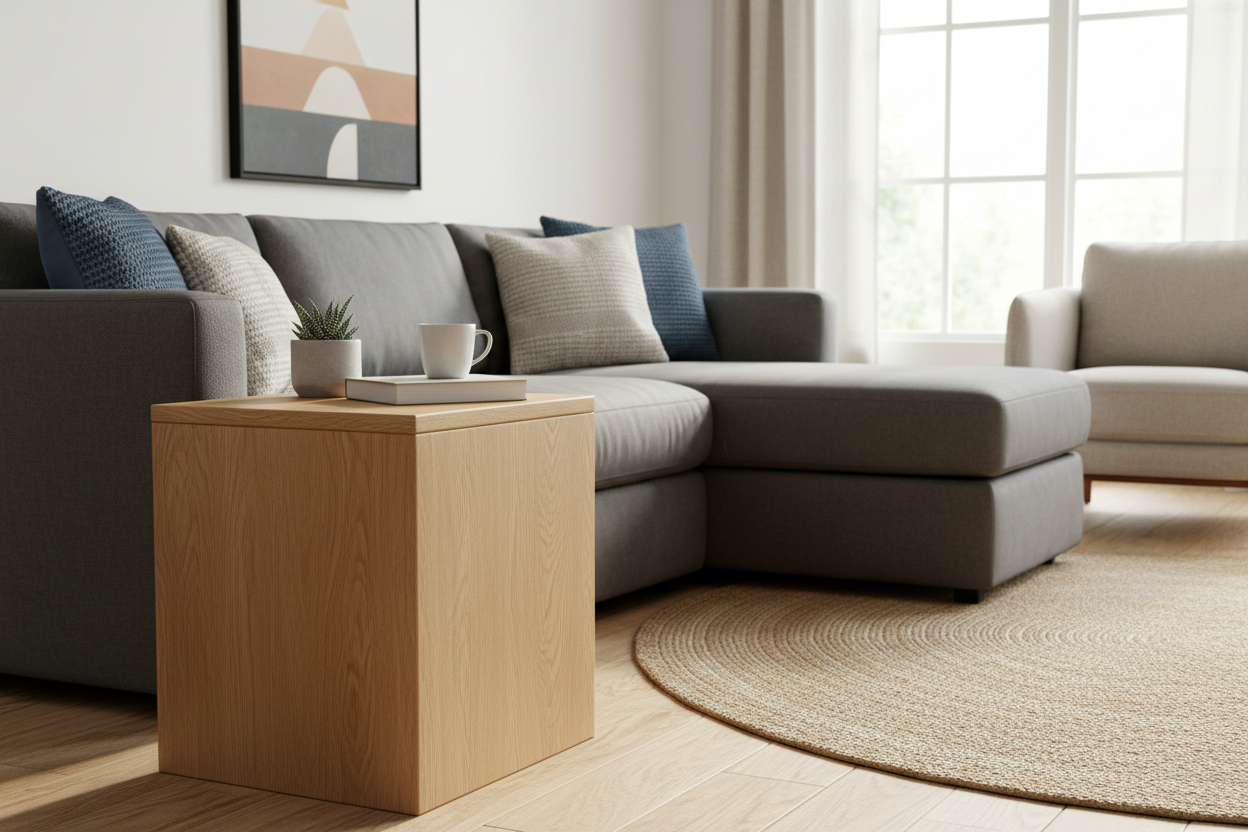
Finding the right furniture often feels like a game of inches. You might have the perfect sofa and a beautiful rug, but something feels slightly off. Often, that awkwardness comes down to scale, specifically the relationship between your seating and your surfaces. If you are working with modern, low-slung furniture or trying to squeeze utility into a tight corner, a 15 inch side table is likely the specific solution required to restore visual harmony and ergonomic comfort.
Standard tables usually hover around 22 to 24 inches in height. While that works for traditional rolled-arm sofas, it towers over contemporary sectionals or mid-century modern pieces. A table that sits significantly higher than your sofa arm isn't just an eyesore; it disrupts the flow of the room. A lower profile, specifically a 15 inch high table, aligns perfectly with seat cushions that sit closer to the ground, allowing you to set down a drink or a book without lifting your shoulder or reaching awkwardly upward.
The Ergonomics of Low Living
Interior design rules regarding height are generally rooted in accessibility. The golden rule for side tables is that the surface should be at or slightly below the arm of the chair or sofa it serves. With the rise of "cloud" couches, Togo sofas, and platform beds, the center of gravity in our living spaces has dropped. A standard end table next to a low-profile sofa looks like a bar stool.
This is where the 15-inch tall table becomes essential. It creates a seamless horizontal line. When you are lounging, your arm naturally falls to this height. If you are creating a "floor culture" living room—popular in Japandi or Bohemian aesthetics—this height bridges the gap between the floor and the furniture, grounding the space without dominating it.
I learned this lesson the hard way a few years ago when I bought a vintage velvet sofa that sat incredibly low to the ground. I paired it with my existing end tables, which were standard height. The room looked disjointed, and I couldn't figure out why until I sat down. My elbow was constantly bumping into the table edge, and reaching for my coffee felt like a workout. I swapped those out for a heavy, ceramic side table 15 inches in height, and the entire room suddenly made sense. The sightlines cleared up, and the room actually felt larger because the furniture wasn't blocking the view.
Width vs. Height: Solving Different Problems
While height is crucial for vertical proportion, floor space is often the bigger constraint in apartments or smaller dens. You might be searching for a side table 15 inches wide rather than 15 inches tall. These slim-profile tables are lifesavers for that "dead zone" between a recliner and a wall, or the gap between two armchairs.
A narrow 15 inch table offers just enough surface area for a lamp and a coaster without protruding into walkways. If you are dealing with a narrow width, look for C-tables or nested designs. These shapes maximize surface area while maintaining a compact footprint. However, be careful not to confuse the two dimensions when shopping online. A table that is 15 inches wide might be 24 inches tall, which serves a completely different purpose than the low-profile options discussed earlier.
Material Matters in Small Doses
Because a 15 inch end table is physically smaller than average furniture, you can afford to be bolder with materials. A massive oak table might weigh down a room, but a small 15-inch block of wood adds warmth without bulk. This size is particularly popular for sculptural pieces—think ceramic drums, travertine cubes, or heavy metal geometric shapes.
Transparent materials like acrylic or glass work exceptionally well if you want the table to disappear. In a small room, a clear 15 inch tall side table provides functionality without visual clutter. Conversely, if you want an accent piece, a solid brass or colorful enamel table at this height acts like jewelry for the room—small, distinct, and eye-catching.
Beyond the Living Room
These lower tables are not restricted to flanking a sofa. Their specific height makes them incredibly versatile throughout the home. In the bedroom, platform beds often sit too low for standard nightstands. A side table 15 inches high is frequently the perfect companion for a mattress that sits directly on a frame or the floor.
Plant lovers also find this height useful. Large potted plants, like a Fiddle Leaf Fig or a Monstera, often need just a little lift to get better light or to stand out from the floor. A sturdy 15-inch stand elevates the pot enough to aid drainage and airflow while keeping the heavy foliage below eye level, maintaining an open feel in the room.
Styling Your Low Table
Styling a surface that sits lower to the ground requires a different approach than styling a console or highboy. Since you are looking down at it, the top surface arrangement is key. Avoid tall, skinny lamps on a 15 inch table; they can look precarious and top-heavy. Instead, opt for shorter, stouter lamp bases or floor lamps placed behind the table.
Stacking is your friend here. Coffee table books work beautifully to add a little height back if you need it. If the table is being used in a high-traffic zone, keep the styling minimal—perhaps just a stone coaster and a small succulent. The beauty of a low table is its unobtrusive nature; cluttering it defeats the purpose.
Checklist Before You Buy
Before purchasing, grab a measuring tape. Sit on your sofa and measure the distance from the floor to the top of the armrest. If that measurement is between 16 and 18 inches, a 15-inch table is your ideal match. If your sofa arm is 24 inches high, this table will be too low, and you will find yourself reaching down uncomfortably.
Also, consider the "visual weight" of the piece. A solid block table will feel grounded and heavy, while a table with thin legs will feel airy. If your sofa is bulky and touches the floor, a leggy table provides nice contrast. If your sofa is on tall legs, a solid drum table can anchor the arrangement.
Frequently Asked Questions
Is a 15-inch table too short for a standard couch?
Yes, likely. Standard sofa arms are typically 24 to 26 inches high. Placing a 15-inch table next to a standard sofa will make the table look miniature and make it difficult to reach your items. These tables are best reserved for low-profile, modern, or lounge-style seating.
Can I use a 15-inch wide table as a nightstand?
Absolutely. A width of 15 inches is actually ideal for smaller bedrooms where space on either side of the bed is limited. Just ensure the height matches your mattress level so you aren't reaching up or down in the dark.
What is the best shape for a small side table?
Round tables are generally better for tight spaces because they lack sharp corners, making traffic flow easier and reducing knee bumps. However, if you are fitting the table flush against a wall or between two square chairs, a square or rectangular shape maximizes the usable surface area.


Leave a comment
This site is protected by hCaptcha and the hCaptcha Privacy Policy and Terms of Service apply.