










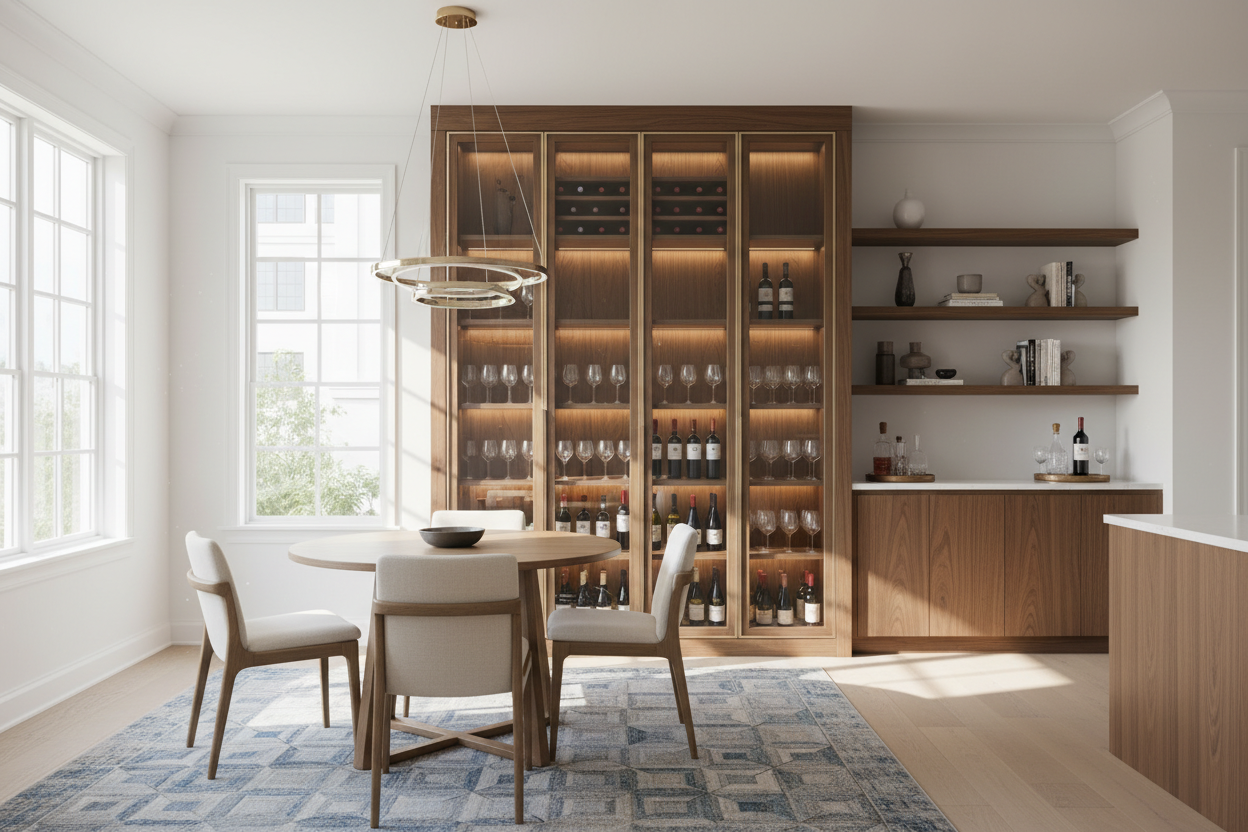
I spent three years shoving sixty-dollar bottles of Willamette Valley Pinot Noir behind a stack of canned chickpeas in my pantry. Every time I wanted a drink, I was basically an amateur archaeologist digging through clutter, knocking over half-empty bags of flour just to find a corkscrew. It felt like I was hiding a shameful secret instead of owning a collection I actually enjoyed.
The moment I finally invested in a wine cabinet with glass doors, everything changed. Suddenly, my dining room didn't just look like a place where we ate takeout; it felt like a purposeful, curated space. There is something about seeing your glassware and labels through a clean pane of glass that makes you feel like you actually have your life together.
- Glass doors prevent dust buildup on bottles while keeping the collection visible.
- Vertical designs maximize storage in tight dining rooms without sacrificing floor space.
- Integrated racks keep corks moist by storing bottles at the correct angle.
- Internal lighting options can turn a simple storage unit into a focal point for evening entertaining.
The 'Hidden Bottle' Trap (And Why I Escaped It)
We’ve all been there: the 'wine graveyard' on top of the refrigerator. It’s greasy, it’s dusty, and the heat from the fridge motor is actively cooking your Cabernet. For a long time, I convinced myself I didn't have the room for a real bar setup. I thought a dedicated tall wine cabinet with doors was a luxury reserved for people with actual wine cellars and custom-built estates.
But the 'hidden bottle' habit is a trap. When you can’t see what you have, you buy duplicates or, worse, forget about a great bottle until it’s past its prime. Moving my wine out of the dark pantry and into a dedicated piece of furniture was the ultimate adulting move. It turned my scattered bottles into a legitimate home feature.
Confronting My Fear of the 'Visible Mess'
My biggest hesitation was the 'fishbowl effect.' I was terrified that putting everything behind glass would just put my messy habits on display for every dinner guest to see. I pictured mismatched labels and half-empty bottles of cheap vermouth ruining the vibe of the room. I was wrong.
A wooden wine cabinet with glass doors actually acts as a visual filter. It forces you to be intentional. When I switched to a black cabinet with glass doors, the high-contrast frame acted like a picture frame for my collection. The dark wood masked the visual noise of different label designs, making the whole thing look sophisticated rather than cluttered. It’s less like a grocery store shelf and more like a gallery display.
Going Vertical: Squeezing It Into a Small Dining Room
If you’re working with a standard 12x12 dining room, you probably don't have space for a wide sideboard. This is where a tall wine cabinet with glass doors becomes your best friend. By taking up only 18 to 24 inches of floor width but stretching 70 inches high, you get the storage of a massive buffet without the footprint.
I recommend looking for a tall storage cabinet with glass doors that features adjustable shelving. In my first apartment, I bought a cheap unit with fixed shelves and quickly realized my taller Syrah bottles wouldn't fit standing up. Going vertical draws the eye upward, which actually makes low-ceiling rooms feel a bit airier. It’s a classic interior design trick that works every single time.
How to Style the Inside (So It Doesn't Look Like a Liquor Store)
The goal is a 'vignette,' not a retail display. If you fill a tall cabinet with wine rack entirely with bottles from top to bottom, it looks heavy and industrial. To keep it feeling like part of a home, you need to break up the glass and labels with different textures. I like to keep my heaviest bottles at the bottom and use the middle shelves for my 'hero' items.
Think about adding a few vintage cocktail books, a heavy crystal decanter, or even a small ceramic bowl for corks. If you find that a massive tower is too much for your current layout, you might prefer a small wood cabinet with glass doors to act as a more subtle accent piece. The key is balance—leave some 'white space' on the shelves so the eye has a place to rest between the bottles.
My Honest Mistake
I once bought a beautiful cabinet without checking the weight capacity of the glass shelves. Wine is heavy—a standard bottle weighs about 3 pounds. I loaded up a middle shelf with twelve bottles, and I spent the whole night hearing the glass groan. Always check that your shelves are tempered glass and rated for at least 30-40 pounds if you plan on stocking up.
Frequently Asked Questions
Does sunlight through glass doors ruin the wine?
Direct UV light is the enemy of wine. If your dining room gets blasted with afternoon sun, place your cabinet on a wall that doesn't get direct hits, or choose a unit with tinted glass. For everyday drinking bottles, it’s usually not an issue, but don't put your 20-year-old collectibles in the sun.
Are these cabinets hard to keep clean?
Windex is your best friend. Yes, fingerprints happen near the handles, but a quick wipe once a week keeps it looking sharp. It’s a small price to pay for not having dusty bottles.
Do I really need to anchor a tall cabinet to the wall?
Yes. Absolutely. A tall unit filled with glass and liquid is incredibly top-heavy. Most quality manufacturers include a wall-anchor kit—use it. It takes five minutes and prevents a total disaster if someone bumps into it during a party.


Leave a comment
This site is protected by hCaptcha and the hCaptcha Privacy Policy and Terms of Service apply.