










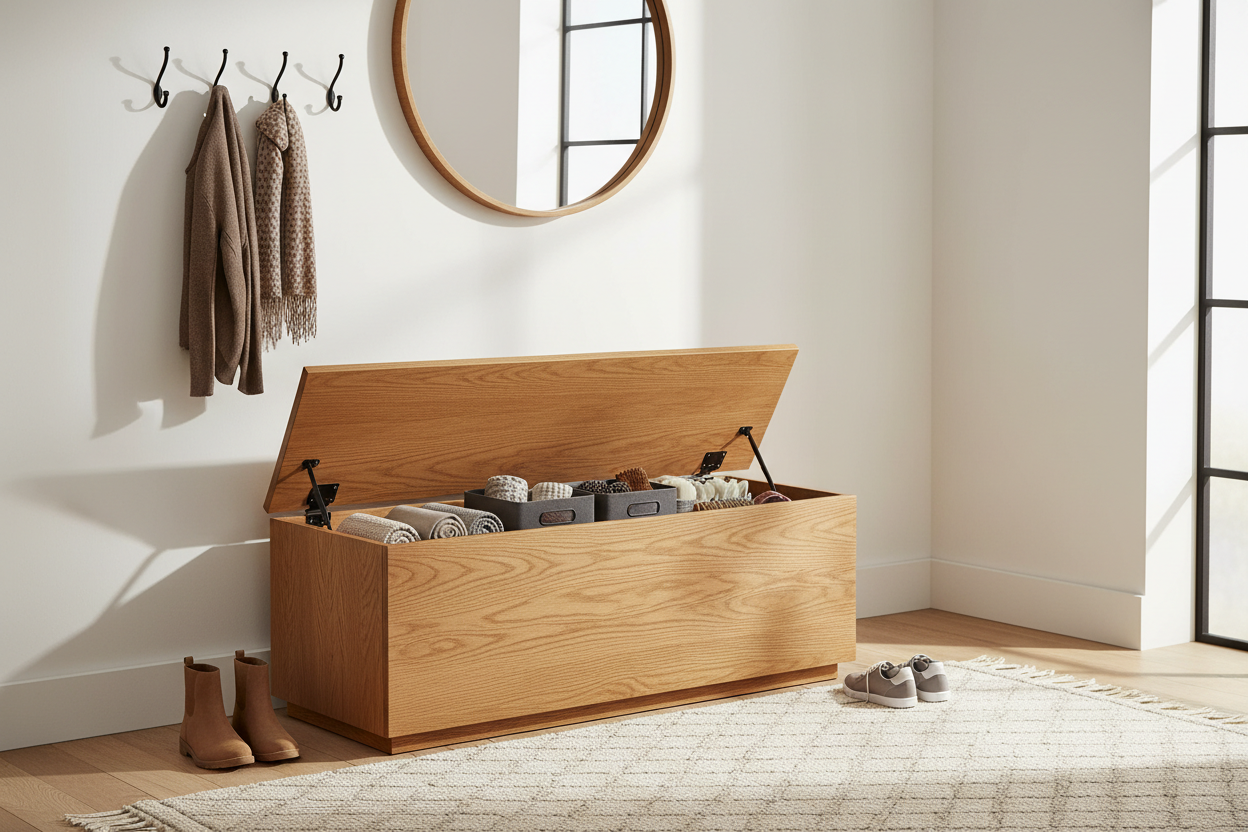
Walking through your front door should feel like a relief, not an obstacle course. Yet, for many of us, the entryway becomes a chaotic dumping ground for sneakers, backpacks, and mail. The most effective solution to this daily mess isn't just a strict cleaning schedule; it is the right piece of furniture. A wood entryway bench with storage serves a dual purpose that few other pieces can claim: it provides a sturdy place to sit while putting on shoes and offers a hidden compartment or shelving system to make clutter vanish instantly.
Choosing the right bench is more than just picking a color. It requires understanding how your household operates. Do you kick off shoes immediately? Do you need a place to stash winter scarves? The configuration of the furniture dictates how well it solves your organizational problems. Whether you opt for a lift-top lid or a design with cubbies, the goal is to streamline your departure and arrival routine without sacrificing style.
My Battle with the "Temporary" Bench
I learned the value of high-quality entryway furniture the hard way. A few years ago, I bought a cheap, particle-board unit online because the price was right. It looked decent in the photos, but it wasn't built for real life. After one particularly rainy autumn, the laminate started peeling at the base where wet boots had rested against it. Worse, the seat began to wobble every time I sat down to tie my laces. It became just another piece of junk cluttering the hall rather than solving the problem.
Replacing that disaster with a genuine entryway wood bench with storage changed the entire dynamic of my front hall. I chose a solid oak piece with a heavy grain. Not only did it withstand the moisture from rain-soaked jackets, but the weight of the wood meant it didn't shift or creak. It turned a source of frustration into a reliable anchor for the home, proving that investing in natural materials pays off in longevity.
Why Material Choice Dictates Durability
The entryway is a high-traffic zone. It sees mud, water, heavy school bags, and constant friction. While metal and upholstered benches have their place, wood offers a resilience that is hard to beat, provided you choose the right type. Hardwoods like oak, maple, and walnut are dense and resistant to denting. They can be refinished if scratched, giving the furniture a lifespan that can span decades.
Softwoods like pine are popular for their rustic look and lower price point, but they will show wear and tear much faster. If you enjoy the distressed look, pine is an excellent option. However, if you want your wood entryway storage bench to look pristine for years, sticking to hardwoods or high-quality sealed veneers is a smarter move. The finish is equally important; a polyurethane or lacquer topcoat is essential to create a barrier against moisture and dirt.
Configurations: Shelves vs. Drawers vs. Flip-Tops
The utility of your bench depends entirely on the storage configuration. Not all clutter is created equal, and your storage needs to match what you are trying to hide.
The Open Shelf Design
If your primary issue is a pile of shoes near the door, a wood bench with shelf is likely your best bet. This design usually features a solid seating surface with one or two open tiers underneath. It allows for quick access and, crucially, airflow. Storing damp shoes in a closed drawer can lead to odors and mold. An open shelf lets footwear dry out naturally while keeping it off the floor and out of the walkway. This style works exceptionally well in narrow hallways where opening a drawer or lid might block the path.
The Flip-Top Compartment
For items that aren't accessed daily, such as winter gloves, dog leashes, or emergency umbrellas, a flip-top bench is ideal. These offer a deep cavity beneath the seat. The trade-off is that you cannot store anything on top of the bench if you need frequent access to the inside. It forces you to keep the surface clear, which can be a good discipline for maintaining a tidy look.
Cubby and Basket Systems
A hybrid approach often involves cubbies. Many homeowners pair a wooden bench structure with woven baskets that slide into the open slots. This gives you the aesthetic warmth of wood combined with the texture of wicker or canvas. It effectively acts as a drawer system but is easier to clean and repair. If a basket gets dirty, you replace the basket, not the furniture.
Sizing and Placement for Flow
Nothing ruins the functionality of a hall like furniture that is too large. Before falling in love with a specific model, measure your space. You need at least three feet of clearance for a comfortable walking path. If your entryway is tight, look for a bench with a depth of 12 to 15 inches rather than the standard 18 to 20 inches.
Length is also a factor. A long bench provides more storage, but it can dominate a small room. Visually, the bench should be proportional to the wall it sits against. Leaving some breathing room on either side prevents the space from feeling cramped. If you are placing the bench under a coat rack or hooks, ensure there is enough vertical clearance so that hanging coats don't bunch up on the seat, which renders the sitting area useless.
Styling Your Bench
Once you have the practical side sorted, styling integrates the piece into your home decor. A bare wooden bench can look a bit stark. Adding a thin seat cushion or a couple of throw pillows introduces color and comfort, making the entryway feel inviting rather than utilitarian. Just ensure the fabrics are durable and washable.
Lighting plays a role here too. A wall sconce above the bench or a floor lamp nearby creates a warm atmosphere and helps you see what you are doing when searching for keys or tying shoes in the dark. Mirrors are a classic pairing with these benches; they reflect light to make the hallway feel larger and offer a last-minute check before you head out.
Maintenance and Care
To keep your bench looking new, wipe it down regularly with a damp microfiber cloth to remove dust and grit that can scratch the finish. Avoid harsh chemical cleaners that can strip the wood's natural oils. If your bench has an open shelf for shoes, consider placing a small rubber mat or a cut-to-size liner on the shelf. This protects the wood from water and mud dripping off sneaker soles.
Integrating a wood entryway bench with storage into your home is one of the most practical design decisions you can make. It anchors the space, organizes the chaos, and provides a moment of pause before you rush out into the world.
Frequently Asked Questions
How much weight can a typical wood storage bench hold?
Most solid wood benches are designed to support between 250 to 400 pounds, allowing two average-sized adults to sit comfortably. However, benches made from particle board or those with long unsupported spans may have lower limits, so always check the manufacturer's specifications.
Can I keep a wood bench on a covered porch?
You can, but only if the wood is specifically treated for outdoor use or sealed with marine-grade varnish. Indoor furniture placed outside, even under cover, will eventually warp or rot due to humidity and temperature fluctuations.
What is the best way to prevent scratches from rivets on jeans?
The easiest way to protect the wood surface is to use a seat cushion or a throw blanket. If you prefer the look of bare wood, ensure the bench has a hard, protective topcoat like polyurethane, which resists surface scratches better than oil or wax finishes.


Leave a comment
This site is protected by hCaptcha and the hCaptcha Privacy Policy and Terms of Service apply.