










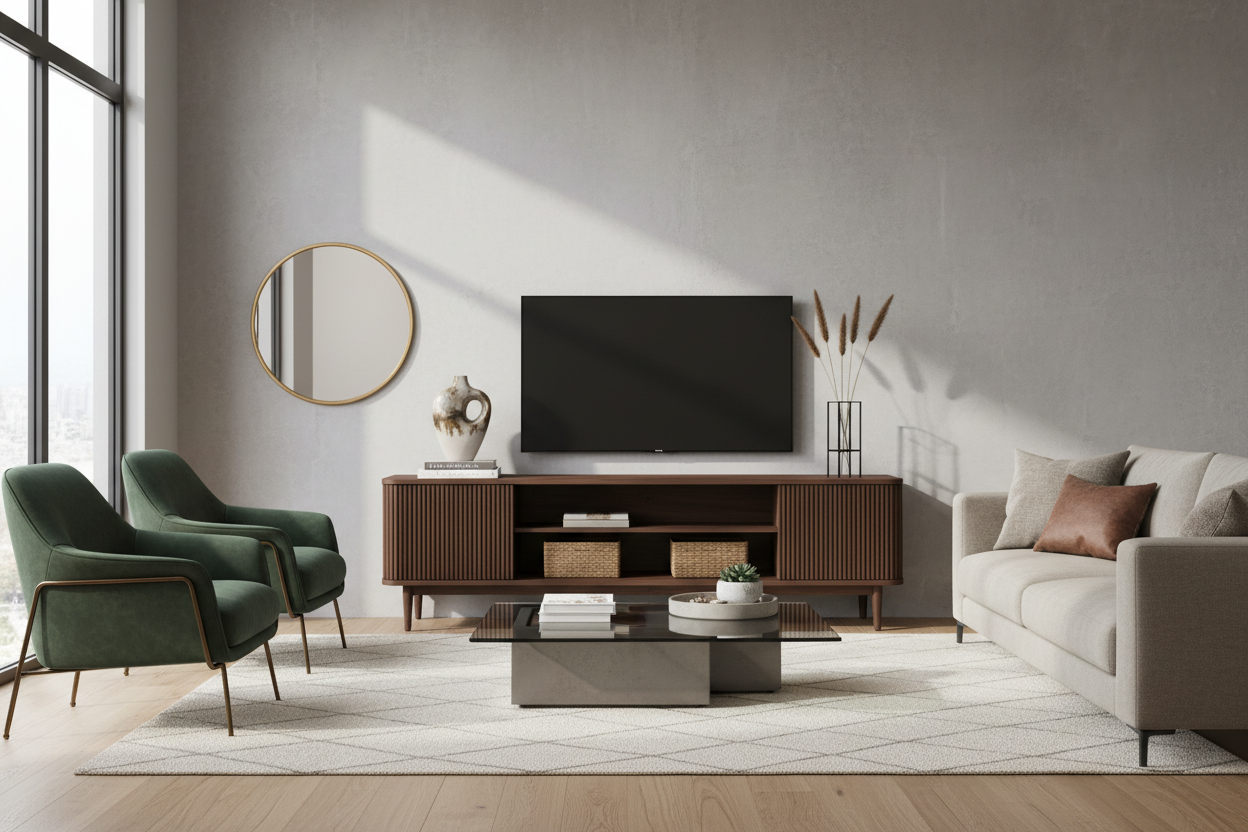
We have all seen it: a beautifully decorated living room completely thrown off balance by a TV stand that is either comically small or overwhelmingly massive. Getting the proportions right under your television is one of the most common design hurdles in North American homes. If you are struggling with a wall that feels awkward or an entertainment setup that lacks polish, a 60 inch media console is often the exact dimension you need to anchor the space.
This specific size hits the sweet spot for modern living. It is substantial enough to ground a standard family room without eating up valuable walkway clearance in tighter suburban layouts. By the end of this guide, you will know exactly how to scale, style, and select the right piece for your home.
Quick Sizing & Decision Guide
- TV Pairing: A 60-inch console safely and stylishly accommodates TVs up to 65 inches (diagonal measurement).
- Visual Balance: Always leave at least 3 to 4 inches of console surface exposed on either side of your TV to prevent a top-heavy look.
- Walkway Clearance: Ensure you maintain a minimum of 36 inches of clear traffic space between the front of the console and your coffee table.
- Storage Strategy: Opt for closed cabinetry if you have gaming equipment or cable boxes to maintain a clean, uncluttered aesthetic.
Space Planning and Room Layout
The Golden Rule of TV Sizing
When clients ask me to source a tv console table 60 inches long, my first question is always about the television. The width of the screen should never exceed the width of the furniture below it. If the TV overhangs the edges, the entire arrangement looks unstable and visually top-heavy. A 60-inch wide unit provides a comfortable, grounding base for the most common TV sizes sold today, specifically 55-inch and 65-inch models.
Working with Negative Space
In open-concept homes, you have to consider the blank wall space surrounding your furniture. Placing a 60 in media console alone on a sprawling 15-foot wall will make the furniture look dwarfed. To fix this, use the negative space strategically. Flank the console with a tall olive tree on one side and a textured floor lamp on the other to widen the visual footprint.
Materials That Survive Real Life
Solid Wood vs. Veneer
In a high-traffic family room, material dictates longevity. Solid oak or walnut offers incredible durability and can be refinished, but it comes at a premium price. High-quality wood veneer over an MDF core is often a more practical choice for a 60 media console. MDF resists warping from temperature and humidity changes much better than solid wood, keeping those long, flat surfaces looking pristine over time.
Grounding the Room's Aesthetic
Managing Visual Weight
The style of your console dramatically impacts how heavy the room feels. A piece that sits directly on the floor with no legs carries heavy visual weight, making it ideal for large rooms with high ceilings. If you are working with a smaller apartment or a narrow living space, look for a piece raised on tapered metal or wooden legs. Seeing the floor continue underneath the furniture tricks the eye into perceiving more square footage.
Lessons from My Own Projects
A few years ago, I sourced a stunning, minimalist walnut unit for a client's suburban family room. The silhouette was gorgeous, and the slatted doors hid the speakers perfectly. But I learned the hard way that a fully loaded 60" tv console needs serious center support. Within six months, the middle of the cabinet started to bow under the weight of a vintage audio receiver and a stack of heavy coffee table books.
We had to pull everything out and retrofit a hidden steel leg in the center. The matte finish also showed every single fingerprint from the client's toddlers. Now, I never specify a piece this wide without checking the internal structural supports first, and I always steer families toward textured or lighter wood finishes that hide daily smudges.
Frequently Asked Questions
What size TV fits on a 60 inch media console?
Ideally, your console should be wider than your TV. A 60-inch wide console perfectly fits a 55-inch or 65-inch TV. Remember that TVs are measured diagonally, so a 65-inch TV is actually only about 57 inches wide, leaving a nice border on the furniture.
How tall should my console be?
For ergonomic viewing, the center of your screen should be at eye level when you are seated on the sofa. For most standard seating, this means choosing a console that is between 24 and 30 inches tall.
How do I hide cords effectively?
Look for units with dedicated cable management cutouts in the back panel. If your chosen piece lacks them, you can use a hole saw attachment on a drill to create your own. Bundle the cords together with velcro ties and mount a power strip directly to the inside back of the cabinet to keep wires off the floor.

Leave a comment
This site is protected by hCaptcha and the hCaptcha Privacy Policy and Terms of Service apply.