










One of the hardest design challenges in residential projects is integrating modern technology into a vintage-inspired aesthetic. You spend months hunting down the perfect authentic teak credenza, only to slap a massive 65-inch flat screen right above it. Suddenly, the room feels completely off-balance. If you are trying to design a mid century living room tv setup that feels intentional rather than accidental, you are not alone. The sheer scale of today's televisions constantly fights against the low-profile, delicate lines of 1950s and 60s furniture.
In this guide, I will walk you through exactly how to balance screen size, wood tones, and storage so your space stays true to its roots while fully supporting your modern streaming habits. We will cover everything from managing visual weight to choosing the right storage solutions for North American living spaces.
Quick Decision Guide
- Scale matters: Your media console should be at least 20 to 25 percent wider than your television to prevent an awkward, top-heavy look.
- Embrace asymmetry: Offset the TV to one side of a longer console and balance the other side with a tall lamp or artwork to soften the harshness of the screen.
- Hide the clutter: Slatted sliding doors offer great ventilation for gaming consoles, but ensure your remotes use radio frequency (RF) rather than infrared (IR) to work through the wood.
- Watch your viewing height: Mid-century furniture is notoriously low to the ground. Ensure the center of your screen sits at eye level when seated (typically 42 inches from the floor).
Space Planning: Anchoring the Screen
Balancing the Visual Weight
A giant black rectangle naturally dominates any room. To counter this, a dedicated mid century tv wall needs surrounding elements that draw the eye away from the screen. I often use a gallery wall approach, surrounding the television with framed mid-century prints, atomic clocks, or brass sconces. By integrating the screen into a larger composition, it becomes just another piece of the puzzle rather than the sole focal point.
Scale and Proportion
Many homeowners make the mistake of buying a low-profile mid century tv wall unit that is exactly the same width as their television. Visually, this creates a blocky, top-heavy column that feels unstable. Always leave at least six to eight inches of exposed wood surface on either side of the screen. If your room is narrow, look for a piece with tapered legs to expose more floor space, which tricks the eye into thinking the room is larger than it is.
Going Vertical: Wall Units and Built-Ins
Maximizing Storage
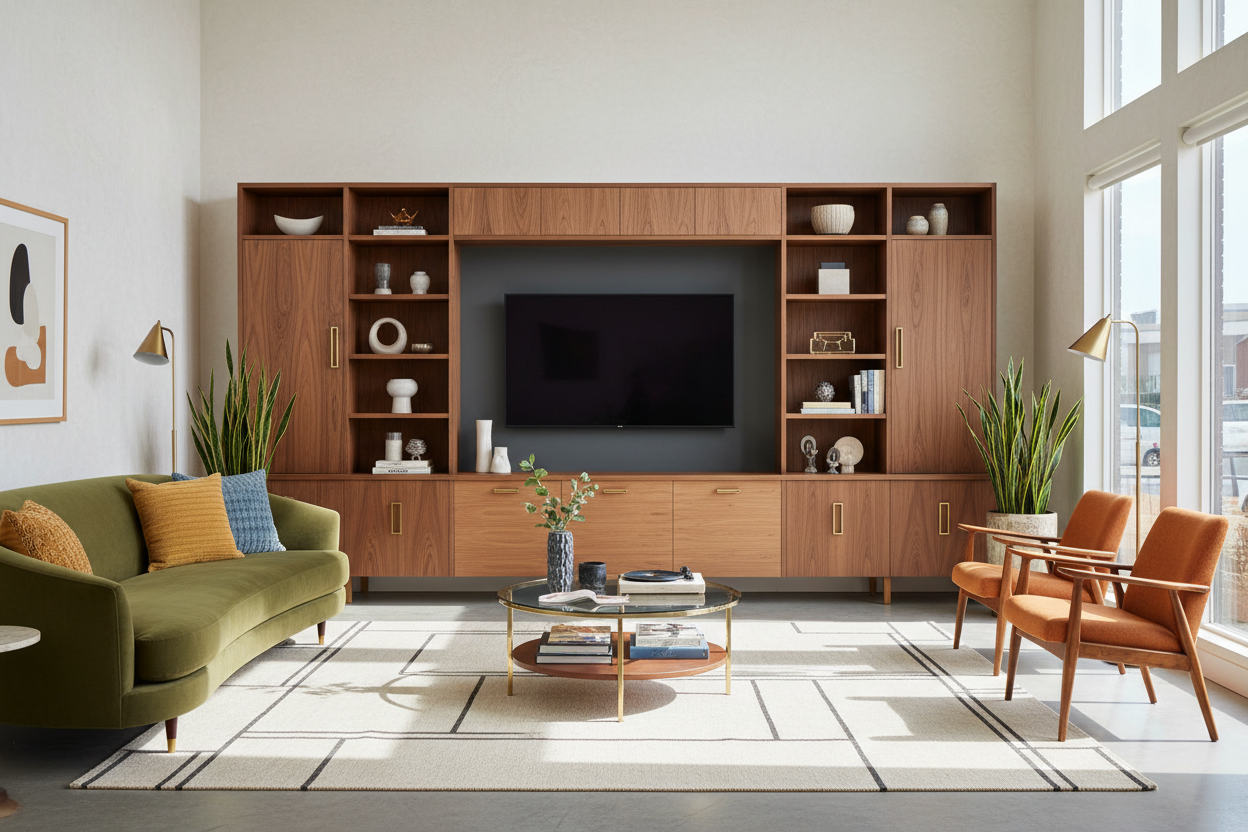
If you have the square footage in a suburban family room, a mid century modern built-in entertainment center can completely resolve the cord and clutter issue. Custom built-ins allow you to run wiring behind drywall and house bulky receivers in lower cabinets. A well-designed mid century wall unit tv setup draws the eye to the craftsmanship of the cabinetry rather than the electronics. We often use walnut veneer for these built-ins to keep costs manageable while maintaining that rich, authentic era-appropriate warmth.
Creating a Focal Point
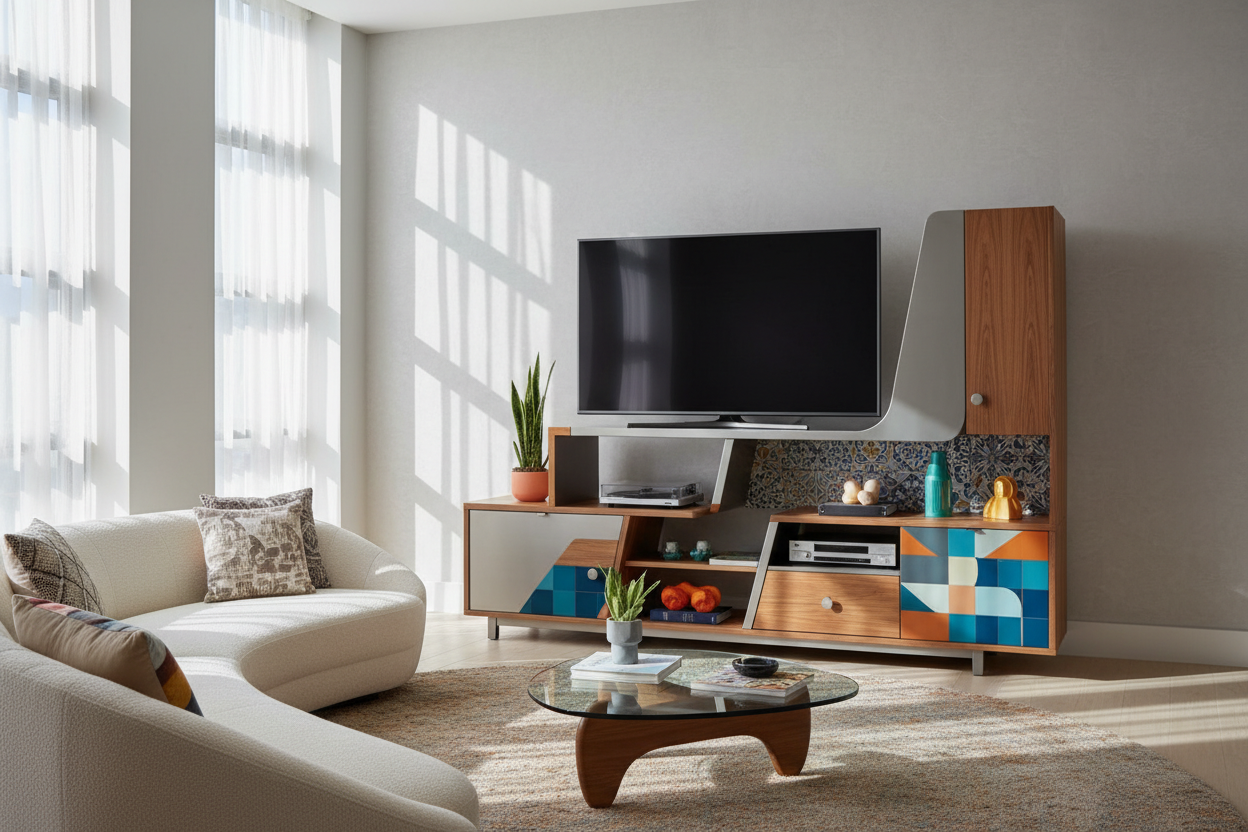
When planning a mid century modern entertainment wall, consider asymmetrical shelving. Open shelves on one side paired with closed cabinetry on the other breaks up the rigid symmetry that can make a room feel sterile. Adding a mid century modern media wall allows you to incorporate trailing plants, ceramic pottery, and books alongside your tech. For renters or those in smaller apartments who cannot drill into studs, a freestanding mid century modern tv wall unit provides the same vertical storage without the permanent commitment.
Designer's Honest Take
A few years ago, I designed a stunning custom slatted walnut console for a client's open-concept living room. It looked incredible in photos and perfectly captured the aesthetic we wanted. But I learned a hard lesson about modern media components: infrared remotes do not pass through thick walnut slats reliably. The clients had to keep the sliding doors wide open whenever they watched a movie, completely defeating the purpose of hidden storage.
Now, I always specify acoustic fabric backing behind cutout doors, or I ensure the primary cable box is RF-enabled. I also have to warn clients about the iconic angled peg legs that define this style. They are beautiful, but they leave a massive, highly visible gap underneath the furniture where cables love to pool. If you buy a piece with high legs, you must be meticulous about zip-tying your cords to the back legs or running them through a wall-mounted conduit.
Frequently Asked Questions
How high should I mount my TV above a mid-century console?
Ideally, you want a gap of 4 to 8 inches between the top of the console and the bottom of the TV. The center of the screen should sit right at eye level when you are seated on your sofa, which is usually around 42 inches from the floor.
Can I mix wood tones on my media wall?
Yes, but keep it intentional. If your console is a warm teak, you can pair it with lighter oak or darker walnut accents in the room. Just avoid woods with contrasting undertones, like mixing a warm orange-toned teak with a cool, gray-washed oak.
How do I hide cords with open-leg furniture?
Use a paintable cord cover that runs straight down from the TV to the console. For the cords trailing from the console to the wall outlet, route them down the back of one of the furniture legs using clear zip ties or adhesive cable clips.


Leave a comment
This site is protected by hCaptcha and the hCaptcha Privacy Policy and Terms of Service apply.