










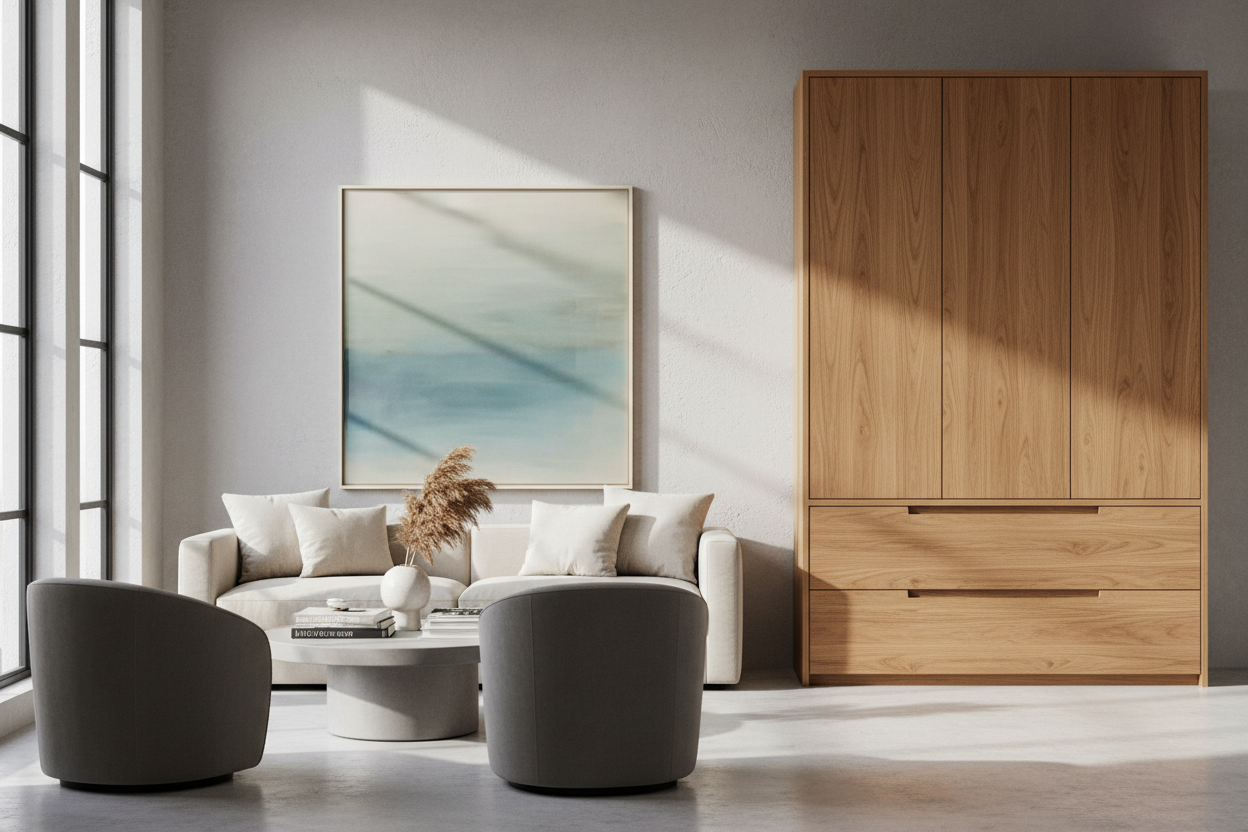
We have all stared at that awkward, empty corner in the living room or hallway, wishing we could magically conjure more square footage. When floor space is tight, the only way to go is up. Incorporating a tall cabinet wood piece is one of my favorite strategies for hiding everyday clutter while adding warmth and architectural interest to a room. But before you drag a massive 80-inch crate into your home, you need to know how to choose the right proportions and materials so it does not overwhelm your layout.
Quick Decision Guide
- Always measure your ceiling height and leave at least 12 to 18 inches of breathing room above the piece to avoid a cramped look.
- If you need to hide visual clutter, opt for a tall wooden cabinet with doors rather than open shelving.
- Solid wood requires humidity control, while high-quality veneers over MDF resist warping in climate-fluctuating North American homes.
- Always use anti-tip wall anchors, regardless of the cabinet's weight or base width.
Material Matters: Solid Wood vs. Veneer
The Reality of Solid Wood
Clients often insist on tall solid wood storage cabinets with doors and shelves, assuming heavy means indestructible. While solid oak, maple, or walnut offers incredible longevity and can be refinished, it reacts to seasonal humidity. In older homes with dry radiator heat or humid coastal environments, solid slabs can warp or crack if not properly acclimated.
When to Choose Veneer
Do not dismiss engineered options. A well-crafted tall wooden storage cabinet featuring a thick wood veneer over an MDF core is incredibly stable. It gives you the organic texture of natural grain without the risk of seasonal shifting, making it ideal for bathrooms, basements, or modern apartments with aggressive HVAC systems.
Maximizing Functionality and Layout
Finding the Right Storage Combination
Think about what you actually need to store. A tall storage cabinet with drawer space at the bottom is perfect for dining rooms—stashing heavy linens or flatware down low—while keeping display items at eye level. If you are hiding board games, routers, or bulky winter gear, a tall storage cabinet with doors wood design keeps the chaos completely out of sight.
Managing Visual Weight
A massive, dark-stained piece can easily anchor a large open-concept living room, but it will swallow a narrow hallway whole. For tighter spaces, look for a tall wood cabinet with shelves on the top half and closed doors on the bottom. The open upper section lets the eye travel through the piece, utilizing negative space to reduce its overall visual weight.
Designer's Honest Take
I learned a hard lesson about vertical storage early in my career. I specified a gorgeous, vintage tall wooden cabinet with drawers for a client's narrow Brooklyn entryway. It looked stunning on installation day. But I had not accounted for the depth of the bottom drawers when fully extended. Every time they opened the bottom drawer to grab a scarf, it banged into the opposite wall, eventually chipping the baseboard. I also had to retro-fit heavy-duty wall anchors because the piece became dangerously front-heavy when loaded. Always calculate the 'open door' and 'extended drawer' footprint, not just the static dimensions.
Frequently Asked Questions
How tall should a cabinet be for an 8-foot ceiling?
Aim for a maximum height of 72 to 78 inches. Leaving 18 to 24 inches of negative space between the top of the cabinet and the ceiling prevents the room from feeling top-heavy and allows room for styling with a trailing plant or ceramic vase.
Do I really need to anchor my tall cabinet?
Yes, absolutely. Even if the piece feels incredibly heavy and stable when empty, the center of gravity shifts dangerously forward once you load the upper shelves or open the doors. Wall anchors are a non-negotiable safety step.
How do I clean and maintain a wood cabinet?
Dust weekly with a dry microfiber cloth. Avoid silicone-based commercial sprays, which leave a cloudy buildup over time. For occasional deep cleaning, use a slightly damp cloth with a mild soap solution, immediately following up with a dry cloth to prevent moisture damage.


Leave a comment
This site is protected by hCaptcha and the hCaptcha Privacy Policy and Terms of Service apply.